
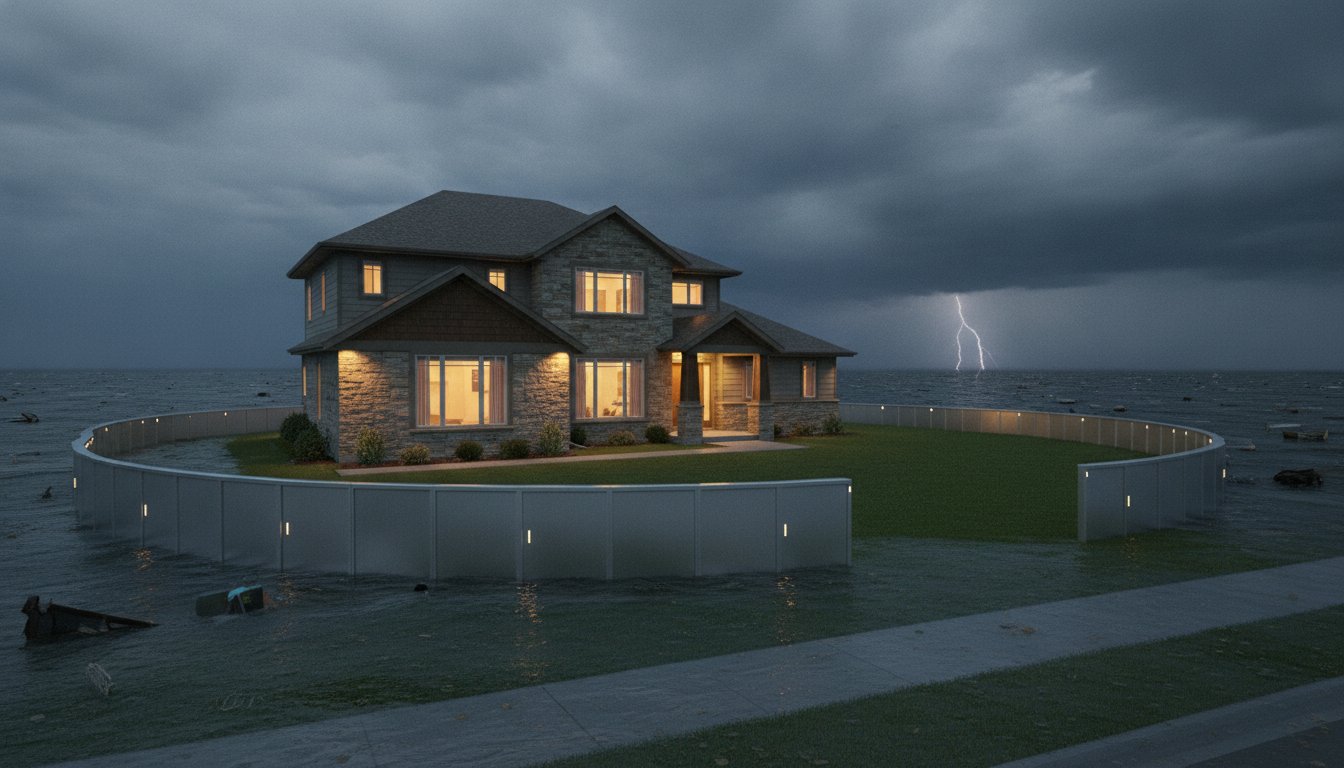
What if you could shield your home from rising tides without ever detaching it from its foundation? For many homeowners, the choice feels impossible. You are caught between the prohibitive costs of a structural lift and the devastating reality that just one inch of water can cause $25,000 in damage. It's natural to feel a sense of dread when considering the months of displacement or the fear of structural failure during a house lift. You shouldn't have to sacrifice your property's curb appeal or its history just to stay safe.
There is a smarter path toward total security. You can discover professional-grade alternatives to raising house in flood plain that defend your home without the invasive costs of structural elevation. This guide focuses on strategic fortification, a method of controlling the water's path rather than moving the building itself. We will preview reliable, engineered defense systems that provide military-grade resilience while keeping your foundation firmly on the ground. It is time to replace vulnerability with a hardened, proactive defense strategy that protects what matters most.
Key Takeaways
- Identify the hidden financial and structural risks of lifting a home, from permit delays to foundation instability.
- Discover engineered alternatives to raising house in flood plain that provide high-stakes protection without the invasive costs of elevation.
- Learn how to deploy the Fortress Flood Diversion System to redirect rising water away from your property before impact occurs.
- Understand the science of creating an impermeable structural shield using advanced liquid-applied barriers for maximum resilience.
- Implement a multi-layered 'Defense in Depth' strategy that combines rapid-deployment inflatable barriers with permanent perimeter fortifications.
The Reality of Elevation — Why Homeowners Seek Strategic Alternatives
The threat of rising water is absolute. It doesn't negotiate. For decades, the standard response to this threat has been structural elevation. While House raising is a proven method for meeting NFIP standards, it's an invasive, high-stakes operation that many properties simply can't withstand. Homeowners are increasingly searching for alternatives to raising house in flood plain because the traditional path is often paved with hidden costs and structural hazards. You shouldn't have to choose between a safe home and a bankrupt bank account.
The Financial Burden of Structural Modification
Elevation is rarely as simple as the initial quote suggests. Beyond the physical lift, you face a mountain of soft costs that drain your resources. Consider the following expenses that often go overlooked:
- Engineering reports and soil density tests often cost thousands of dollars.
- Specialized permits can delay projects for months, leaving you in limbo.
- Temporary housing expenses accumulate rapidly while you're displaced from your home.
Many homeowners find themselves trapped by the 50% Rule. If repairs or improvements exceed 50% of the building's market value, FEMA requires the entire structure to be brought into compliance. For slab-on-grade foundations, this is a logistical nightmare. Lifting a slab requires precision that older structures often lack, leading to permanent structural cracks and diminished resale value. Finding viable alternatives to raising house in flood plain is a financial necessity for those who want to protect their investment without destroying it.
Zoning and Aesthetic Limitations
Sometimes the law or the land says no. Many coastal districts enforce strict height restrictions that make a significant lift impossible. If you raise your home to meet the Base Flood Elevation, you might simultaneously violate local zoning codes. There's also the matter of architectural soul. A historic estate loses its visual anchor and its character when perched ten feet in the air on concrete pilings. Curb appeal isn't just about vanity; it's about the value and history of your neighborhood.
Accessibility becomes a lifelong hurdle too. Replacing a few porch steps with a massive staircase or a mechanical lift changes how you experience your property every day. You want a home that maintains its accessibility and beauty, not one that looks like a permanent construction site. Strategic fortification offers a way to keep your foundation on the ground while keeping the water out.
True security doesn't always require a retreat to higher ground. We're seeing a fundamental shift in strategy. Instead of moving the house away from the water, we're defending the perimeter. By treating the home as a fortress rather than a floating object, you maintain your property's history, its beauty, and your profound sense of security. Protection should be a shield, not a burden.
Dry Floodproofing — Creating an Impermeable Structural Shield
If elevation is a retreat, dry floodproofing is a stand. This strategy involves sealing your home's exterior to prevent water from ever crossing the threshold. It's one of the most effective alternatives to raising house in flood plain because it focuses on structural integrity. You're not just painting a wall. You're creating a military-grade envelope that treats your home as a watertight vessel. This method is particularly vital for slab-on-grade homes where lifting is technically impossible or financially ruinous.
Precision is everything here. You must account for hydrostatic pressure. As floodwaters rise against your foundation, they exert massive physical force. According to 2026 industry data, waterproof membranes typically cost around $1.17 per square foot, while sprayed-on cement coatings average $3.50 per square foot. However, these aren't DIY projects. Professional application is mandatory to ensure the seal can withstand the weight of the water without causing the walls to buckle or collapse. A failed seal is a failed defense.
Transparent Liquid Barriers: The Invisible Defense
You shouldn't have to hide your home's masonry behind thick, ugly coatings. The Fortress Transparent Liquid Paintable Flood Barrier represents a breakthrough in aesthetic protection. It bonds directly to brick, stone, and concrete at a molecular level. It's 100% clear. This allows you to maintain the high-end residential facade of your estate while providing an impenetrable shield. It's the ultimate solution for homeowners who refuse to compromise on curb appeal. If you're ready to fortify your property, you can explore advanced sealing technologies that disappear once they dry.
Reinforcing Openings and Entry Points
Water is opportunistic. It searches for every microscopic fracture and utility penetration. Standard door frames and vents are the weakest links in your perimeter. Strategic fortification requires sealing these gaps with specialized, high-elasticity coatings that can expand and contract with the temperature. You must treat every pipe entry and electrical conduit as a potential breach point. Long-term maintenance is simple but necessary. A quick annual inspection of your liquid-applied shields ensures your home remains a hardened target against the next storm. You deserve the peace of mind that comes from a house that simply won't leak.
Engineered Diversion Systems — Redirecting the Threat Before Impact
Retention is a battle of brute force. When you try to hold back a flood, you're fighting thousands of pounds of hydrostatic pressure. Redirection is a more sophisticated strategy. By controlling the water's path, you reduce the impact force on your home's foundation. This is why engineered diversion systems are becoming the preferred alternatives to raising house in flood plain for high-value estates. You aren't just surviving the flood. You're outsmarting it.
The difference between professional systems and DIY sandbagging is absolute. Sandbags are porous, heavy, and prone to failure under high-velocity flow. They're a reactive, desperate measure. An engineered diversion system is a proactive perimeter defense. It uses the natural topography of your land to channel water toward drainage catchments or natural runoff areas. This strategy keeps the water at a distance, ensuring your structure never has to bear the full weight of the surge.
How Diversion Systems Control Water Velocity
Physics dictates the level of damage. High-velocity water doesn't just soak a home; it erodes the soil and undermines the foundation. Diversion systems are designed to break that velocity. By strategically placing barriers, you can turn a destructive surge into a manageable stream. This protects more than just your main residence. It safeguards your expensive landscaping, guest houses, and detached garages. You're defending your entire property line, not just the four walls of your living room.
The Fortress Flood Diversion Advantage
Every property has a unique fingerprint. A one-size-fits-all approach to flood defense is a recipe for failure. The Fortress Flood Diversion System is custom-engineered for your specific property layout. It integrates seamlessly with your existing estate security and hardscaping. These systems are built for resilience, standing firm against heavy debris and repeated high-velocity events. When the water rises, you don't want a temporary fix. You want a permanent, military-grade solution that acts as a vigilant guardian for your home. Strategic fortification means being ready before the first drop of rain hits the ground.

Rapid Deployment — Inflatable Barriers for Immediate Defense
Speed is the ultimate asset when environmental threats materialize. While permanent structural changes provide long term peace of mind, they cannot be deployed in the hours preceding a sudden storm surge. You need a defense that activates on command. This is why rapid deployment systems have become essential alternatives to raising house in flood plain. They allow you to establish a temporary but impenetrable perimeter that buys you critical time and security. You aren't just waiting for the water. You're ready for it.
The Fortress Inflatable Flood Barrier is engineered for this exact moment of crisis. It offers heavy duty protection without the permanent footprint of a concrete wall or the invasive nature of a house lift. You can store these systems in a standard garage or utility shed when the skies are clear. When the alert sounds, you move from vulnerability to total fortification in minutes. It is a professional grade solution for the homeowner who values both readiness and property aesthetics.
The Deployment Protocol
Effective defense requires a disciplined approach. You must identify specific flood triggers, such as local river gauges or weather service alerts, to activate your system early. A proactive stance is always superior to a reactive scramble. The protocol for the Fortress Inflatable Flood Barrier is straightforward:
- Unroll the barrier along the predetermined perimeter line of your estate.
- Ensure proper anchoring to prevent shifting during high velocity flow.
- Inflate the system using the provided high volume pumps to achieve maximum seal integrity.
Post flood recovery is equally efficient. Once the threat recedes, you simply deflate, clean, and dry the barrier before returning it to storage. This ensures your shield is primed for the next engagement.
Inflatable vs. Traditional Sandbags
Sandbags are an archaic relic of the past. They are porous, which leads to constant seepage and internal water damage. They are also incredibly labor intensive. A single Fortress Inflatable Flood Barrier can replace hundreds of sandbags, saving you hours of grueling physical work. Furthermore, sandbags become hazardous waste after contact with contaminated floodwaters. They require expensive disposal and cannot be reused.
A reusable, water filled or air filled barrier represents a far superior logistical advantage. It is a one time investment in resilience that pays for itself over multiple flood seasons. You avoid the recurring costs of sand, bags, and labor while gaining a more reliable seal. If you want to move beyond temporary patches and invest in a strategic shield, you should secure your perimeter with advanced inflatable technology today. Professional defense is about efficiency as much as it is about strength.
Choosing Your Defense — Implementing a Multi-Layered Strategy
One barrier is a tactic. Multiple barriers are a strategy. The 'Defense in Depth' philosophy recognizes that floodwaters are relentless and opportunistic. If you're looking for alternatives to raising house in flood plain, you must move beyond the idea of a single magic bullet. True resilience comes from a layered approach. This means combining the Fortress Flood Diversion System to move water away, the Fortress Transparent Liquid Paintable Flood Barrier to seal the structure, and inflatable systems for surge protection. You're building a comprehensive shield that accounts for every variable. It's a professional-grade response to a high-stakes problem.
Your risk isn't just about a line on a FEMA map. You have to analyze your specific Base Flood Elevation (BFE) and the historical frequency of local events. Soil type matters too. Saturated ground can shift foundation pressures even if the water doesn't enter the home. By understanding these environmental factors, you can deploy the right combination of technology. It's about matching the strength of the defense to the severity of the threat. When you harden your perimeter, you're not just protecting a building. You're safeguarding your peace of mind and your family's future.
Engineering Your Custom Protection Plan
Every estate requires a unique blueprint for survival. A site-specific flood risk assessment is the foundation of any successful fortification. You need to know exactly how water moves across your property during a 100-year event. We don't guess; we engineer. By combining Fortress systems, you achieve 360-degree protection. This isn't a DIY project. It's a professional-grade installation that ensures every seal is airtight and every diversion path is clear. Working with FloodWater Pros means you're getting a strategic partner who understands the high stakes of environmental defense. We see the threats you haven't considered yet.
Taking the Next Step Toward Security
Anxiety is the result of uncertainty. Action is the cure. When you have a reliable, engineered defense system in place, the sound of rain changes from a threat to just weather. The timeline for implementing these alternatives to raising house in flood plain is far shorter than the months required for a structural lift. You can harden your home's defenses in weeks, not seasons. You avoid the trauma of displacement and the fear of structural failure. You deserve the profound relief that comes from knowing your home is a fortress. It's time to move from a state of vulnerability to a state of unwavering readiness.
Don't wait for the next declaration of emergency to realize your home is at risk. You can contact FloodWater Pros for an engineered flood defense consultation to begin your transformation. Secure your legacy. Protect your investment. Stand your ground with a partner who has seen it all.
Stand Your Ground: Securing Your Estate Without Elevation
You don't have to surrender your home's foundation to the rising tide. Structural elevation is a massive undertaking that often compromises the very history and aesthetic you're trying to save. By choosing strategic alternatives to raising house in flood plain, you shift the battle to the perimeter. You've seen how dry floodproofing, engineered diversion, and rapid deployment systems work together to create an impenetrable shield. This isn't just about survival. It's about total transformation through engineered resilience.
FloodWater Pros brings national expertise in high-stakes flood zones directly to your property. We provide a full-service experience from initial engineering to final installation. Our proprietary Fortress technology ensures your home remains a hardened target against any environmental threat. You can Secure Your Home with an Engineered Fortress Defense System today. Take command of your safety. Your peace of mind is worth the investment in a professional, proactive defense. You have the power to protect what matters most.
Frequently Asked Questions
Can I use barriers instead of elevation to satisfy flood insurance requirements?
Insurance requirements are exceptionally strict. While these systems are effective alternatives to raising house in flood plain for physical protection, the NFIP typically only grants premium discounts for residential structures that are elevated. You should consult your insurance agent to see if a Dry Floodproofing Certificate applies to your specific non-residential or historic building. Your priority should be the physical safety of your assets and family.
How long do professional inflatable flood barriers last?
A professional inflatable barrier can last ten years or longer with proper maintenance. These systems are constructed from military-grade, UV-resistant polymers designed for repeated use in harsh environments. You must clean and dry the barrier thoroughly after each deployment to prevent mold and material degradation. Proper storage in a cool, dry area ensures your shield is ready when the next alert sounds.
Is dry floodproofing safe for homes with basements?
Dry floodproofing requires extreme caution for homes with basements. The pressure from surrounding water can cause unreinforced basement walls to buckle or collapse inward. We typically recommend these methods for slab-on-grade homes or buildings with crawlspaces. If you have a basement, a professional engineering assessment is mandatory to determine if your foundation can survive the external force without failing.
What is the difference between flood diversion and flood retention?
Diversion is the act of redirecting water flow while retention is the attempt to stop it entirely. Diversion systems are often safer because they reduce the total hydrostatic pressure exerted on your home. By channeling water toward natural drainage areas, you avoid the structural strain of holding back a massive surge. It's a strategic move that outsmarts the flood rather than fighting it head-on.
Do I need a permit to install a Fortress Flood Diversion System?
Permit requirements vary by local municipality and the scale of the installation. Most permanent perimeter defenses like the Fortress Flood Diversion System require a site plan review and a local building permit. You're altering how water moves across your land, which can impact neighboring properties. Professional installation ensures your fortification meets all local regulatory standards while providing maximum security.
Can the transparent liquid barrier be applied over existing paint?
No, you cannot apply the Fortress Transparent Liquid Paintable Flood Barrier over existing paint. The barrier must bond directly to porous masonry, brick, or concrete at a molecular level to create an effective seal. If your home is currently painted, you'll need to strip the surface to the bare substrate before application. This ensures the chemical bond is absolute and the protection is impenetrable.
How much warning time do I need to deploy an inflatable barrier?
You can achieve full perimeter protection in less than an hour. Most Fortress Inflatable Flood Barriers take between fifteen and forty-five minutes to deploy, depending on the total length of the system. You'll need a high-volume pump and a clear path along your property line. This rapid response time is critical when a storm surge or flash flood provides minimal warning for action.
Will these systems protect against hurricane-strength storm surges?
These systems are engineered to withstand high-velocity flow and heavy debris impact. While no system is invincible against every extreme event, our strategic alternatives to raising house in flood plain are designed for the high-stakes environments of coastal surges. The key is matching the height of your barrier to the predicted water level. Professional engineering ensures your defense is built for the specific forces of your region.


