
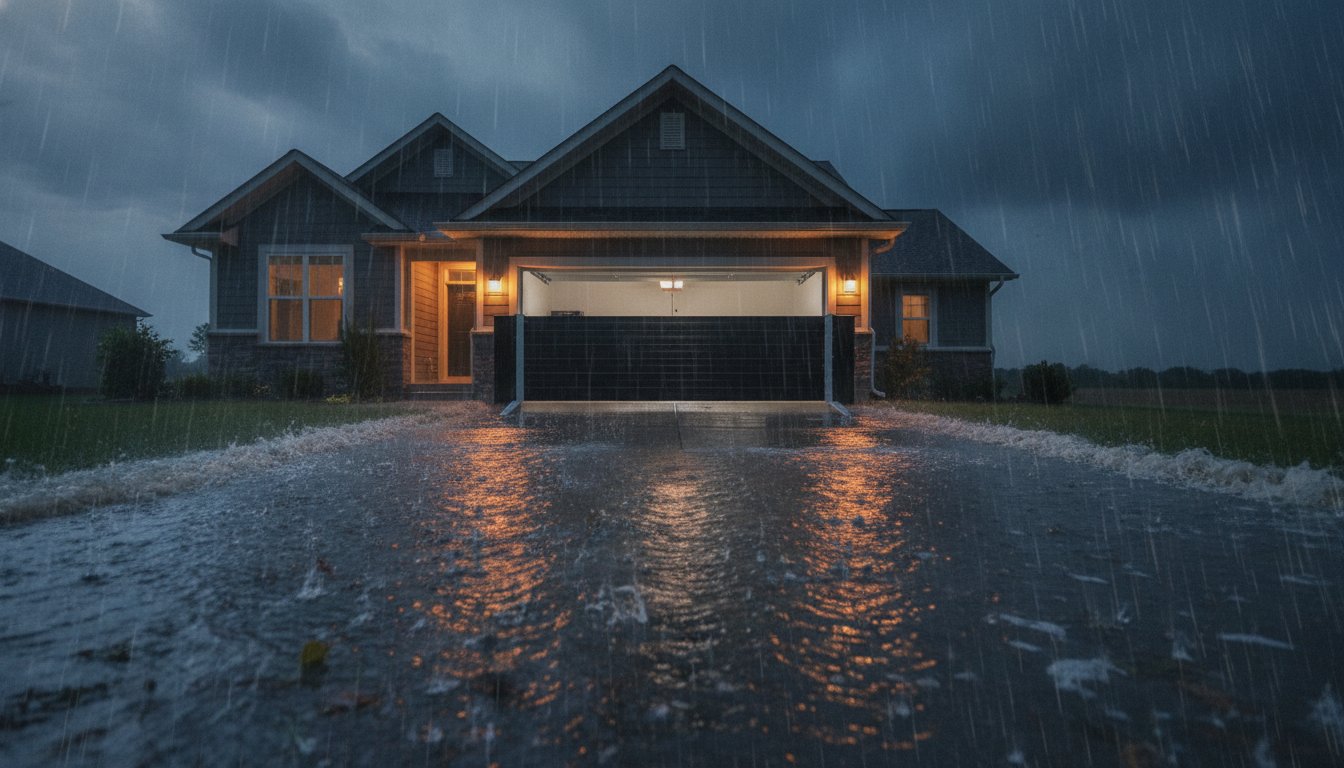
Your garage door is a mechanical moving part, not a structural wall, and floodwater knows it. When the storm clouds gather, the vulnerability of that wide opening becomes a source of deep anxiety. You've likely felt the physical exhaustion of stacking heavy sandbags, only to find that water still finds a way to ruin your vehicles. According to FEMA, just one inch of water can cause up to $25,000 in damage. Installing a high-performance flood barrier for garage door protection is no longer a luxury. It's a critical necessity for safeguarding your home's structural integrity and your family's peace of mind.
We understand that protecting what you value requires more than just a temporary fix. It requires a definitive shield. This guide will show you how to transform your garage from a high-risk liability into an impenetrable fortress. You'll learn about engineered systems like the Fortress Inflatable Flood Barrier that deploy in minutes to keep your floors bone-dry. We'll explore how the Fortress Flood Diversion System provides professional-grade security. You'll discover how to face the next hurricane with the confidence of a homeowner who is truly prepared and protected.
Key Takeaways
- Identify the "Wide Path" vulnerability and how hydrostatic pressure exerts thousands of pounds of force against your garage door.
- Deploy a rapid-response flood barrier for garage door protection with inflatable systems designed for high-stakes environmental threats.
- Seal microscopic gaps with liquid paintable barriers to achieve total fortification without the need for bulky metal fixtures.
- Master the physics of diversion to turn your driveway into a tactical bypass that moves water away from your home.
- Secure your investment with professional installation to guarantee an engineered, watertight seal on uneven garage thresholds.
The Garage Vulnerability - Why Your Largest Door is Your Greatest Risk
Your garage door is the widest breach in your home's defense. It's a "Wide Path" for disaster. While a standard wall is a fixed, structural element, a garage door is a moving mechanism. It's designed for convenience, not for repelling thousands of pounds of water. Most homeowners rely on basic weather stripping, but these seals are built to stop wind and rain, not rising floods. Air-tight does not mean water-tight. When a storm hits, this massive opening becomes the primary entry point for catastrophic damage.
Standing water isn't just wet; it's incredibly heavy. This is known as hydrostatic pressure. As water levels rise against the exterior of your door, it exerts a relentless lateral force. Without a professional flood barrier for garage door protection, your door panels are forced to act as a dam they were never engineered to be. Even small gaps are dangerous. These openings create a "Siphon Effect," where pressure pulls water through at high speeds. This can submerge a garage floor in minutes, even if the rest of your home remains dry.
To understand the scale of the threat, one must look at the physics of a Flood barrier compared to a standard door. A door is a series of panels on a track. It's built to move. A barrier is built to stay. When you lack a dedicated defense system, you're betting your property on a mechanical hinge.
Mechanical vs. Structural Defense
A garage door is a machine, not a structural wall. At water levels as low as 12 inches, many residential panels begin to buckle inward. This "panel buckling" creates massive gaps that no seal can close. Additionally, the weight of external water pins the door against its tracks with such force that standard openers often burn out or fail. You aren't just facing a leak; you're facing a total mechanical collapse of your home's largest entrance.
The Cost of a Breach
The financial impact of a breach is staggering. FEMA data from 2024 shows that floods are the most costly natural disaster in the U.S., and just one inch of water can cause $25,000 in damage. Beyond ruined vehicles and stored valuables, the water wicks into drywall and insulation. This "wicking" effect can pull moisture several feet up into the walls of the main house, triggering rapid mold growth. Long-term, repeated saturation compromises the stability of the concrete slab and the foundation surrounding the garage. Protecting this opening isn't just about a dry floor; it's about preserving the structural integrity of your entire home.
Tactical Deployment - Comparing Inflatable and Removable Garage Barriers
Speed is the ultimate currency during a flash flood. When the water starts rising, you don't have hours to secure your home. You have minutes. Choosing the right flood barrier for garage door protection is a tactical decision that determines whether your valuables survive the night. Traditional systems often involve heavy metal panels or modular gates. These are effective but cumbersome. They require permanent tracks and significant storage space. In contrast, inflatable technology offers a rapid-response alternative that prioritizes agility without sacrificing strength.
Seal integrity is the true test of any defense. Most driveways aren't perfectly flat. Metal gates rely on rigid seals that can leave microscopic gaps on pitted concrete. An inflatable system acts differently. As it expands, it conforms to the specific textures and dips of your threshold. This creates a pressurized grip that prevents water from sneaking underneath. These barriers are built to endure. They utilize high-strength polymers that resist UV degradation and the impact of floating debris during long storms. If you want to ensure your home is truly ready, it's time to consult with a flood defense expert about engineered systems.
Fortress Inflatable Flood Barrier: The Professional Choice
The Fortress Inflatable Flood Barrier is engineered for high-stakes environments. It uses heavy-duty, military-grade materials designed to withstand extreme hydrostatic pressure. Unlike sandbags that shift under load, air-filled systems provide a consistent, weighted seal against the ground. You can secure a full two-car garage in under 10 minutes. This speed allows you to focus on other critical evacuation tasks while your property remains fortified and dry.
Limitations of DIY Sandbag Alternatives
Many homeowners turn to water-activated bags or traditional sandbags. These often fail at the joints. Seepage is inevitable when you rely on stacked units rather than a continuous wall. Beyond the leaks, sandbags present a massive environmental mess. They're heavy, difficult to dispose of, and often contaminated by toxic floodwater. According to FEMA's guide to reducing flood risk, dry floodproofing requires systems that are both reliable and easy to deploy. Single-use solutions are a liability during a multi-day storm event. They offer a false sense of security that vanishes the moment the water pressure rises.
The Invisible Shield - Utilizing Liquid Barriers for Garage Thresholds
Even the most robust physical gates can leave vulnerabilities. Water is a patient invader. It exploits microscopic pores in concrete and hair-line fractures in mortar. This is where a traditional flood barrier for garage door protection meets its match. To achieve total security, you need an invisible layer of defense that seals what the eye cannot see. Relying on a mechanical gate alone is a risk. True fortification requires a secondary, seamless membrane that addresses the building's own porosity.
The Fortress Transparent Liquid Paintable Flood Barrier represents a breakthrough in aesthetic defense. Most competitors focus solely on heavy steel or aluminum gates. These are effective but can be massive eyesores that decrease curb value. They also fail to address the low-level seepage that occurs through the building material itself. By using a liquid-applied coating, you create a rubberized shield. This barrier is virtually invisible to the naked eye but remains impenetrable to rising tides. It bonds at a molecular level to masonry and metal alike. It ensures that your garage remains a dry sanctuary without the need for permanent, bulky fixtures.
When comparing different flood barrier types, it's clear that a multi-layered approach is the gold standard. A physical barrier stops the surge and debris. A liquid barrier stops the soak. This combination prevents the "wicking" effect where moisture travels up through the walls long after the initial flood has receded.
Sealing the Final Gaps
Concrete is surprisingly porous. Under pressure, water moves through the slab via capillary action. It acts like a sponge, pulling moisture into your garage even if the door is closed. The Fortress paintable barrier seals these pores permanently. It acts as a critical fail-safe behind your primary gate. You apply it to door frames, floor-to-wall joints, and even the threshold itself. It provides maintenance-free peace of mind. Once it cures, it stays clear and functional for years.
Structural Integrity and Coatings
Protection must extend beyond the moving parts of the door. Sealing the surrounding brick, mortar, and siding is vital. Water often bypasses a high-quality flood barrier for garage door by soaking through the adjacent walls. The Fortress coating is engineered for extreme durability. It withstands heavy tire traffic, UV exposure, and the corrosive effects of road salt. It doesn't peel or crack under the weight of a vehicle. It stays flexible. This flexibility allows it to move with your home's natural shifts while maintaining a watertight seal. The "Zero-Gap" philosophy dictates that every potential entry point, no matter how small, must be hermetically sealed to ensure absolute structural safety.

Commanding the Water - Redirection vs. Retention Strategies
Most homeowners view flood defense as a final stand at the threshold. They wait for the water to hit the door. This is retention. It puts the entire burden of protection on a single seal. There is a more tactical way. Redirection commands the water. It forces the flow away from your property before it ever reaches the garage opening. By managing the energy of moving water, you transform a high-risk vulnerability into a controlled environment.
Stopping thousands of pounds of moving water is a feat of extreme engineering. It requires massive structural strength to resist hydrostatic pressure. Diversion is different. It works with the physics of flow. By creating a path of least resistance, you guide the water into existing drainage or landscaping. This reduces the stress on your primary flood barrier for garage door. It's the difference between catching a heavy blow and parrying it. When water is diverted, it never has the chance to pool or exert pressure against your home's structure.
Perimeter defense means looking at the entire garage footprint. It isn't enough to secure the door if the water can simply wrap around the side of the slab. Integrating diversion systems with your existing landscaping creates a seamless shield. This approach protects your foundation and prevents soil erosion near the garage. If you're ready to take command of your property's safety, contact FloodWater Pros for a professional engineering assessment of your home's diversion needs.
The Fortress Diversion Advantage
The Fortress Flood Diversion System creates a permanent "no-go" zone for floodwater. This system isn't a temporary fix. It's a structural upgrade. Professional engineering is critical here. Our experts assess your driveway slope and runoff patterns to ensure water moves exactly where we want it. In high-velocity flood zones, where water moves with destructive speed, redirection is the only reliable solution. It's about mastering the landscape to protect the structure.
Strategic Perimeter Defense
Mapping the "Path of Least Resistance" is the first step in total fortification. We identify where water naturally wants to go and then we change its mind. For maximum security, we recommend a layered defense. You combine the Diversion System with the Fortress Inflatable Flood Barrier. This ensures that even if the diversion is overwhelmed by an extreme surge, your garage remains bone-dry. The ROI of permanent diversion is clear. It's a one-time investment that eliminates the recurring emergency response costs and the devastating price of water damage restoration.
Total Fortification - Professional Installation and Readiness Plans
Professional installation is the gold standard for residential safety. A retail "grab and go" product might seem convenient, but it often carries a high failure rate during extreme weather. Without a precision seal, a flood barrier for garage door protection is merely a suggestion to the water. Our installers at FloodWater Pros ensure a 100% watertight threshold seal by accounting for the specific micro-textures of your concrete. We also mitigate the risk of "unintended consequences." Improperly placed DIY barriers can accidentally redirect high-velocity water toward your neighbors' property, creating legal and structural liabilities. A professionally engineered defense provides the certainty that your home will remain standing when the storm passes.
Every home requires a unique Engineering Blueprint. We don't believe in one-size-fits-all security. Our team customizes your barrier system to match the specific elevation, slope, and structural materials of your garage. This strategic approach ensures that your defense is integrated into the building's architecture rather than just being an afterthought. It transforms your garage into a fortress. By analyzing the "Wide Path" vulnerability we identified earlier, we build a system that commands the water rather than just hoping to block it.
The Installation Advantage
The peace of mind provided by professional installation is irreplaceable. You aren't just buying a product; you're investing in a certified shield. Our experts analyze how the Fortress Flood Diversion System interacts with your local topography. This ensures that water is commanded away from the slab without compromising the surrounding foundation. It's the ultimate level of protection for high-value property. When the clouds darken, you won't be wondering if your seal will hold. You'll know it will.
The Readiness Checklist
A defense system is only as good as its maintenance. Before hurricane season begins, you must verify that your equipment is battle-ready. Creating a "Flood-Ready" household culture ensures that everyone knows their role when the alert sounds. Practice your deployment drills until they become second nature. Preparation is the antidote to panic. Follow these steps to ensure total fortification:
- Step 1: Inspect your Fortress Inflatable Barrier for air-tightness. Check for any punctures or valve wear that could compromise the seal under pressure.
- Step 2: Clear the Fortress Flood Diversion System of any debris or blockages. Ensure the path of least resistance remains open and unobstructed for maximum flow.
- Step 3: Verify the integrity of your Fortress Transparent Liquid Paintable Barrier. Look for areas where heavy traffic may have thinned the membrane and reapply to maintain the zero-gap seal.
The time to prepare is before the breach occurs. If you haven't yet secured your perimeter, now is the time to act. Fortify your garage with a professional Fortress Flood Diversion System today and stand firm against the next surge.
Command the Surge: Secure Your Home's Weakest Point
A flood doesn't wait for you to be ready. It exploits the mechanical vulnerabilities of your garage door and the porous nature of your concrete. You've seen why simple retention isn't enough. True safety requires a tactical shift toward redirection and engineered defense. By combining the flood barrier for garage door protection of an inflatable system with a permanent diversion strategy, you transform your property into an impenetrable fortress. You move from a state of constant anxiety to one of profound relief.
Don't leave your home's structural integrity to chance or DIY alternatives. Our proprietary Fortress technology is specifically engineered for extreme redirection. We provide national service for high-stakes residential defense. Our experts handle professional on-site installation to ensure every threshold is hermetically sealed. It's time to take a decisive step toward safeguarding your legacy. Secure your garage with the Fortress Flood Diversion System today and face the next storm with unwavering confidence. Your home is worth the protection of a vigilant guardian.
Frequently Asked Questions
Are garage flood barriers effective against flash floods?
Yes, engineered flood barriers are highly effective against the rapid onset of flash floods. While traditional sandbags often fail due to seepage and shifting, a dedicated flood barrier for garage door protection creates a pressurized, watertight seal. These systems are designed to withstand the sudden hydrostatic force of rising water. They ensure your property remains fortified even when you have only minutes to react before a surge hits.
Can I still use my garage door if a flood barrier is installed?
Yes, you can maintain full use of your garage door without any interference. Most professional systems, including our inflatable and diversion solutions, are designed for tactical deployment. They are only active when a specific weather threat is imminent. When the barrier is not deployed, your garage functions normally. This allows for daily convenience while ensuring you have a prepared solution for high-stakes environmental threats.
How high should a garage flood barrier be for residential use?
Most residential barriers range from 12 to 36 inches in height. This is usually sufficient to handle the majority of inland and coastal flood events. FEMA notes that just one inch of water causes $25,000 in damage; therefore, even a lower-profile barrier offers significant protection. Our experts assess your specific flood zone and historical data to determine the optimal height for your home's structural defense.
Will an inflatable flood barrier work on an uneven driveway?
Yes, an inflatable flood barrier is specifically designed to master uneven or pitted surfaces. Unlike rigid metal gates that leave microscopic gaps on worn concrete, an air-filled system expands to fill every dip and texture. This creates a pressurized grip on the driveway threshold. It ensures a 100% watertight seal regardless of the ground's imperfections. It is the only way to guarantee security on older slabs.
What is the difference between a flood seal and a flood barrier?
A flood seal is typically a passive rubber strip designed to stop light rain or drafts. A flood barrier for garage door protection is an active, engineered system built to resist extreme hydrostatic pressure. While seals often fail under the weight of standing water, barriers provide the structural integrity required to defend against a true environmental breach. They are the difference between a minor patch and a military-grade shield.
How long does it take to deploy a Fortress Inflatable Flood Barrier?
You can achieve total deployment in under 10 minutes. The Fortress Inflatable Flood Barrier is engineered for rapid response in high-stakes scenarios where every second counts. This speed is critical when a storm is closing in fast. It allows you to secure your home's widest opening with minimal physical exertion. You gain the profound relief of security without the exhaustion of traditional, heavy defense methods.
Can a flood barrier be installed without drilling into my driveway?
Yes, several of our advanced systems require no permanent drilling or structural alterations to your driveway. The Fortress Inflatable Flood Barrier and our Transparent Liquid Paintable Barrier provide high-level protection without invasive hardware. This preserves your home's curb appeal while maintaining an impenetrable line of defense. It is a clean, efficient solution for homeowners who prioritize both aesthetic beauty and structural resilience.
Does the Fortress Flood Diversion System require permanent changes to my yard?
The Fortress Flood Diversion System is a permanent structural installation designed to integrate seamlessly with your existing yard. It is not a temporary fix; it is a long-term tactical upgrade. Our engineers work with your existing drainage and landscaping to create a path of least resistance for floodwater. This ensures that water is commanded away from your home's foundation forever. It provides a structural answer to a recurring environmental challenge.


