
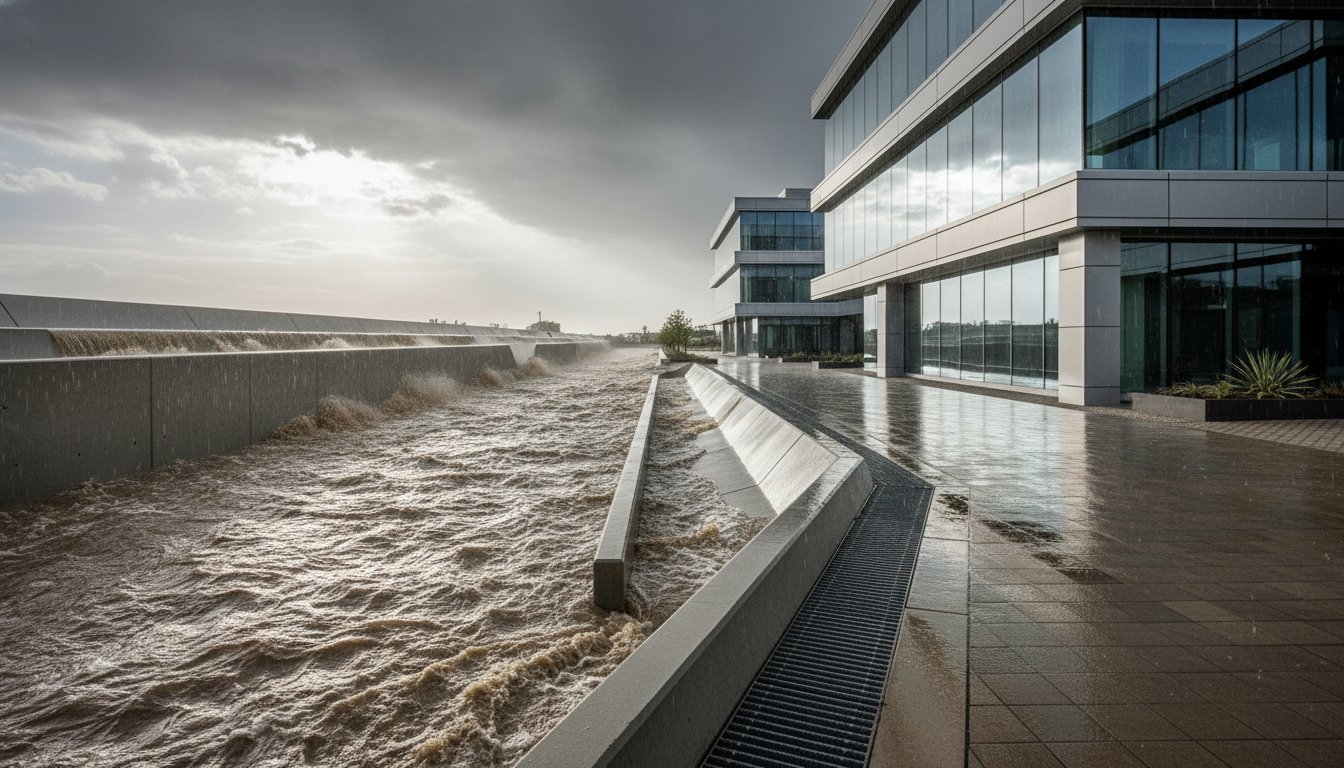
The most dangerous mistake in flood protection is believing you can stop water. The only way to win is to give it a better place to go. Traditional sandbags are often just a decorative illusion of safety that fails the moment the pressure becomes extreme. Modern flood diversion system design shifts the focus from futile resistance to strategic redirection. It's about out-engineering the flow to ensure your foundation remains dry and your structure stays standing.
You know the fear of watching water creep toward your door while wondering if your current defenses will buckle under the weight of a storm. It's a high-stakes gamble that no property owner should have to take. This article will help you master the principles of strategic water redirection to fortify your property against catastrophic environmental threats. We'll explore how to align your strategy with the latest federal standards, including the FEMA Review Council's May 2026 reforms, to build a permanent defense. You're about to learn how to replace engineering confusion with a definitive, structural answer that provides total peace of mind during the next major weather event.
Key Takeaways
- Understand the physics of defense. Learn why redirecting water flow is the only way to neutralize the destructive power of hydrodynamic force.
- Master the core principles of flood diversion system design. Identify how catchment areas and structural barriers work together to protect your foundation.
- Compare diversion and retention strategies. Discover why passive redirection offers superior protection with reduced structural stress and lower maintenance needs.
- Ensure your defense meets federal standards. Deconstruct FEMA Technical Bulletin 3 requirements to achieve compliant, certified dry floodproofing for your property.
- Fortify your perimeter with an integrated shield. Learn how combining the Fortress Flood Diversion System with inflatable and paintable barriers creates an impenetrable line of defense.
The Physics of Defense: Why Design Matters in Flood Diversion
Flood diversion isn't about building a bigger wall. It's about engineering a smarter exit. In the context of flood diversion system design, we define this practice as the strategic redirection of water flow paths away from vulnerable assets. When you try to stop water, you're fighting a losing battle against the laws of physics. Foundations aren't designed to act as dams. They're built to support vertical loads, not the immense lateral pressure of a rising tide. Effective protection relies on the "Path of Least Resistance" as its core design philosophy. By giving water a controlled route to follow, you bleed off its destructive energy before it can compromise your property.
Large-scale Flood bypass systems operate on this exact principle. They move massive volumes of water around population centers rather than trying to hold them back with brute force. On a property level, the goal is identical. You must command the water's direction to ensure it never has the opportunity to test the structural limits of your home or business. This proactive stance transforms a potential catastrophe into a manageable flow.
Hydrostatic vs. Hydrodynamic Forces in Design
Standing water creates hydrostatic pressure. It's a constant, crushing weight that pushes against basement walls from the outside. If the water doesn't move, the pressure builds until the masonry cracks or the floor heaves. Hydrodynamic force is even more violent. This is the kinetic energy of moving water and the impact of floating debris like logs or vehicles. A superior flood diversion system design focuses on maintaining water velocity. By keeping the water moving past your structure rather than letting it pool, you significantly reduce the physical load on your building's envelope. It's the difference between being hit by a wave and letting it slide past a hull.
The Vulnerability of Traditional Retention
Static barriers and sandbags often provide a false sense of security. They're prone to the "seepage factor," where water eventually finds microscopic gaps in the defense. Once moisture penetrates, it saturates the soil behind the barrier. This creates a heavy mud slurry that increases pressure on your foundation far beyond what clear water would exert. Trapping water against a building is a dangerous gamble. It turns your property into a buoy, creating dangerous uplift forces that can shift a structure off its footings. Diversion eliminates this risk. It ensures water never has the chance to sit, soak, and destroy. You don't just want a barrier; you want a tactical redirection that keeps the threat at a distance.
Core Components of an Engineered Diversion System
Effective flood diversion system design relies on three critical phases: interception, redirection, and evacuation. If any part of this chain fails, the entire property remains at risk. It's a structural loop that must remain closed against the elements. A single weak point in your perimeter can turn a sophisticated defense into a funnel for disaster. To build a truly resilient system, you must treat your property as a tactical environment where every inch of topography is either an ally or a threat.
Every property has a primary catchment area. This is the zone where rising water or heavy runoff first makes contact with your perimeter. Identifying these high-risk entry points is the first step in fortification. You aren't just looking at the ground; you're looking at the entire watershed surrounding your site. Structural barriers then act as the redirection engine. They don't just stand there; they work. Their job is to change the water's vector from toward the building to around the building. This requires precise foundation anchoring. Without deep integration, the very ground beneath the barrier can wash away. This leads to a catastrophic collapse known as scouring.
A system without a designated discharge zone is just a temporary pool. You must have a clear, high-capacity exit strategy to prevent water from backing up. This is where many DIY attempts fail. They move water away from the front door only to have it flood the garage from the side. Professional engineers look to FEMA flood design guidelines to ensure these components meet rigorous safety thresholds. These standards ensure that your defense isn't just a guess but a proven structural answer. For those ready to implement these high-stakes defenses, exploring a permanent flood redirection strategy is the first step toward total security.
Catchment and Perimeter Fortification
Mapping natural topography is non-negotiable. You need to know exactly how water behaves during a 100-year storm event. Barrier heights must be selected based on historical flood elevations plus a freeboard safety margin. This ensures that even when the unexpected happens, your perimeter fortification remains unbreached. Integrating these defenses with existing landscaping allows for a shield that is both impenetrable and aesthetically discreet.
Conveyance and Discharge Strategy
Once water is intercepted, it needs a path. This is the conveyance phase. Engineered channels or swales guide the flow safely toward public drainage or natural basins. You must calculate flow capacity with precision. A flash flood can dump thousands of gallons in minutes. If your channels are too narrow, the system will be overwhelmed. Always check local regulations regarding water discharge. Your strategy must be effective without creating legal liabilities with adjacent landowners.
Diversion vs. Retention: Choosing the Superior Strategy
Choosing between retention and diversion is the difference between fighting the tide and masterfully guiding it. Retention focuses on holding water back. It turns your property into a temporary dam. This approach is inherently reactive and dangerous. Diversion, however, is a proactive shield. It's the gold standard of flood diversion system design. While a retention wall waits to be tested by crushing weights, a diversion system ensures those weights never arrive at your doorstep. You don't want to trap a threat against your home. You want to eliminate the threat by changing its destination.
Redirection-based engineering includes a built-in fail-safe that retention simply cannot match. If a retention wall develops a single crack, the entire defense can collapse. Water under pressure is relentless. It finds the smallest weakness and exploits it. In a diversion system, the primary goal is movement. Even if minor seepage occurs, the bulk of the water is already being channeled away. This reduces the stakes and ensures that a small breach doesn't lead to a total structural failure. It's a more resilient way to protect high-value assets.
The Structural Load Advantage
Lateral pressure is the silent killer of foundations. Trapped water exerts massive force that can buckle reinforced concrete. Diversion preserves the integrity of the soil surrounding your foundation by keeping it dry. By maintaining water velocity, these systems prevent the buildup of hydrostatic pressure. You aren't just blocking a wave. You're ensuring the ground beneath your feet stays solid and uncompromised. This "fortress" approach is fundamentally safer than traditional dam-style barriers. It protects the building's envelope by refusing to let water settle and soak into the earth.
Operational Readiness and Deployment
Speed is your greatest ally during a storm event. You don't want to be wrestling with sandbags when the rain starts. Modern systems offer varied deployment options to suit your needs. The Fortress Inflatable Flood Barrier provides rapid, active defense that can be deployed in minutes. For those seeking zero human intervention, permanent redirection infrastructure is the ultimate answer. These systems use passive geometry to function without a single hand being lifted. This level of readiness provides a profound relief of security. You know the system's ready even if you're not home to trigger it.
The cost-to-benefit ratio of permanent diversion is undeniable. Retention walls require constant monitoring for cracks and seepage. They are a recurring maintenance burden. Diversion infrastructure is a definitive, structural answer. It requires less long-term care because it doesn't absorb the full, punishing brunt of the water's weight. You invest in a permanent defense strategy that complies with federal standards. It's a strategic partnership with engineering that pays dividends in safety and asset preservation for decades.

Designing for Compliance: FEMA and NFIP Standards
Compliance is the bridge between a theoretical defense and a legally fortified asset. It's not enough for a system to work. It must be proven to work according to federal mandates. The rigor of flood diversion system design is measured by its alignment with FEMA Technical Bulletin 3. This document provides the blueprint for dry floodproofing. It requires that a structure remain watertight up to the design flood elevation. This isn't a suggestion. It's a high-stakes requirement for any property owner seeking to minimize risk and secure their investment.
Engineering stamps on site-specific plans are mandatory. They represent the expert's oath that the design will withstand the specific environmental threats of your location. A generic barrier won't suffice for a building permit in a high-risk zone. You need a system that's been calculated to resist the exact hydrostatic pressure and debris impact of your local watershed. This professional validation is what transforms a simple product into a certified defense strategy. It ensures your protection is recognized by local authorities and insurance providers alike.
Dry Floodproofing and Structural Resilience
Dry floodproofing demands a 'watertight' standard. This means the building envelope must be impenetrable to water intrusion. Testing protocols are brutal. Barriers are subjected to sustained hydrostatic pressure and simulated debris impacts to ensure they won't buckle under load. While many competitors rely on cumbersome metal shields, modern innovation allows for more discreet protection. The Fortress Transparent Liquid Paintable Flood Barrier provides a military-grade seal without compromising the architectural beauty of your structure. It's an invisible layer of resilience that meets the highest engineering standards.
Mitigating Risk and Insurance Costs
An engineered diversion system does more than just stop water. It fundamentally changes your property's risk profile under the NFIP's Risk Rating 2.0 methodology. As of the May 7, 2026, FEMA Review Council report, updated risk assessments heavily favor properties with professional mitigation. By documenting your flood diversion system design and its professional installation, you provide the evidence needed to lower premiums. The ROI of professional installation far outweighs the gamble of DIY methods. You're buying more than a product. You're buying a lower insurance rate and a permanent sense of security.
If you're ready to align your property with these federal standards, secure a professional floodproofing consultation today.
The Fortress Approach: Custom Engineered Protection
The Fortress approach represents the final evolution of flood diversion system design. It's a comprehensive strategy that moves beyond singular products to create a unified field of protection. Most property owners struggle with a piecemeal defense. They buy a gate here and a pump there. This fragmented method creates gaps. The Fortress Flood Diversion System eliminates these vulnerabilities. It offers a definitive, structural answer by integrating every layer of your perimeter into a single, impenetrable shield.
Innovation shouldn't come at the cost of beauty. We've mastered the balance between high-stakes engineering and aesthetic flexibility. Traditional flood walls are often eyesores that detract from a property's value. Our transparent and paintable liquid barriers offer a different path. They provide the same level of military-grade security without the visual weight of heavy steel. You gain the profound relief of security without sacrificing the architectural integrity of your investment. It's professional empathy in action, acting as a shield against both water and uncertainty.
Integrated Defense Layers
Synergy is the core of a resilient perimeter. We combine the Fortress Inflatable Flood Barrier for rapid response with permanent diversion walls to handle extreme events. This ensures you're prepared for every scenario. Flash floods require immediate action; sustained rising water requires structural endurance. For critical entry points like vents or masonry joints, the Fortress Transparent Liquid Paintable Flood Barrier provides invisible protection. These layers work in concert to ensure water is intercepted, redirected, and evacuated before it ever touches your foundation. This is the "path of least resistance" principle brought to life through custom engineering.
Professional Installation and Maintenance
Professional on-site installation is non-negotiable for system integrity. A diversion system is only as strong as its weakest anchor point. Our full-service model takes you from initial flood diversion system design to the final physical deployment. We don't just ship parts. We build defenses. This commitment includes long-term support and inspection services offered by FloodWater Pros. We ensure your system remains in peak operational readiness year after year. You aren't just buying equipment. You're investing in a strategic partnership with experts who have seen it all. Secure your legacy with an engineered Fortress Flood Diversion System and experience the tranquility of total protection.
Secure Your Perimeter: The Final Line of Defense
Environmental threats won't wait for a convenient time. Your defense needs to be ready now. You've learned how strategic redirection outperforms the risky gamble of retention. By mastering flood diversion system design, you replace vulnerability with a definitive structural answer. This is the path toward a dry foundation and a secure future. It's about more than just stopping water; it's about commanding its direction.
The Fortress approach offers a military-grade shield. Our solutions are engineered to exceed FEMA Technical Bulletin 3 standards. We back this with a national professional installation network for total reliability. Whether you need invisible paintable barriers or rapid inflatable technology, your property deserves the best protection available. You've done the work to understand the physics of defense. Now, it's time to secure the peace of mind you deserve.
Fortify your property with a custom Fortress Flood Diversion System. Take command of your environment today.
Frequently Asked Questions
What is the difference between flood diversion and flood retention?
Flood diversion is the strategic redirection of water flow paths while retention attempts to store water on-site. Diversion is a proactive defense that moves the threat away from your structure. Retention walls act as dams and often face extreme hydrostatic pressure that can lead to foundation failure. Diversion is the superior strategy for long-term structural safety.
Does a flood diversion system require a professional engineer for design?
Yes, a professional engineer is essential for a certified flood diversion system design. Site-specific engineering stamps ensure the system can withstand local hydrostatic loads and debris impacts. This validation is often a requirement for local building permits. It also provides the necessary documentation to influence your property's risk rating under federal standards.
Will redirecting water on my property cause legal issues with my neighbors?
Redirecting water can create legal liabilities if the discharge negatively impacts adjacent properties. Professional design ensures that water is guided toward public drainage or natural basins in compliance with local regulations. You must ensure your defense strategy doesn't shift the burden of environmental threats onto your neighbors. Proper engineering prevents these legal conflicts.
How much does a custom flood diversion system design typically cost?
The cost of a custom design depends on property topography, historical flood data, and specific structural requirements. While individual project needs vary, investing in professional engineering provides a definitive answer to complex environmental risks. You should consult with a specialist to determine the scope of protection required for your specific site and assets.
Can flood diversion systems be integrated into existing landscaping?
Modern systems integrate seamlessly with existing architecture and landscaping. The Fortress Transparent Liquid Paintable Flood Barrier provides an invisible seal for critical entry points without altering your property's appearance. Permanent diversion walls can also be designed as decorative landscape features. These structures double as high-stakes defensive shields while maintaining your curb appeal.
Are Fortress flood barriers compliant with FEMA and NFIP standards?
Fortress systems are engineered to exceed the rigorous dry floodproofing standards of FEMA Technical Bulletin 3. This compliance is critical for properties within high-risk flood zones. Professional installation ensures that your defense meets the necessary criteria for National Flood Insurance Program risk assessments. This alignment is vital for both physical safety and insurance premium mitigation.
How long does it take to install a permanent perimeter diversion system?
Installation timelines depend on the complexity of the flood diversion system design and the specific products chosen. Rapid-response barriers like the Fortress Inflatable Flood Barrier can be ready for use quickly. Permanent perimeter systems involving structural excavation and foundation anchoring may take several weeks to complete. Quality installation is a non-negotiable requirement for system integrity.
What maintenance is required for an engineered flood redirection system?
Engineered systems require periodic inspections to ensure structural integrity and clear flow paths. You must keep discharge zones and channels free of debris to maintain maximum flow capacity. Professional support services help monitor for any signs of scouring or foundation shifting. Regular care ensures your perimeter remains impenetrable and ready for the next storm event.


