

What if floodwater reaches your home from a direction you haven’t prepared for? It may flow across the yard, collect near an entrance, or find a vulnerable opening. Knowing how to protect home from flooding starts with understanding those pathways, not choosing a barrier at random. Generic advice can leave you unsure which measures actually fit your property.
This guide explains how to assess where water could approach and enter your home, identify vulnerable areas, and prioritize practical protections. You’ll learn how to build a preparedness plan around your property’s risks instead of relying on a one-size-fits-all checklist.
We’ll cover ways to review flood risk, inspect likely entry points, and protect key parts of the home. You’ll also learn when an engineered option, such as a system designed to divert water or a flood barrier, may be worth exploring. Start by getting a clearer picture of where water could go.
Key Takeaways
- Learn how to protect home from flooding by identifying the type of flood risk and how water could reach your property.
- Trace likely water pathways from the yard to the foundation, then distinguish runoff from water entering through drains or openings.
- Match each protection measure to the pathway it addresses, and consider its planning needs and limitations.
- Build a practical plan that prioritizes vulnerable areas and household readiness, with life safety first.
- Explore whether an engineered flood barrier or diversion approach may suit recurring water pathways at your property.
How to Protect Your Home from Flooding Starts with Understanding the Risk
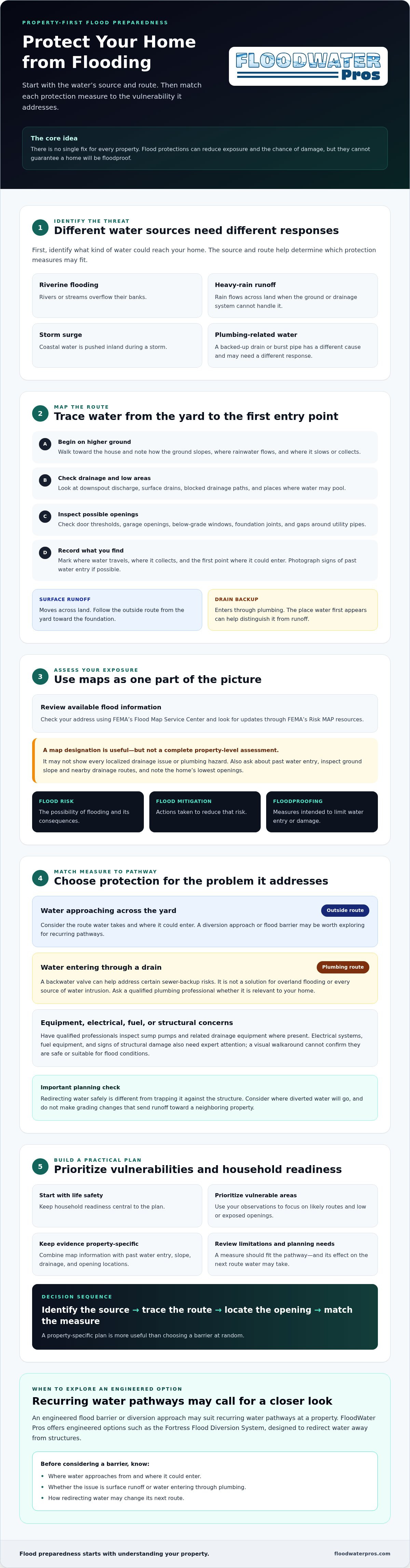
There’s no single fix for every property. Home flood protection can reduce exposure and the chance of damage, but it can’t guarantee a home will be floodproof. Begin by identifying the kind of water threat you face. Riverine flooding happens when rivers or streams overflow their banks. Heavy-rain runoff flows across land when rainfall exceeds what the ground or drainage system can handle. Storm surge pushes coastal water inland during a storm. Plumbing-related incidents, such as a backed-up drain or burst pipe, have different causes and may require a different response.
These pathways call for different protections. The broad range of flood mitigation strategies includes structural measures and planning approaches. The right choice depends on how water could reach your home.
Where can floodwater reach a house?
Water often follows the ground’s slope toward low points, but its source and route vary by property. Walk from higher ground toward the house and look for places where runoff gathers or flows. Check door thresholds, garage openings, below-grade windows, foundation joints, and gaps around utility pipes. These low or exposed points may let water in even if the main entrance stays dry.
Distinguish surface water from drainage backups. Runoff moves across the land; water from a backed-up drain enters through plumbing. Where water first appears can help identify which problem you’re dealing with, so note the entry point rather than treating every pathway as the same risk.
How to assess your home's flood exposure
Review your address using FEMA’s Flood Map Service Center and check for updates through FEMA’s Risk MAP resources. A map designation is useful, but it isn’t a complete property-level assessment. It may not show every localized drainage issue or plumbing hazard. Also ask about past water entry, inspect the ground slope and nearby drainage routes, and note the home’s lowest openings.
Keep the terms clear: flood risk is the possibility of flooding and its consequences; flood mitigation means actions taken to reduce that risk; floodproofing describes measures intended to limit water entry or damage. When considering how to protect home from flooding, start with evidence about your own property, not a generic checklist.
Trace Water Pathways Before Choosing Flood Protection for Your Home
Before deciding how to protect home from flooding, follow the water’s likely route. Start on higher ground and walk toward the foundation, observing where rainwater flows, slows, or collects. Look at the whole route, not only the spot where water appeared last time. A barrier placed at one opening may not address runoff approaching from another direction or water entering through a drain.
Inspect grading, drainage, and exterior openings
Notice whether the ground slopes toward the house or a low area, and check where downspouts discharge. Look for surface drains, blocked drainage paths, and places where water may pool. Then inspect openings below the surrounding grade, including basement windows and garage thresholds. Record what you find and, if possible, photograph signs of past water entry.
Redirecting water safely is different from trapping it against the structure. A barrier can change where water flows, so consider its next route as well. Don’t make grading changes that send runoff toward a neighboring property. For a closer look at how diversion planning accounts for water movement, read this flood diversion system design guide.
Check interior systems that may allow water in
Surface runoff is only one possible pathway. Water may also enter through floor drains or other plumbing connections during a sewer backup. A backwater valve can help address certain sewer-backup risks, but it isn’t a solution for overland flooding or every source of water intrusion. Ask a qualified plumbing professional whether it’s relevant to your home and how your drainage system should be assessed.
Where present, have a qualified professional inspect sump pumps and related drainage equipment. Electrical systems, fuel equipment, and signs of structural damage also need expert attention. A visual walkaround can’t confirm that these systems are safe or suitable for flood conditions.
Keep your notes practical: mark where water travels, where it collects, and the first point where it could enter. If water comes across the yard, the response may need to address the outside route. If it emerges from a drain, focus on the plumbing pathway. FloodWater Pros offers engineered options such as the Fortress Flood Diversion System, designed to redirect water away from structures. Once you’ve mapped the property’s vulnerabilities, explore engineered flood barrier options.
Compare Home Flood Protection Measures by the Water Problem They Address
The right measure depends on where water comes from and how it reaches the house. Clearing a drain may help with a maintenance issue, but it won’t stop water entering through a basement window or backing up through a sewer line. Use this comparison to match options to the pathway you identified, then confirm property-specific decisions with an appropriate professional.
| Measure | Pathway addressed | Planning needs | Key limitation |
|---|---|---|---|
| Drainage and maintenance | Surface water affected by blocked drains, gutters, or downspouts | Keep drainage routes clear and seek qualified advice about areas where water collects | Doesn’t address every runoff route, rising water, or sewer backup |
| Opening protection | Water approaching doorways, garage entrances, or other vulnerable openings | Identify exposed openings and choose an approach suited to their location and the expected water pathway | Protecting one opening won’t address water entering elsewhere |
| Deployable barriers | Water approaching selected exterior openings | Check how the barrier fits the opening and what preparation and deployment it requires | Temporary measures, including sandbags, aren’t substitutes for a property-specific plan and may not suit every flood source |
| Engineered diversion | Surface water that can be redirected away from a structure | Assess how water moves across the property and where it can be directed safely | Suitability depends on the site and water pathway; it isn’t a solution for every type of flooding |
Match the measure to the water route
For surface runoff, begin with maintenance: keep drainage routes clear and note where water accumulates. If water repeatedly approaches an exterior opening, a barrier or diversion concept may be worth assessing. Any redirection needs to account for where the water will flow next. Don’t assume one measure will work for every water source or condition. For a broader overview, see modern residential flood protection systems.
Doorway barriers and protection for below-grade openings address different access points. A measure that fits a front entrance may not suit a basement window. For sewer-backup concerns, a sump pump or backwater valve may be relevant, but each requires suitable design and maintenance. A backwater valve targets certain sewer-backup risks, not surface flooding. Ask qualified professionals about plumbing, structural changes, and electrical or fuel systems. Consult your insurer about coverage and policy decisions.
Understanding how to protect home from flooding means layering measures around the risks you’ve identified, not expecting one product to block every pathway. A property-specific assessment can help clarify whether an engineered barrier or diversion approach fits. Learn about engineered flood protection options.
Build a Home Flood Protection Plan Before the Next Warning
A useful plan separates work you can do ahead of time from decisions you may need to make during an emergency. Record what you’ve learned about your property, address the most vulnerable points first, and keep household readiness current. Broader property flood mitigation solutions can help you plan beyond one opening or one temporary measure.
What to do before flood conditions develop
Use this sequence to turn your observations into a workable plan:
- Document the risks. Photograph vulnerable areas and existing damage, and note where water has entered before. Keep records with your household documents.
- Prioritize protection. Identify which openings or systems need attention first, based on the water pathways you’ve observed.
- Arrange assessments. Ask qualified professionals to review structural, drainage, electrical, fuel, or plumbing concerns that require specialist judgment.
- Prepare essentials. Decide how household members will access important documents, medication, valuables, and supplies if you need to leave quickly.
Review your flood insurance policy directly with your insurer so you understand its terms, exclusions, and documentation process. Check current preparedness and flood guidance from FEMA and the National Weather Service, since recommendations and alerts can change. Keep the plan where household members can find it, and make sure everyone knows where essential items are stored.
What to do when flooding is imminent
Protecting property comes second. Prioritize people and pets, monitor official alerts, and follow evacuation instructions from local authorities. Don’t enter floodwater or touch electrical equipment in wet areas. If conditions become dangerous, leave rather than staying to move belongings or deploy equipment.
Barriers and pumps are property-protection measures, not substitutes for evacuation directions or emergency services. Decide in advance what you can safely do, and stop when conditions make it unsafe. A plan should reduce last-minute uncertainty, not pressure anyone to defend the building at personal risk.
If your preparation includes assessing whether an engineered barrier or diversion approach fits your property, explore FloodWater Pros flood protection options as one part of that planning process.
When Engineered Flood Barriers May Help Protect Your Home
An engineered barrier may be worth assessing when the same water pathway repeatedly threatens a vulnerable opening or directs runoff toward the structure. It isn’t a universal fix. First, determine whether the proposed system addresses the water route you’ve documented and suits the property’s layout and conditions. That’s how to protect home from flooding with a solution chosen for an identified vulnerability, not simply because a product is available.
What to ask before selecting an engineered flood barrier
A property-specific assessment can help you understand the fit before making a decision. Ask:
- Which water pathway is this system designed to address, and which risks are outside its purpose?
- How do the property’s layout, access, drainage, and surrounding conditions affect the design?
- What are the system’s limitations, and what maintenance and installation requirements should you plan for?
Clear answers help you compare a barrier approach with diversion or other measures. They can also reveal whether a proposed solution might redirect water toward another vulnerable area. Don’t assume a system suitable for one property will suit another, or that an engineered barrier replaces household preparedness or official safety instructions.
How FloodWater Pros supports the protection process
FloodWater Pros manages projects from engineering and manufacturing through professional on-site installation. Its offerings include the Fortress Flood Diversion System, designed to redirect water away from structures, as well as the Fortress Inflatable Flood Barrier and Fortress Transparent Liquid Paintable Flood Barrier. A property-specific assessment can help determine whether a diversion or barrier approach fits the water pathway and vulnerabilities identified at your home.
Before choosing, ask how the proposed product’s design relates to your site and request a clear explanation of its limitations and installation requirements. The goal is a considered layer of protection that addresses a known risk, not a promise that a home can never flood.
If recurring water pathways threaten your property, discuss a property-specific flood protection assessment with FloodWater Pros to explore whether an engineered barrier or diversion approach may be appropriate.
Turn Your Flood Risk Assessment Into a Stronger Plan
Protecting a home starts with understanding how water could reach it. Trace likely pathways, identify vulnerable openings, then match each risk with a practical measure. No single barrier addresses every source of flooding, so build your plan around the property and put household safety first.
That’s the foundation of how to protect home from flooding: assess the risks, prioritize vulnerable points, and prepare before a warning. If recurring runoff threatens your structure, an engineered diversion or barrier may be worth exploring as one layer of protection.
FloodWater Pros manages engineering, manufacturing, and professional installation. The Fortress Flood Diversion System is designed to redirect water away from structures. To explore whether an engineered approach may fit your home’s needs, discuss a property-specific flood protection plan with FloodWater Pros.
Frequently Asked Questions
How can I protect my home from flooding?
Start by identifying how water could reach your property, then prioritize the openings and systems most exposed. A practical plan for how to protect home from flooding includes checking flood-hazard information, reviewing past water entry, inspecting drainage and low openings, and preparing household essentials. Match each measure to the pathway it addresses. No single product can prevent every kind of flooding, so keep life safety and official evacuation guidance at the center of your plan.
What is the best way to keep floodwater out of a house?
There isn’t one best method for every house. The right approach depends on where the water comes from and where it could enter. Surface runoff near a garage may call for a different assessment than water backing up through a drain. Check the property’s drainage, vulnerable openings, and history of water entry before choosing a solution. An appropriate professional can help assess whether a barrier, diversion, or another measure fits the site.
Can sandbags protect a home from flooding?
Sandbags may help with some temporary, localized water pathways, but they aren’t a dependable answer for every property or flood source. Their usefulness depends on placement, conditions, and the route water takes. They may not address water entering through other openings, rising around the structure, or backing up through plumbing. Treat them as one possible temporary measure, not a substitute for a property-specific plan, household preparedness, or evacuation instructions.
Should I use a sump pump or a flood barrier?
Choose based on the water pathway. A sump pump is intended to manage water collected in a suitable drainage system, while a flood barrier is intended to address water approaching a vulnerable opening or area. Neither option solves every flooding problem. Have a qualified professional assess whether a sump pump is appropriate and how it should be maintained. FloodWater Pros offers engineered barrier products, including the Fortress Flood Diversion System, designed to redirect water away from structures.
Does a home outside a FEMA flood zone still need flood protection?
It may. FEMA flood-hazard maps are useful, but a map designation doesn’t capture every source of water risk at a specific property. Localized heavy-rain runoff, drainage issues, plumbing incidents, or water entering through low openings may still be concerns. Review current FEMA information, check the property’s water-entry history, and inspect drainage routes and vulnerable points. Consider asking a qualified professional to assess conditions the map alone may not show.
How do I stop water from entering through a garage or doorway?
First identify whether water approaches across the ground, collects near the opening, or comes from another route. Keep drainage paths clear and note how the ground slopes around the entrance. A barrier designed for an opening may be worth assessing, but its fit depends on the property and the water pathway. Don’t assume a doorway measure will protect other parts of the home. Ask a qualified professional about suitable options and installation needs.
What should I do if flooding is expected?
Prioritize people and pets, monitor official alerts, and follow evacuation instructions from local authorities. Prepare essential documents, medication, and household necessities only if you can do so safely and without delaying departure. Don’t enter floodwater or touch electrical equipment in wet areas. Barriers and pumps protect property, but they don’t replace evacuation or emergency services. Check current FEMA and National Weather Service guidance before flood conditions develop, and follow instructions as they change.


