
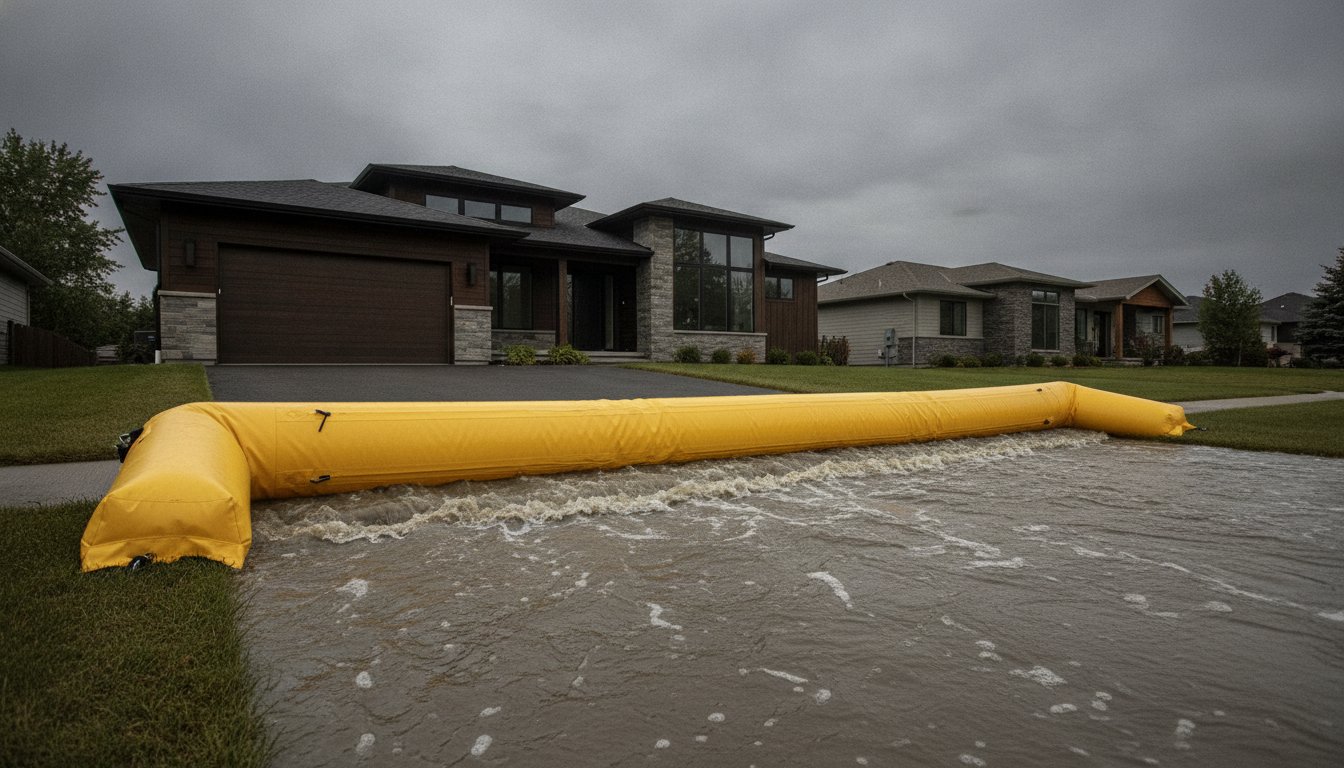
The affordable, water-activated tube sitting in your garage might feel like a safety net, but relying on it during a major surge could be a $25,000 mistake. According to FEMA, just one inch of water in your home leads to that exact average in damages. This inflatable flood barrier review exposes the high-stakes gamble many homeowners lose because they can't distinguish between a retail toy and a structural defense system.
You likely know the exhaustion of hauling heavy sandbags and the paralyzing confusion of decoding different barrier technologies. It's a heavy burden to carry when your property is at risk. We understand that vulnerability. We also know the relief that comes with a proven shield. This guide will help you discover which systems actually hold the line when the water rises and which ones fail under pressure.
We'll examine the critical differences between professional engineering and consumer DIY options. You'll learn about ANSI/FM 2510 standards, rapid deployment strategies, and how to choose a reusable investment that provides total perimeter security for years to come.
Key Takeaways
- Learn why traditional sandbags are a liability—and how modern inflatable systems provide a superior, rapidly deployable shield.
- Compare the structural limits of water-activated tubes against heavy-duty air-filled tech in our inflatable flood barrier review.
- Discover the engineering secrets behind seal integrity—ensuring no water seeps beneath your perimeter when the pressure is highest.
- Master the rapid deployment tactics needed to secure your property’s most vulnerable entry points in a matter of minutes.
- Understand the decisive gap between consumer-grade products and professional systems like the Fortress Inflatable Flood Barrier.
The Evolution of Flood Defense: Why Inflatables are Replacing Sandbags
The traditional sandbag is a relic of the past. It's heavy. It's porous. It's notoriously unreliable. For decades, property owners relied on these burlap sacks to hold back rising tides, but the results were often disastrous. Sandbags leak. They require massive teams of people to fill and stack. Worst of all, they absorb toxic runoff, turning into hazardous waste that's difficult and expensive to discard. This inflatable flood barrier review highlights why modern engineering has moved toward a more decisive form of protection.
An inflatable flood barrier is a sophisticated, rapidly deployable perimeter defense system. Unlike sand, which merely attempts to block water, these systems use structural integrity to divert it. The Evolution of Flood Defense has led us to high-strength polymers and air-filled chambers that can withstand immense pressure. These systems offer surgical precision in water diversion. They don't just sit there; they act as a reinforced shield for your property.
The weather patterns of 2026 don't allow for "good enough" solutions. Flash floods are more frequent and more intense. According to FEMA, just one inch of water can cause $25,000 in damage to your home. You need a system that's ready before the first drop hits the ground. When you read an inflatable flood barrier review, you'll see that reliability is the only metric that matters. Professional-grade options like the Fortress Inflatable Flood Barrier are engineered to meet this high-stakes reality.
The Logistics of Defense: Speed vs. Weight
Speed is your greatest ally during a flood warning. Deploying 100 sandbags is a back-breaking, hours-long ordeal. It's exhausting work that often fails because the wall wasn't finished in time. One inflatable barrier can do the work of hundreds of sandbags. It can be deployed in minutes by a single person. This rapid response saves critical time when every second counts. You're not just moving weight; you're deploying a strategic asset.
The Environmental Impact: Reusable Systems
Sustainability is no longer optional. Sandbags are a disposal nightmare. They trap bacteria, oil, and chemicals from floodwater. They end up in landfills by the thousands after every storm. High-grade PVC and polymer barriers offer a cleaner path forward. These systems are a one-time investment that lasts for years. They're easy to clean and even easier to store. The long-term ROI is undeniable. You aren't just buying a product; you're investing in a reusable fortress that protects both your property and the environment.
Decoding the Tech—Air-Filled vs. Water-Activated Systems
Understanding the mechanics of your defense is vital. A generic inflatable flood barrier review often misses the engineering gap between consumer convenience and professional fortification. You need to know if your barrier relies on chemical absorption or structural air pressure. These two technologies serve entirely different purposes during a crisis. One offers a temporary fix, while the other provides a long-term shield.
Water-Activated 'Socks'—The Entry-Level Option
These barriers use super-absorbent polymers that act like a heavy-duty sponge. They're ideal for minor nuisance flooding or garage door thresholds where water levels are low. However, they're typically single-use solutions. Once the gel expands, it stays heavy, wet, and prone to mold. They're difficult to dry out and nearly impossible to store effectively for the next season. In high-velocity scenarios, these "socks" often fail because they lack the structural anchoring and weight required to stay in place against a moving surge.
Material science dictates the lifespan of your defense. A high denier count in the fabric ensures the barrier won't tear when debris like branches or stones hit it. UV resistance is equally important. Without a UV-stable coating, the sun will degrade the polymer over time. This leads to cracks and eventual failure during a storm. For a deeper look at how these materials hold up under stress, see this Performance Review—Evaluating Capacity, Durability, and Reliability.
Air-Filled Structural Barriers—The Professional's Choice
Air-filled systems are a different breed of protection. The Fortress Inflatable Flood Barrier utilizes heavy-duty, PVC-coated polyester designed for high-stakes environments. These barriers don't just sit on the ground; they use the weight of the floodwater itself to create a tighter seal against the pavement. Internal baffles are the secret to this stability. These internal "walls" manage air pressure and prevent the barrier from rolling or collapsing under dynamic loads. This allows the system to maintain its shape even when struck by moving water or debris.
If you're protecting a large estate or a commercial perimeter, you need a system that offers more than just temporary absorption. You need a permanent investment in your property's safety. You can explore the technical specifications of the Fortress Inflatable Flood Barrier to see why air-filled technology is the preferred choice for serious, recurring flood threats. This inflatable flood barrier review confirms that when the water rises, structural integrity is the only thing that stands between your home and a total loss.
Performance Review—Evaluating Capacity, Durability, and Reliability
Performance isn't just a line on a spec sheet. It's the difference between a dry foundation and a total loss. When you read an inflatable flood barrier review, you must look beyond the height of the tube. You need to understand how the system reacts when thousands of pounds of water press against it. A professional grade barrier must manage both static weight and the sudden, violent impact of floating debris. This is where structural engineering separates the guardians from the gadgets.
Seal integrity is the silent hero of flood defense. Most failures don't happen because a barrier pops. They happen because water seeps underneath the contact point. Professional systems solve this through high friction coefficients and weighted anchoring. While skeptics worry about barriers sliding away, the reality is based on physics. A properly designed system uses the downward pressure of the floodwater to "lock" itself to the pavement. This creates a watertight gasket effect that stops seepage in its tracks.
Durability also means resisting the environment itself. Floodwater is rarely clean. It's a toxic soup of motor oil, lawn chemicals, and abrasive silt. Retail grade barriers often degrade when exposed to these pollutants. In contrast, the Fortress Inflatable Flood Barrier is built from materials designed to withstand chemical runoff without losing structural integrity. It's a system built for the grit of a real world crisis.
Hydrostatic Pressure and Stability
Hydrostatic pressure is the force exerted by standing water. To counter this, professional barriers often utilize an L-shaped design principle. This allows the weight of the water to rest on a leading "apron" or flange, which prevents the barrier from overturning. Maintaining a safe ratio of barrier height to water depth is critical. For maximum stability, most engineers recommend keeping the water level at or below 80 percent of the barrier's total height. This ensures the center of gravity remains low and the perimeter remains unshakeable.
Real-World Durability: Beyond the Lab
Puncture resistance is the primary gap between professional and retail grade materials. Consumer "socks" use thin films that a single sharp branch can compromise. Professional systems utilize heavy-duty, PVC-coated polyester that resists tears even under high tension. UV degradation is another silent killer. Cheap barriers fail after a single summer because the sun makes the material brittle. A high-quality inflatable flood barrier review should always check for UV-stable coatings. To ensure your investment lasts for years, follow strict maintenance protocols: clean the surface after every use, dry it completely to prevent mold, and store it in a cool, dark environment away from rodents.

Deployment Strategy—How to Fortify Your Perimeter in Minutes
Success is determined before the first cloud appears. A thorough inflatable flood barrier review reveals that the most effective defenses aren't just about the product. They're about the plan. You must identify your property's low-water entry points. These are the topographical dips where water naturally flows and pools. Staging your barriers in these high-risk zones ensures you aren't scrambling when the sirens sound. Preparation turns a potential disaster into a managed event.
Surface preparation is the foundation of a watertight seal. You must clear the contact patch of all rocks, branches, and debris. As established earlier, seal integrity relies on a tight gasket effect against the ground. Even a small pebble can create a gap that allows thousands of gallons to seep through. Once the surface is clear, roll out the barrier and begin the inflation process. Use a high-volume air pump to reach the manufacturer's recommended pressure. Overlap the sections to create a continuous, impenetrable line of defense. Pay close attention to corners. These are the most common points of failure in DIY setups.
Strategic Redirection vs. Retention
Defense is about control. It's often better to move water around a structure than to try and hold it back entirely. This is the core philosophy of a professional diversion system. Use the natural slope of your yard to guide the surge away from your foundation. You must also consider where that water goes next. Managing end-of-line discharge prevents you from accidentally flooding a neighbor or creating a secondary pool against another vulnerable wall. If your perimeter is complex, you can consult with the experts at FloodWater Pros to design a custom diversion strategy that utilizes your land's natural terrain.
Post-Flood Recovery Procedures
The crisis ends, but the work of a vigilant guardian continues. Safe deflation is your first step. You must wash away silt, salt, and contaminants before the material dries. These pollutants can become abrasive if left on the barrier. Once clean, perform a meticulous inspection for micro-punctures. Even a professional-grade inflatable flood barrier review won't save you next time if your equipment is compromised. Use the "Ready-Set" storage method. Fold the barrier so it's ready to unroll and inflate at a moment's notice. This proactive maintenance ensures your investment remains a reliable shield for years to come.
The Fortress Advantage—Professional-Grade Inflatable Protection
Choosing the right defense is a high-stakes decision. This inflatable flood barrier review has highlighted the critical differences between a temporary fix and a permanent shield. While retail products often offer a false sense of security, the Fortress Inflatable Flood Barrier is engineered for high-stakes environments. It's a professional-grade asset designed for those who can't afford to lose. You aren't just buying a tube of air. You're investing in a sophisticated diversion system built to withstand the violent reality of a 2026 storm surge.
The distinction between a product and a system is vital. A product is something you drop in a driveway and hope for the best. A system is a coordinated defense strategy tailored to your specific land. Fortress offers customization options for unique property layouts and commercial storefronts. Whether you're protecting a low-lying estate or a high-traffic urban entrance, our technology adapts. This flexibility allows for a total perimeter lockdown. It transforms your property from a vulnerable target into an impenetrable fortress.
Engineered for Resilience
Resilience is built into the DNA of our technology. Fortress systems utilize military-grade materials that resist the chemical soup of modern floodwaters. We don't use thin films or porous fabrics. We use heavy-duty, reinforced polymers that maintain their integrity under immense hydrostatic pressure. These barriers are a core component of the broader Fortress Flood Diversion System. By integrating inflatable tech with our other diversion tools, we create a multi-layered defense. Professional engineering dictates the placement and sizing of every unit. We analyze the topography. We predict the flow. We ensure the water goes where we want it, not where it wants to go.
Expert Installation: The Final Layer of Defense
A one-size-fits-all retail purchase ignores the reality of your terrain. A slight incline or a rough patch of concrete can compromise a DIY seal. That's why professional on-site assessment is the final layer of your defense. Our experts identify the "low-water" entry points we discussed earlier. We test every seal. We secure every anchor. This meticulous approach removes the element of human error during a crisis. You won't be second-guessing your setup when the rain starts. You'll have the profound relief that comes from knowing a vigilant guardian has fortified your perimeter. Don't leave your property's future to chance. Secure your perimeter with a Fortress Inflatable Flood Barrier today.
Secure Your Future Against the Next Surge
The stakes are too high for half-measures. You've seen how traditional sandbags fail and why entry-level water-activated tubes aren't enough for a real crisis. True security requires structural integrity and a proven strategy. This inflatable flood barrier review makes one thing clear: professional engineering is the only way to ensure total perimeter defense. You need a system that acts as a vigilant guardian for your home or business.
We've mastered the niche of protection through proprietary Fortress engineering. Our systems aren't just products; they're comprehensive shields engineered for rapid deployment. When the water rises, you shouldn't be left guessing if your defense will hold. With national professional installation available, you can trust that every anchor is secure and every seal is tested. It's time to move from a state of concern to a state of total readiness. You have the power to safeguard what's valuable. Fortify your property with the Fortress Inflatable Flood Barrier today. You've prepared for the worst; now you can finally experience the relief of true security.
Frequently Asked Questions
Do inflatable flood barriers actually work for major hurricanes?
Professional systems provide a formidable defense against rising water and moderate storm surges. They are engineered to divert the energy of the flood away from your foundation. However, no temporary barrier is designed to withstand a Category 5 direct hit or massive, high-velocity debris impacts. They serve as a vital shield for redirection. This makes them a critical component of a comprehensive property protection plan.
How long does it take to inflate a professional flood barrier?
Speed is your greatest tactical advantage during an emergency. Most professional-grade barriers can be fully inflated in 5 to 15 minutes using a high-volume air pump. This rapid deployment allows you to fortify your entire perimeter while neighbors are still struggling with heavy sandbags. It's a decisive, efficient answer to sudden flash flood warnings. Rapid inflation ensures you're ready before the first drop of rain hits the ground.
Can I leave an inflatable flood barrier out all season?
Permanent seasonal exposure isn't recommended for your defense system. While professional-grade materials feature UV-stable coatings, prolonged exposure to the sun and environmental debris can eventually cause unnecessary wear. It's better to deploy the barrier only when a specific threat is imminent. This proactive approach preserves the structural integrity of the polymer. It ensures your investment remains in peak condition for many years of reliable service.
What happens if an inflatable flood barrier gets punctured during a storm?
Redundancy is built into the design of high-stakes defense systems. Professional barriers often utilize internal baffles or multi-chamber engineering to manage air pressure. If a puncture occurs in one section, the surrounding chambers continue to hold the line and maintain the barrier's shape. This prevents a total collapse of your perimeter. It's a critical safety feature that separates a professional system from a vulnerable, single-chamber consumer product.
How do inflatable barriers stay in place without being bolted down?
Physics provides the necessary anchoring for your property. The system utilizes the downward hydrostatic pressure of the floodwater itself to lock the barrier firmly against the ground. This creates a high-friction seal that prevents sliding without the need for permanent bolts or hardware. This inflatable flood barrier review confirms that properly weighted seals are unshakeable under pressure. It's an elegant, structural solution that provides total security without damaging your driveway.
Are these barriers reusable, or do they need to be replaced after one flood?
These systems are a long-term investment in your property's safety. Unlike sandbags that absorb toxic contaminants and must be discarded after one use, professional barriers are fully reusable. You simply wash away the silt and pollutants, dry the material, and store it for the next season. They're engineered for recurring threats and repeated deployments. One investment provides a reliable shield that protects your foundation for years to come.
Can one person deploy a Fortress Inflatable Flood Barrier alone?
A single individual can achieve total perimeter security in minutes. The Fortress Inflatable Flood Barrier is specifically designed for rapid, solo deployment. You don't need a team of laborers to haul heavy materials or fill burlap sacks. This efficiency allows you to focus on other critical preparation tasks before the storm hits. It's a professional-grade solution that empowers the individual property owner to act as a vigilant guardian.
How much water can an inflatable barrier actually hold back?
Capacity is determined by the specific height of your chosen system. Most engineers recommend that the floodwater level stays at or below 80 percent of the barrier's total vertical height. This ensures the center of gravity remains low and the unit remains stable against the force of the surge. Choosing the correct size for your property's risk profile is essential. This prevents overtopping and maintains the structural integrity of your perimeter.


