
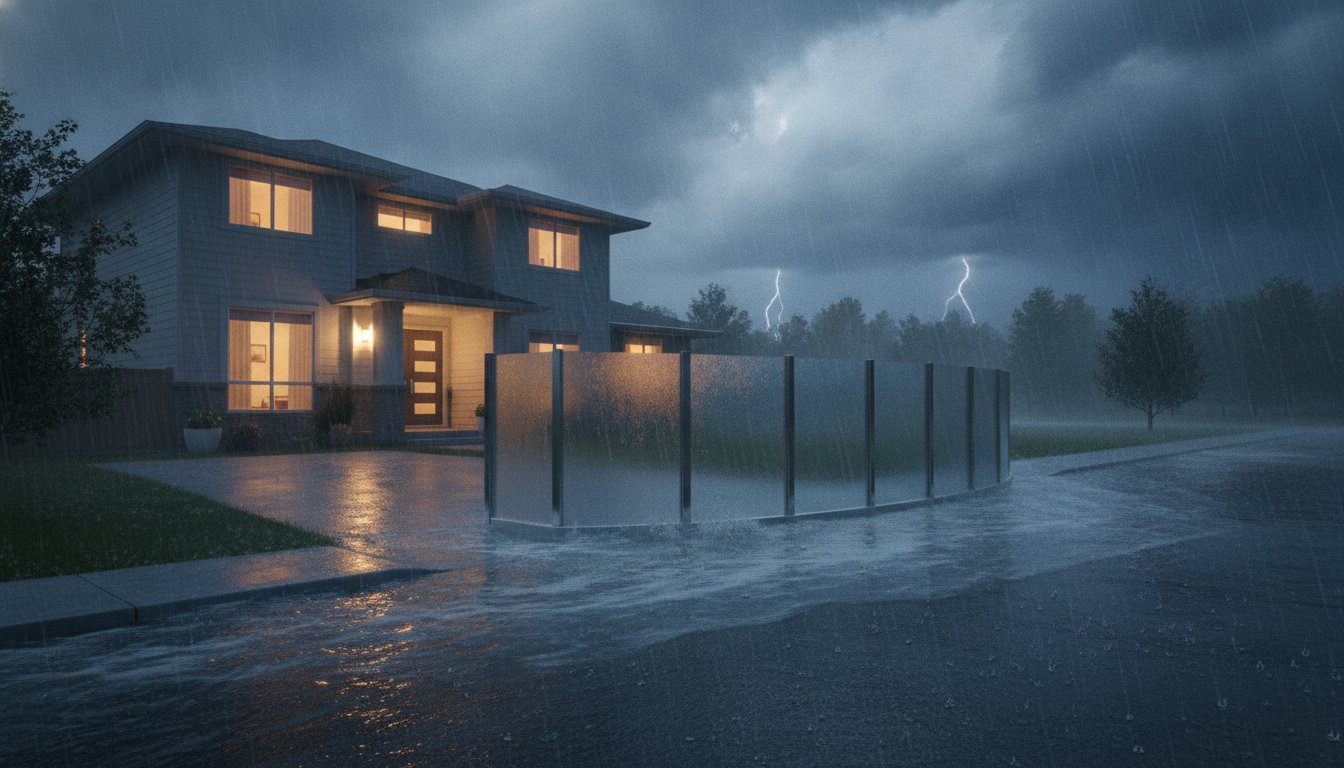
Just one inch of floodwater in a 2,000-square-foot home can cause approximately $25,000 in damage. That single inch represents more than just a repair bill; it's the loss of irreplaceable memories and the crushing weight of a ruined sanctuary. You've likely spent storm seasons watching the clouds with a knot in your stomach, wondering if your current defenses will hold or if you'll spend the night hauling heavy sandbags. It's an exhausting cycle of anxiety that no homeowner should have to endure. Modern residential flood protection systems have evolved to meet this high-stakes reality, shifting the focus from desperate reaction to strategic fortification.
You deserve a home that acts as a fortress without looking like a bunker. This 2026 guide reveals how to secure your property using advanced engineering that prioritizes both aesthetics and impenetrable strength. We'll explore the latest innovations in the field, including the Fortress Inflatable Flood Barrier for rapid deployment and the Fortress Transparent Liquid Paintable Flood Barrier that protects without being seen. You'll discover how to implement a Fortress Flood Diversion System to move water away from your foundation and gain the total peace of mind that comes from knowing your home is truly ready for whatever the climate brings.
Key Takeaways
- Discover why traditional sandbags are a liability in 2026 and how engineered dry floodproofing provides a superior shield against rising waters.
- Master the three pillars of modern residential flood protection systems to balance rapid deployment with invisible, high-performance defense.
- Learn the critical physics of water redirection and why diversion is safer for your home's structural integrity than holding water back.
- Identify the path of least resistance on your property to select a system that matches your specific landscape and deployment capacity.
- Understand why hardware alone isn't enough and how professional site analysis transforms a product into a complete security solution.
Why Traditional Home Flood Defense Is Failing in 2026
The era of relying on luck is over. In 2026, the climate demands more than hope; it requires a strategy. A modern residential flood protection system isn't just a barrier. It's an engineered suite of tools designed for dry floodproofing. Waiting for the water to arrive before acting is a gamble you'll likely lose. FEMA data shows that just one inch of water in a 2,000-square-foot home causes $25,000 in damage. That's a high price for a "wait and see" approach. You must shift from reactive panic to proactive fortification. High-performance residential flood protection systems allow you to become the vigilant guardian your home needs.
The Failure of Traditional Methods
Sandbags represent a bygone era. They are a reactive relic that often fails when the stakes are highest. They are labor-intensive, heavy, and notoriously difficult to store. Even worse, sandbags are rarely watertight. They allow seepage that ruins flooring and breeds mold. They also become environmental hazards after a storm, often carrying toxic contaminants from floodwaters. You can't rely on a porous bag of sand to protect your family's sanctuary.
The physics of modern storms also makes old methods obsolete. Hydrostatic pressure is the immense weight of standing water pressing against your walls. Water weighs approximately 62.4 pounds per cubic foot. This force can buckle foundation walls and shatter standard windows. Simple plywood or loose barriers can't withstand this relentless energy. Without professional flood management strategies, your home's structure is at risk of catastrophic failure. The emotional toll of this vulnerability is immense. Watching the clouds shouldn't cause a panic attack. You deserve the relief that only engineered resilience provides.
Defining 2026 Protection Standards
Standards for home defense have reached a new level of sophistication. Compliance with FEMA/NFIP Technical Bulletin 3 is now the benchmark for serious protection. This standard ensures that barriers can handle the specific pressures and debris impacts of a major event. It isn't just about stopping water; it's about insurance eligibility and long-term structural integrity. Modern systems are now designed to be reusable, rapidly deployable, and multi-functional. They don't require a construction crew to install when the rain starts falling. Dry floodproofing is the practice of making a structure watertight below the design flood elevation. This single concept is the foundation of modern security. By adopting these standards, you transform your property from a vulnerable target into an impenetrable shield.
The Three Pillars of Modern Residential Flood Protection
Effective residential flood protection systems aren't one-size-fits-all. You need a strategy tailored to your home's unique vulnerabilities. We categorize these defenses by deployment speed, visibility, and strategic intent. It's about choosing the right weapon for the right threat. Whether you face a slow-rising river or a sudden flash flood, your defense must be absolute. Modern engineering has moved beyond simple barriers to provide a comprehensive shield that respects your property's aesthetics while ensuring total security.
Diversion Systems: Redirecting the Threat
Diversion is the most proactive approach to home defense. Rather than waiting for water to strike your foundation, you change its path. The Fortress Flood Diversion System uses engineered channels and barriers to move volume away from your structure entirely. This protects your perimeter. It keeps the pressure off your walls. Redirection is strategically superior to simple blocking. When you look for ways to flood-proof your house, redirection should be your first line of defense. It stops the problem before it reaches your door. By managing the flow of water across your landscape, you prevent the hydrostatic pressure that leads to catastrophic foundation failure.
Inflatable and Rapid Deployment Barriers
Speed is your greatest ally when a storm surge hits. The Fortress Inflatable Flood Barrier allows you to deploy heavy-duty protection in a matter of minutes. These systems are ideal for driveways, garage doors, and low-lying entry points where water tends to pool. They provide a massive, water-filled seal that stays in place even under heavy current. Unlike sandbags, these modern residential flood protection systems are fully reusable. They don't end up in a landfill after a single event. You can store them compactly in a garage or shed, ready to be deployed at the first sign of a warning. They offer military-grade security that any homeowner can manage alone.
Invisible Defense: Liquid Paintable Barriers
High-end architecture requires a defense that doesn't ruin curb appeal. The Fortress Transparent Liquid Paintable Flood Barrier is the invisible shield for luxury properties. This advanced coating seals porous surfaces like brick, stone, and door frames against infiltration. It's a "set and forget" solution that utilizes modern chemical engineering to create a watertight bond. You won't even know it's there until the water starts to rise. This invisible layer prevents seepage through micro-cracks and seams that traditional barriers might miss. Building a comprehensive defense starts with understanding your property's specific needs. You can explore these advanced barrier options to find your ideal fit and secure your peace of mind.
Redirection vs. Retention: Why Diversion Is the Superior Strategy
Understanding the physics of water is the first step toward true security. Most homeowners view flood defense as a simple battle of strength. They believe a thicker wall or a taller barrier is the only answer. This is retention. It's the practice of holding water in place. While sometimes necessary, retention is inherently risky. It forces your home to bear the full weight of the flood. Modern residential flood protection systems offer a more intelligent path. They utilize the principle of redirection. By moving the water, you remove the threat. It's the difference between catching a punch and stepping out of its way.
The Science of Hydrostatic Pressure
Water weight is a relentless force. Standing water exerts pressure in all directions. As depth increases, this hydrostatic pressure compounds against your walls. If you hold back three feet of water, you're asking your foundation to withstand thousands of pounds of lateral force. This pressure finds every micro-crack. It forces moisture through solid concrete. The Fortress Flood Diversion System changes this dynamic. It guides the volume of water away from the structure. This reduces the load on your home's integrity. Redirection ensures that the energy of the flood is spent elsewhere. It's an engineering-first approach that prioritizes the long-term health of your property.
Protecting the Foundation
The safest place for floodwater is away from your foundation. Keeping water ten feet from your walls is far superior to stopping it at the doorstep. When water pools against a house, it saturates the surrounding soil. This leads to soil expansion and loss of stability. Saturated earth can't support a heavy slab effectively. This results in foundation cracking, shifting, and chronic seepage issues. You shouldn't wait for water to touch your brickwork. Strategic landscaping can serve as a powerful partner to your residential flood protection systems. By using your property's natural contours to feed into diversion channels, you create a dedicated safe zone. This proactive strategy ensures your foundation remains dry and stable. It provides the profound relief of knowing the threat has been successfully bypassed.

Engineering Your Defense: How to Select the Right System
Choosing the right residential flood protection systems is a high-stakes decision. It requires more than a cursory glance at a flood map. You need a strategic framework to ensure your home remains an impenetrable sanctuary. Every property has a unique "path of least resistance." This is where water naturally flows due to topography and gravity. Identifying these channels is your first step. Look at your driveway slopes and the pitch of your yard. If you don't guide the water, the water will guide itself into your living room.
Next, you must honestly assess your deployment capacity. A heavy-duty barrier is worthless if you can't set it up alone during a midnight storm. Consider who will be on-site to activate the defense. If you prefer a "set and forget" approach, invisible barriers like the Fortress Transparent Liquid Paintable Flood Barrier are the superior choice. They offer constant protection without the need for manual labor. For high-traffic areas like garages, the Fortress Inflatable Flood Barrier provides a rapid-response solution that takes minutes, not hours, to secure. Balancing these needs with your home's aesthetics ensures you don't sacrifice curb appeal for security.
Property Vulnerability Assessment
A true defense starts with a meticulous analysis of entry points. Doors are obvious, but window wells and foundation vents are often overlooked. You need to understand your property's elevation profile. Are you facing a sudden flash flood or a slow-rising river? Each threat requires a different tactical response. A flash flood demands rapid diversion, while a rising river requires long-term dry floodproofing. Professional analysis removes the guesswork. DIY solutions often fail because they miss the subtle vulnerabilities that water always finds. You can schedule a professional site analysis to identify these hidden risks before the next season begins.
Compliance and Insurance Benefits
Engineering your defense also has financial advantages. Professional systems can significantly impact your NFIP premiums or private insurance costs. Many providers recognize the value of engineered resilience over temporary fixes. You must ensure your chosen system meets local building codes and community flood management standards. FEMA-compliant systems like Fortress provide the highest tier of insurance-recognized protection. This compliance acts as a shield for both your property and your financial future. By investing in professional-grade fortification, you move from a state of vulnerability to a state of unwavering readiness.
The Fortress Advantage: Professional Engineering and Installation
Buying a piece of equipment is not the same as building a defense. Hardware alone is a half-measure. Without professional engineering, even the strongest barrier can fail at the most critical moment. A true residential flood protection system must be integrated into the specific topography and structural realities of your property. This is where FloodWater Pros excels. We don't just sell products. We deliver a complete architecture of resilience. Our process moves from a rigorous site analysis to a precision final installation. You aren't just buying a shield; you're hiring a vigilant guardian.
Fortress systems are designed and manufactured in the USA. They are built for military-grade resilience. In a world of increasing environmental volatility, "good enough" is a dangerous standard. Our systems utilize advanced material science to ensure impenetrability under extreme conditions. This isn't about temporary fixes. It's about a permanent shift in your home's defensive posture. When the storm arrives, you won't be questioning your equipment. You'll be standing behind a proven fortress.
Engineered for Resilience
The proprietary technology behind the Fortress Flood Diversion System represents a breakthrough in water management. We focus on the physics of flow. By using materials that withstand massive debris impact and relentless pressure, we ensure your home stays dry. This military-grade durability is essential for the high-stakes weather patterns of 2026. Every component is tested to exceed standard safety margins. The result is a profound relief. You gain the peace of mind that comes from a system designed specifically for the unique vulnerabilities of your residence. It's a structural answer to a structural threat.
The Full-Service Solution
Professional installation is the final, critical step in the chain of protection. A small gap in a seal can render the most advanced barrier useless. Our experts ensure every connection is watertight and every diversion channel is perfectly pitched. We handle the technical complexities so you don't have to. Beyond the initial setup, we provide ongoing support to ensure your fortress is always ready for action. You've seen the risks of inaction. You know the cost of failure. It's time to take the first step toward a dry, secure future. You can secure your home with a professional Fortress system from FloodWater Pros and finally experience the tranquility of total readiness.
Secure Your Legacy Against the Rising Tide
The landscape of home defense has shifted permanently. You now understand that reactive measures like sandbags are no longer enough to protect what you value most. By prioritizing redirection over simple retention and utilizing engineered diversion, you ensure the structural integrity of your foundation remains intact. Modern residential flood protection systems offer more than just a barrier. They provide a sophisticated, multi-layered shield that works with your property's unique topography. This is the difference between hoping for the best and being prepared for the worst.
True security requires a partner who understands the high stakes of environmental threats. FloodWater Pros combines proprietary Fortress Diversion Technology with professional engineering and installation to deliver a full-service solution. With national service coverage, we are ready to transform your home into an impenetrable fortress. Don't wait for the next storm to test your limits. Fortify your property today; consult with the experts at FloodWater Pros. You've taken the first step toward total readiness. Now, secure the peace of mind you deserve. Your sanctuary is worth the investment.
Common Questions About Residential Flood Protection
Are residential flood barriers as effective as sandbags?
Modern flood barriers are significantly more effective than sandbags because they provide a watertight seal and are engineered to withstand intense hydrostatic pressure. Sandbags are porous, labor-intensive, and often fail to stop seepage that leads to mold and structural rot. Engineered systems like the Fortress Inflatable Flood Barrier offer a reliable, reusable defense that doesn't buckle under the weight of rising tides. They provide military-grade security that sandbags simply can't match.
How much does a professional residential flood protection system cost?
The cost of a professional system depends on your property's size and specific risk profile. While individual components like flood vents or backwater valves have established industry price ranges, a complete engineered defense is a customized investment. You should view this as a strategic move to prevent the $25,000 in damage that just one inch of water can cause. Professional systems provide long-term value by shielding your home from catastrophic financial loss.
Can I install a flood diversion system myself?
You shouldn't attempt to install a complex diversion system yourself because even minor errors in pitch or sealing can lead to total failure. Professional installation ensures that your residential flood protection systems are integrated correctly into your property's topography. Engineering experts identify hidden vulnerabilities that a DIY approach will likely miss. This provides the absolute security your home requires when the stakes are highest.
What is the best flood barrier for a garage door?
The Fortress Inflatable Flood Barrier is the superior choice for garage doors due to its ability to span wide openings and create a heavy-duty seal. It deploys quickly to block water from entering low-lying entry points. This system provides high-level resilience while remaining easy to store and reuse. It's the most practical rapid-response solution for large residential spans that are traditionally difficult to secure.
Is there a flood barrier that doesn't ruin my home's appearance?
You can protect your home without sacrificing curb appeal by using the Fortress Transparent Liquid Paintable Flood Barrier. This invisible coating seals porous surfaces and seams against water infiltration without changing the look of your architecture. It's a "set and forget" defense that provides impenetrable security. It remains completely hidden from view until a storm arrives, preserving your property's aesthetic value.
How long does it take to deploy an inflatable flood barrier?
An inflatable flood barrier can be fully deployed in just a few minutes. This rapid-response capability is critical during flash flood events where every second counts. Because these systems are lightweight and use water or air to create a massive seal, they allow a single person to secure a property quickly. You avoid the physical exhaustion of manual labor while gaining immediate protection.
Does flood protection equipment reduce home insurance premiums?
Many insurance providers, including the NFIP and private carriers, offer reduced premiums for homes with recognized flood mitigation equipment. Implementing professional-grade residential flood protection systems demonstrates a proactive commitment to risk reduction. You should consult with your insurance agent to see how specific engineered barriers and diversion systems impact your coverage rates. It's an investment that often pays for itself through lower policy costs.
How do I know which flood protection system is right for my property?
The best way to identify the right system is through a professional property vulnerability assessment. Experts analyze your home's elevation, drainage capacity, and the specific "path of least resistance" that water follows on your land. This site-specific data allows you to choose between diversion, rapid-deployment barriers, or invisible coatings. A tailored defense ensures you aren't over-engineering or leaving critical entry points exposed.


