

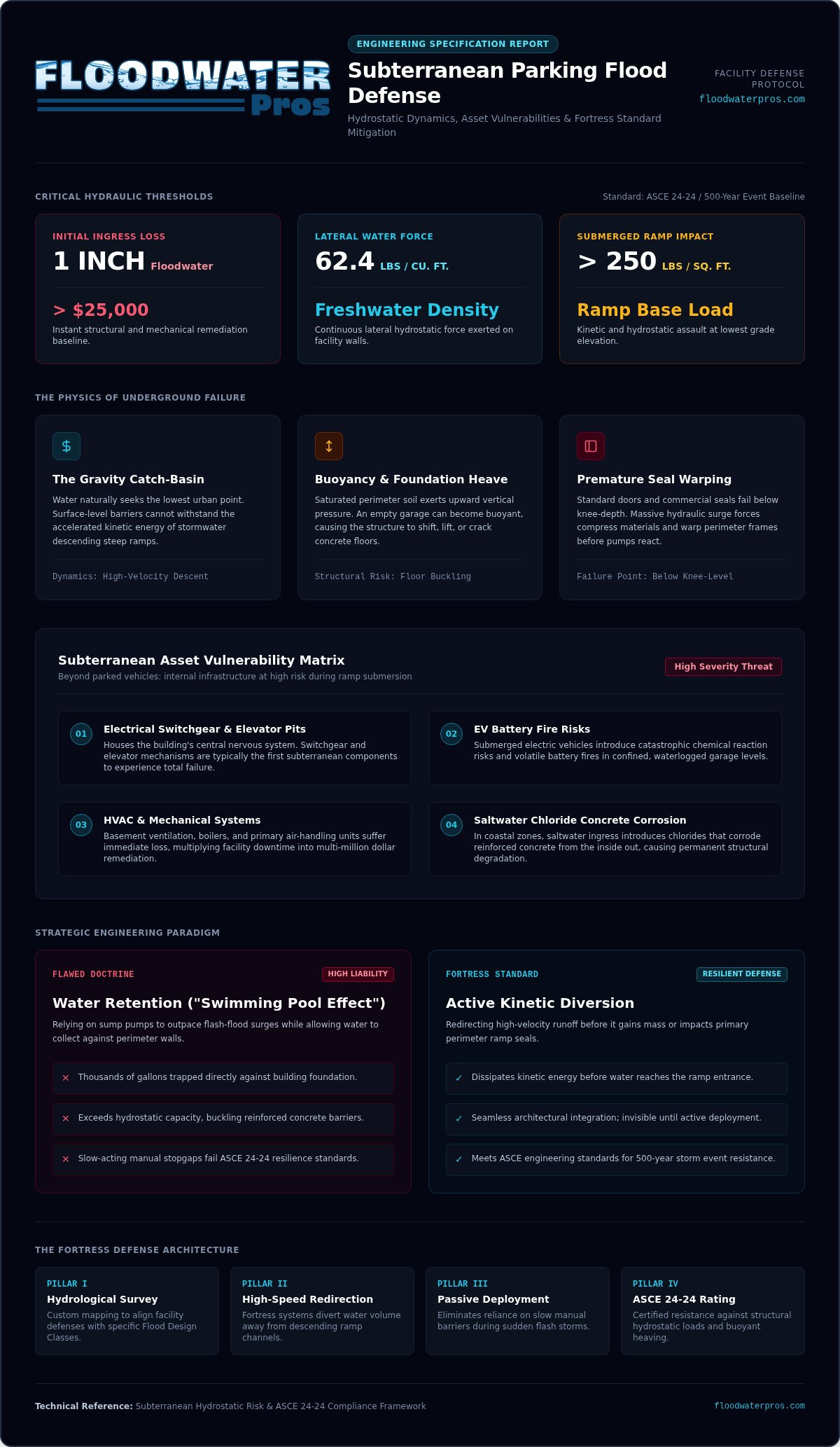
Did you know that just one inch of floodwater can trigger over $25,000 in structural and mechanical remediation costs? For subterranean assets, the stakes are even higher. Freshwater exerts a staggering 62.4 pounds per cubic foot of hydrostatic pressure against your facility. Without specialized subterranean parking flood barriers, your underground garage becomes a high-speed collection point for municipal runoff. You have likely felt that familiar dread during a sudden cloudburst. You wonder if your team can deploy manual defenses before the ramp submerges and your assets are lost.
It's a valid concern. Traditional sandbags and slow-acting manual planks often fail to meet the rigorous ASCE 24-24 engineering standards required for modern resilience. This guide will help you master the science of underground fortification. You'll discover why engineered diversion is the only reliable way to safeguard multi-million dollar assets from catastrophic water pressure and EV battery fire risks. We will examine passive deployment systems and invisible integrations that provide total peace of mind without compromising your building's aesthetic. From hydrostatic load ratings to the latest FEMA requirements, here is how you turn a vulnerable basement into an impenetrable fortress.
Key Takeaways
- Understand why underground garages act as natural catch-basins and how hydrostatic pressure threatens structural integrity.
- Evaluate subterranean parking flood barriers based on deployment speed and their ability to handle high-velocity redirection.
- Master the strategic shift from water retention to active diversion to prevent energy build-up against ramp entrances.
- Identify the critical components of a professional hydrological survey to ensure your defense system matches your property's flood design class.
- Discover why transitioning from DIY stopgaps to engineered Fortress standards is the only way to achieve military-grade security and total tranquility.
The Subterranean Threat: Why Underground Parking Requires Specialized Defense
Underground parking isn't just a convenience; it's a structural vulnerability. Gravity dictates that water seeks the lowest point. In dense urban environments, that point is almost always your garage ramp. During a flash flood, these ramps transform into high-speed waterways within seconds. Standard flood barrier systems designed for surface-level storefronts cannot withstand the concentrated kinetic energy of water rushing down a steep incline. You need a defense built for the physics of descent.
The most significant danger is often invisible. It's hydrostatic pressure. Freshwater exerts a relentless 62.4 pounds per cubic foot of lateral force. At the base of a submerged ramp, this pressure can quickly exceed 250 pounds per square foot. This isn't a simple leak. It's a structural assault. Without specialized subterranean parking flood barriers, this immense weight can buckle reinforced concrete walls or heave garage floors upward. The force is absolute and unforgiving.
Many property owners mistakenly rely on retention. They hope their sump pumps can outpace the surge. This "swimming pool effect" creates a massive liability for the building foundation. When you hold thousands of gallons of water against a structure, you invite catastrophic failure. Diversion is the only strategic answer. You must redirect the energy of moving water before it gains the mass to breach your perimeter. Effective subterranean parking flood barriers act as a shield, turning a potential basin into an impenetrable fortress.
The Physics of Underground Water Ingress
Water density creates an exponential threat as depth increases. In subterranean chambers, the pressure isn't just lateral; it's vertical. An empty garage can actually become buoyant. If the surrounding soil is saturated, the entire structure can shift or "float," leading to massive structural cracks. Standard doors and commercial seals aren't engineered for these specific loads. They often fail when water levels are still below the knee, as the seals compress and the frames warp under the weight of the surge.
High-Value Asset Vulnerability
Vehicle damage is the most visible loss, but it's only the beginning. Subterranean levels house the central nervous system of your building. Electrical switchgear, elevator pits, and HVAC units are usually the first components to fail. If your facility is in a coastal zone, saltwater ingress introduces chlorides that corrode reinforced concrete from the inside out. This leads to long-term degradation that can cost millions to remediate. Subterranean flood risk is a structural threat that compromises the long-term integrity of the entire building, not just a temporary nuisance for parked cars.
Engineered Barrier Technologies: Comparing the Fortress Arsenal
Defense is not a single event. It is a calculated strategy. For underground assets, relying on a single point of failure is a gamble you will eventually lose. Modern protection requires a multi-layered approach because every entry point faces different hydraulic loads. The Fortress line provides this essential versatility. These systems are engineered to meet the latest ASCE flood-resistant design and construction standards. They ensure your structure remains watertight while managing the immense energy of a 500-year storm event. High-performance subterranean parking flood barriers are the only way to transform a vulnerable ramp into a secure perimeter.
The Fortress Flood Diversion System stands as the flagship of this arsenal. It is built for high-velocity redirection. Most barriers simply attempt to block water, but this system manages kinetic energy. It guides the surge away from the ramp entrance, reducing the direct impact on your building's primary seals. This technology also prioritizes aesthetic integrity. You don't have to sacrifice your property's visual soul for military-grade security. These barriers integrate seamlessly into your architecture, remaining invisible until they are called to duty. Professional protection means looking at the whole picture. If you're unsure which layer your property needs, it's time to consult with a structural defense expert to build your custom plan.
Fortress Inflatable Flood Barriers for Rapid Response
When a cloudburst hits, minutes determine the scale of your loss. The Fortress Inflatable Flood Barrier is the definitive answer for rapid response. It's constructed with heavy-duty materials designed for the abrasive environment of commercial garage ramps. You can secure a massive perimeter in minutes, not hours. This deployment speed is vital for multi-unit residential buildings where staff resources are often limited during a crisis. It's a proactive shield that offers total peace of mind without requiring permanent, bulky hardware.
Fortress Transparent Liquid Paintable Flood Barrier
The most dangerous threats are often the smallest. Traditional hardware can leave "micro-gaps" where extreme water pressure forces its way into your facility. The Fortress Transparent Liquid Paintable Flood Barrier seals these vulnerabilities with an invisible defense. This liquid-applied coating is perfect for pedestrian entryways and utility access points. It creates a hermetic seal that prevents seepage without altering the building's appearance. It is a critical secondary layer for any comprehensive strategy involving subterranean parking flood barriers.
Diversion vs. Retention: The Strategic Path of Resistance
Retention is a battle of attrition. When you rely on a barrier to simply hold back a surge, you are testing the limits of your building's structural seals. It is a temporary stall. Diversion is a permanent solution. By redirecting the energy of moving water away from the ramp entrance, you eliminate the threat before it becomes a burden. This is the core philosophy behind high-performance subterranean parking flood barriers. They don't just stand there. They act as a strategic shield for your property.
The Fortress Flood Diversion System masters the path of least resistance. It acknowledges a simple truth: water will always find a way. If you don't give it a path, it will make one through your garage door. By engineering a specific route for the surge, you significantly reduce the load on your internal pump systems. Preventing ingress entirely is far more efficient than trying to pump out a submerged basement. You move the water. You save the building.
The Redirection Framework
Effective defense uses perimeter barriers to guide water toward municipal drainage or natural runoff zones. Holding the line is dangerous because it concentrates massive hydrostatic stress on a single point. Moving the line spreads that load. This redirection framework can be integrated with your existing landscaping for a seamless, aesthetic look. You get the protection of a military-grade fortification without the visual clutter of industrial hardware. It is a sophisticated way to manage urban runoff before it reaches your subterranean parking flood barriers.
Case for Engineered Diversion
Standing water is heavy. It exerts relentless pressure that can lead to foundation cracks and long-term seepage issues. Diverted flow is managed. When you compare the structural stress of a submerged ramp to a redirected stream, the choice is clear. The long-term ROI of diversion is found in the foundation damage you never have to repair. You avoid the "swimming pool effect" that compromises the integrity of your entire facility. Diversion is the active defense that preserves structural longevity. It turns a chaotic environmental event into a controlled, manageable flow.
Implementing Your Defense: A Buyer’s Selection Framework
Selecting the right subterranean parking flood barriers is a strategic decision that goes beyond simple height requirements. You aren't just buying hardware. You're investing in a structural shield. The process begins with a professional hydrological survey of every entry point. You must understand exactly how water will behave on your specific ramp before the first drop falls. Without this data, you're merely guessing. Once you've mapped the threat, you can determine your deployment constraints. If your facility is unstaffed during overnight hours, a manual system is a liability. You need passive or rapid-response technology that activates without human intervention.
Aesthetic impact is the next critical factor. In 2026, property owners no longer have to choose between a bunker-like appearance and military-grade security. High-performance systems now offer invisible integration. However, this beauty must be backed by a professional flood barrier system installation. A barrier is only as strong as its seal against the existing structure. Finally, you must verify that your chosen defense is rated for current environmental projections. 500-year storm events are becoming the new baseline for urban resilience. To ensure your property is truly ready, schedule an engineering consultation with our defense specialists today.
Assessing Your Deployment Reality
Staffing levels often dictate the success or failure of a flood plan. If you don't have 24/7 on-site teams, manual stop-log systems are a gamble. For estates or multi-unit residential buildings with limited staff, the case for inflatable flood barriers for homes and luxury properties is clear. They allow for rapid, high-strength protection that one person can manage. Maintenance is equally vital. Your fortress must be ready for the unexpected. Annual inspections of EPDM gaskets and drainage weep holes ensure that when the surge arrives, your perimeter remains hermetic.
Regulatory and Insurance Considerations
Compliance is a structural necessity. Under FEMA Technical Bulletin 6, subterranean garages are classified as basements. This means standard NFIP coverage is often capped at $500,000, which rarely covers the total loss of mechanical systems and high-value vehicles. Implementing certified subterranean parking flood barriers helps you meet ASCE 24-24 standards. This engineering certification is often required to qualify for private excess flood lines that offer the multi-million dollar coverage your assets require. Professional installation by a registered engineer isn't just a best practice. It is a requirement for warranty validity and regulatory peace of mind.
The Fortress Standard: Professional Installation and Mastery
Defense is a chain. It is only as strong as its weakest link. In the high-stakes environment of underground parking, a single seal failure means total defeat. This is why DIY attempts or generic contractors are not an option for subterranean parking flood barriers. You need a strategic partner that understands the nuances of hydrostatic force and structural redirection. FloodWater Pros provides this mastery. We manage the entire lifecycle of your defense, from the initial engineering design to the final on-site fortification. We act as a shield against uncertainty, ensuring your property remains an impenetrable fortress.
Our national reach ensures that expert protection is available regardless of your location. We maintain a specialized focus on commercial flood barriers for high-value assets across the United States. We don't just provide hardware. We provide a comprehensive structural answer to environmental threats. By choosing a Fortress system, you're choosing a standard of excellence that has mastered the specific niche of underground protection. It's time to stop reacting to the weather and start dictating your own security.
The Full-Service Lifecycle
Every ramp is unique. Engineering the right solution starts with customizing Fortress technology to match your specific slope and drainage profile. Our manufacturing process uses precision materials built to withstand the extreme pressures of 2026 environmental projections. We don't leave the final result to chance. Professional installation by our specialized teams ensures the seal is absolute and the system is flawless. This integrated approach is the only way to guarantee the hermetic performance required for subterranean parking flood barriers.
Secure Your Assets Today
The cost of inaction is catastrophic. One night of municipal drain failure can wipe out millions in assets and compromise your building's structural integrity. You've seen the vulnerability. Now, you can experience the profound relief of security. Starting your consultation for a Fortress system is the first step toward total peace of mind. We provide the seasoned wisdom and unwavering readiness you need to face the next storm with confidence. Don't wait for the water to rise. Fortify your subterranean parking with FloodWater Pros today.
Secure Your Foundation: The Future of Subterranean Defense
The threat to your underground assets is absolute, but your response can be even stronger. True resilience relies on the strategic mastery of diversion rather than simple retention. By managing the kinetic energy of a surge, you protect the structural integrity of your building and prevent the catastrophic "swimming pool effect" that compromises foundations. Implementing engineered subterranean parking flood barriers is no longer an optional upgrade. It is a fundamental requirement for any facility facing the intensified climate extremes of 2026. You now have the framework to move beyond temporary fixes toward a permanent, structural answer.
Don't leave your property's future to chance or unproven stopgaps. Our national installation teams are ready to deploy proprietary Fortress diversion technology tailored to the unique hydraulic loads of your site. This is your path to total tranquility and military-grade security. You can move from a state of constant concern to a state of unwavering readiness. Consult with a Fortress Engineering Expert today to finalize your defense strategy. Your assets deserve the highest standard of protection, and your peace of mind is our primary mission.
Frequently Asked Questions
What is the best flood barrier for a subterranean garage ramp?
The Fortress Flood Diversion System is the premier choice for subterranean garage ramps because it manages kinetic energy rather than just blocking flow. Most subterranean parking flood barriers fail because they rely on retention. This system uses engineered redirection to guide water away from the entrance. This reduces the hydrostatic load on your building. It transforms a vulnerable incline into a controlled waterway that bypasses your primary assets.
How long does it take to deploy an inflatable flood barrier?
You can deploy the Fortress Inflatable Flood Barrier in just a few minutes. This rapid response time is critical when a flash flood hits without warning. The system is engineered for ease of use, allowing a single person to secure a wide perimeter quickly. It's a high-strength solution that provides immediate protection for commercial ramps or residential driveways. This speed ensures your facility remains defended even when staff resources are limited during a crisis.
Can flood barriers be installed on existing parking structures?
Yes, we specialize in retrofitting existing parking structures with advanced defense systems. Our national installation teams handle the entire process from engineering design to on-site fortification. We customize the Fortress Flood Diversion System to match your specific ramp profile and drainage capacity. This ensures a hermetic seal against your existing concrete walls. You don't need a new building to achieve a military-grade level of security and structural tranquility.
Do subterranean flood barriers require power to operate?
The Fortress Flood Diversion System is an engineered physical barrier that does not require electricity to maintain its structural integrity. It relies on physics and high-strength materials to redirect water flow. While some automated systems exist, our focus is on fail-safe solutions that work even during the total power outages common in 2026 storm events. This ensures your underground defense remains active when your building's primary electrical systems are most vulnerable.
What is the difference between a flood gate and a flood diversion system?
A traditional flood gate acts as a dam that holds water in place, which creates massive hydrostatic pressure against your structure. In contrast, the Fortress Flood Diversion System is an active defense that redirects water toward municipal drainage. Diversion is a permanent solution because it prevents the "swimming pool effect" from ever developing. You move the water's energy away from your building. This preserves the long-term integrity of your reinforced concrete and foundation.
Is the Fortress paintable barrier really invisible?
The Fortress Transparent Liquid Paintable Flood Barrier is designed to be virtually invisible once applied. It provides a clear, hermetic seal that protects pedestrian entryways and utility gaps without altering the building's aesthetic. This is a critical secondary layer for any comprehensive defense strategy. It seals the micro-gaps where traditional hardware often fails under extreme pressure. You get military-grade security without sacrificing the visual soul or architectural design of your property.
How do I maintain my flood barrier system for long-term reliability?
Long-term reliability requires an annual inspection and maintenance plan. You must ensure that all gaskets and seals remain pliable and free of debris. We recommend cleaning the drainage weep holes and checking for any sediment blockages in the diversion channels. Regular maintenance is a structural necessity for subterranean parking flood barriers. It ensures that your perimeter remains flawless and ready to perform when the next storm event challenges your facility's defenses.
Will installing a flood barrier lower my property insurance?
Many insurers recognize the value of engineered defense systems like the Fortress line. While we don't provide insurance services, a certified system that meets national engineering standards often qualifies a property for lower premiums or excess flood lines. These barriers prove to underwriters that you're a proactive partner in risk management. You should consult with your insurance provider to see how professional installation and structural fortification can improve your specific policy terms.


