
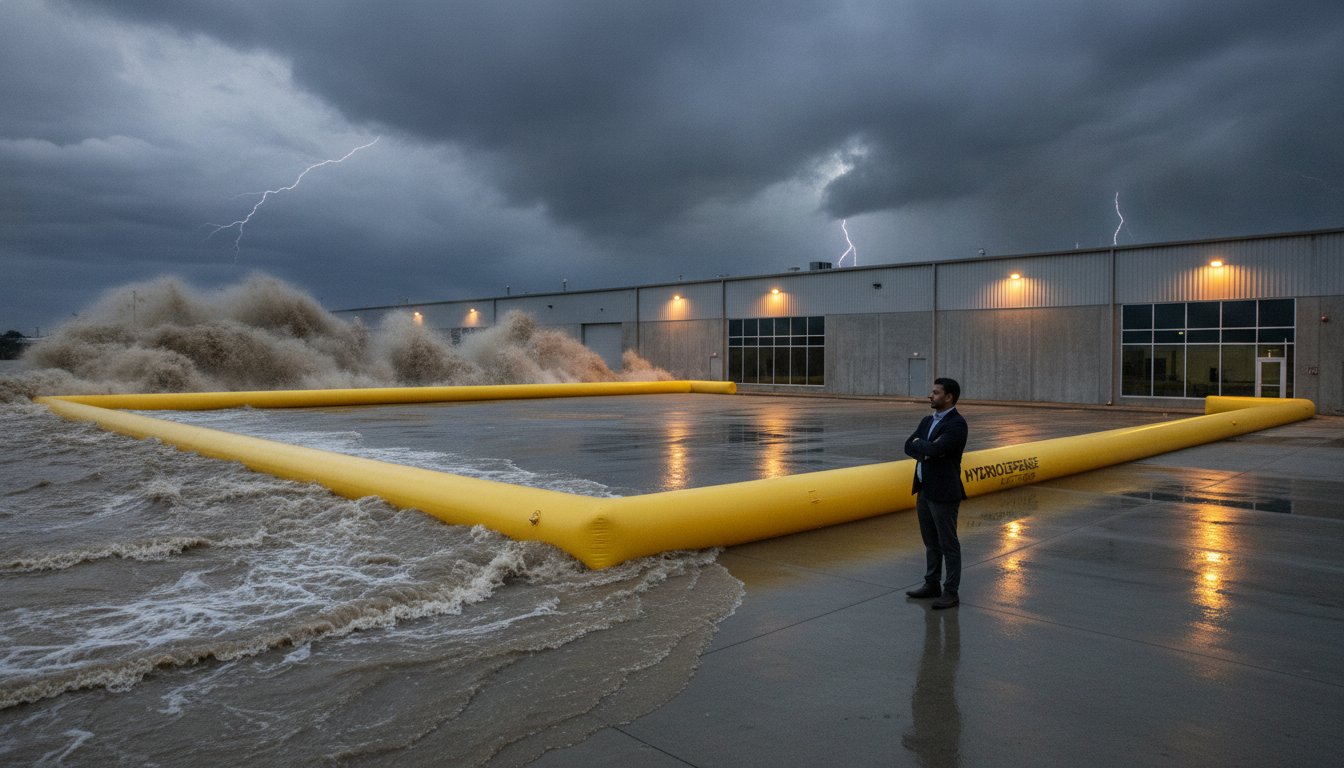
A $500,000 insurance payout won't rebuild your legacy after a storm surge guts your facility. In 2026, the NFIP commercial coverage limits remain capped at half a million dollars, a figure that barely scratches the surface for most industrial operations. You've likely felt that knot of anxiety as storm clouds gather. You know that sandbags and residential-grade shutters are just theater. True commercial hurricane flood protection requires a shift from reactive cleanup to proactive fortification. It's the difference between hoping for the best and ensuring your doors open the morning after the surge.
This guide reveals how to deploy an impenetrable shield around your infrastructure using systems tested to the ANSI/FEMA 2510-2020 standard. You'll discover how engineered diversion systems and rapid-deployment barriers, like the Fortress Inflatable Flood Barrier, create a military-grade perimeter against catastrophic flooding. We'll explore the strategic benefits of "set and forget" defenses and the Fortress Transparent Liquid Paintable Flood Barrier. These solutions don't just stop water. They protect your inventory, minimize business downtime, and can even help lower those rising insurance premiums. It's time to stop fearing the forecast and start commanding your environment.
Key Takeaways
- Shift your strategy from simple water retention to active redirection to keep surges away from your facility perimeter.
- Learn how the Fortress Inflatable Flood Barrier provides rapid deployment when storm surges threaten critical business assets.
- Understand why true commercial hurricane flood protection must address business interruption costs, not just physical structural damage.
- Discover the "Predict, Plan, Prepare" framework designed to transition facility managers from reactive panic to engineered readiness.
- Explore how the Fortress Transparent Liquid Paintable Flood Barrier adds a discrete yet impenetrable layer to your building's defense ecosystem.
The Rising Stakes of Hurricane Flooding for Commercial Property
The sky turns a bruised purple. The wind begins to howl. For most, this is a weather event. For you, it's a structural audit conducted by nature itself. Effective commercial hurricane flood protection is no longer an optional line item. It is a multi-layered defense strategy designed to neutralize the combined assault of storm surge, torrential rain, and hurricane-force winds. In 2026, the United States faces over $32 billion in annual flood-related damages. Relying on residential-grade solutions in this high-stakes environment is a recipe for catastrophic failure.
Beyond the visible waves lies a silent predator: hydrostatic pressure. When floodwaters surround a building for prolonged periods, they exert thousands of pounds of force against the foundation and walls. This pressure can cause structural shifts, cracked slabs, or even total foundation collapse. It doesn't take a massive wave to destroy a business; it only takes the persistent, heavy weight of standing water. Engineered systems are the only way to counter these industrial-scale loads.
Storm Surge vs. Flash Flooding: Two Different Enemies
You aren't fighting one type of water. You're fighting two. Flash floods are high-velocity events. They carry debris like battering rams and strike with sudden, kinetic force. Storm surges are different. They are massive, slow-rising mountains of water that exert relentless hydrostatic pressure. A barrier designed for a quick rainstorm will buckle under a surge. This is why a one-size-fits-all approach fails. You must identify critical entry points before the storm arrives. Loading docks, glass storefronts, and underground utility conduits are the primary targets for water ingress. Understanding the different types of flood barriers is the first step in building a resilient perimeter that can handle both velocity and weight.
The Financial Impact of Inadequate Protection
Business interruption is the true killer of commercial enterprises. Physical repairs are expensive, but downtime is often fatal to the bottom line. In 2026, the National Flood Insurance Program (NFIP) caps commercial building coverage at $500,000. For most industrial facilities, this figure barely covers the inventory lost in the first hour of a breach. Professional mitigation is a strategic financial move. It directly impacts your ability to secure private excess insurance and can lead to lower premiums. True success is defined by business continuity. It means being operational 72 hours faster than the competition because your interior stayed dry while others were submerged.
Redirection vs. Retention—The Engineering Shift in Flood Defense
Traditional flood defense relies on a flawed premise: retention. Most facility managers believe that the goal is to hold water back. They stack sandbags. They build temporary plywood dams. They wait for the impact. This approach is fundamentally reactive and dangerous. When you try to retain water, you force your building to bear the full hydrostatic load of the surge. You turn your facility into a levee. Redirection represents the vital engineering evolution. Instead of bracing for the weight of the water, you guide its energy around your assets. This perimeter-first strategy is the gold standard for commercial hurricane flood protection in 2026. It preserves the integrity of your structural envelope by ensuring the water never reaches your foundation in the first place.
How the Fortress Flood Diversion System Works
The Fortress Flood Diversion System utilizes the water’s own kinetic energy to move it along a predetermined path. It’s a sophisticated application of fluid dynamics. By installing these systems as part of your commercial landscaping, you create a permanent, invisible shield. These aren't just barriers; they're engineered channels. They're built to withstand the high-velocity debris, such as shattered glass, uprooted trees, and building materials, that defines a hurricane environment. Traditional walls often crumble under the impact of a floating vehicle or heavy timber. Redirection systems are designed to deflect that energy. If you're looking to upgrade your facility's resilience, you can consult with a protection specialist to map your site's unique topography and identify the most effective diversion paths.
Why "Holding the Line" Isn’t Enough
Dams eventually fail. When you try to hold back a surge, you invite seepage. Water is patient. It finds micro-cracks in masonry and gaps in door seals. Even if the water stays outside, the soil beneath your commercial footings becomes saturated. This leads to massive erosion and foundation instability. The "retention-only" model is a gamble with your building's structural future. Redirection prevents this saturation. It keeps the ground dry and the footings firm. It’s a proactive choice that acknowledges the reality of modern storm intensity. For facility managers looking for more resources on comprehensive organizational planning, FEMA's Ready Business toolkit offers excellent foundational guidance on preparing your workforce and operations for the physical challenges of a disaster.
The difference between these two philosophies is the difference between survival and recovery. Retention leads to a long, expensive cleanup and potential structural condemnation. Redirection leads to business as usual. By moving the water away from the site, you protect the soil, the slab, and the skeleton of your business. It is the only way to achieve true commercial hurricane flood protection in an era of rising tides and unpredictable surges.
Selecting the Right Barrier for High-Stakes Storm Surge
Choosing a defense system isn't just about the height of the water. It's about the speed of the threat. With 30% of commercial properties now located in high-risk flood zones, the decision between permanent fixtures and deployable systems has never been more critical. A steel flood gate might offer immense strength; however, it can also be a logistical nightmare for a facility with high daily traffic. Conversely, a system that takes twelve hours to deploy is useless when a storm shifts course at the last minute. Effective commercial hurricane flood protection requires a balance of three factors: deployment velocity, storage footprint, and protection height. You must match the tool to the specific vulnerability of your site.
The global flood barrier market is projected to reach $2 billion by 2026. This growth is driven by a shift toward modular and rapid-response technologies. Static defenses like concrete walls often fail to account for the unique entry points of modern architecture. Loading docks, pedestrian entrances, and glass storefronts each require a tailored approach. You don't just need a wall. You need an adaptable shield that integrates with your existing operations without compromising security.
Rapid Deployment: The Fortress Inflatable Advantage
When every second counts, the Fortress Inflatable Flood Barrier is the definitive answer. These systems utilize water or air to create a heavy, pressurized seal against the ground. They are designed for large perimeters where traditional sandbagging would take days and dozens of laborers. A small team can secure an entire warehouse perimeter in a fraction of the time. Because they are inflatable, these barriers offer a minimal storage footprint. They remain tucked away in compact containers until the moment of crisis. They are the ultimate rapid-response tool for facilities that cannot afford to maintain permanent, unsightly obstructions. Once the surge recedes, they are simply drained, rolled up, and stored for the next season. It is a repeatable, reliable cycle of protection.
Invisible Defense: Paintable Liquid Barriers
High-end retail and flagship offices face a unique challenge. They need military-grade security without the military-grade aesthetic. Steel gates and heavy panels destroy the customer experience and brand image. The Fortress Transparent Liquid Paintable Flood Barrier solves this conflict. This advanced coating is applied directly to glass, masonry, and metal frames. It is virtually invisible to the naked eye. It works by sealing the micro-fissures and porous surfaces that traditional gates often miss. During a hurricane, water doesn't just come through the door; it seeps through the building materials themselves. This liquid barrier creates a continuous, waterproof skin. It provides the peace of mind of a total seal while maintaining the architectural beauty of your facility. It is the sophisticated choice for the urban environment.

Strategic Deployment—Preparing Your Facility Before the Warning
Readiness is the only barrier that never leaks. In the high-stakes environment of 2026, waiting for a hurricane warning to arrive before acting is a gamble with your company's survival. True commercial hurricane flood protection is a year-round protocol. It requires a shift from reactive panic to a disciplined "Predict, Plan, Prepare" framework. This methodology ensures that when the surge arrives, your team isn't reading a manual for the first time. They are executing a battle-tested strategy. Fortification is a process, not a product. It begins long before the first clouds gather on the horizon.
The Site Assessment: Finding the Vulnerabilities
A site assessment is a forensic search for failure points. Most facility managers focus on the front doors, but water is a relentless opportunist. It finds the secret highways into your infrastructure. HVAC vents, cable conduits, and elevator pits are common ingress points that go unprotected until it is too late. You must also account for site topography. The way water moves across your parking lot during a surge is dictated by elevation changes that are often invisible to the naked eye. Professional engineering audits identify these "low-path" threats. They ensure your Fortress Flood Diversion System is positioned to intercept and redirect energy effectively. Without this data, even the strongest barrier is just an expensive obstacle that water will eventually flow around.
Staff Training and Deployment Drills
Technology is only as reliable as the hands that deploy it. You need a clear chain of command that functions under the stress of an approaching storm. Who is responsible for the Fortress Inflatable Flood Barrier? Who verifies the integrity of the seals on the Fortress Transparent Liquid Paintable Flood Barrier? These questions must be answered in a written Emergency Response Plan (ERP). Deployment drills, or "dry-runs," are essential to identify friction points. If it takes your team four hours to secure the perimeter during a sunny afternoon, it will take six hours in the wind and rain. A barrier is only as effective as its deployment speed. To ensure your facility is truly ready for the next season, schedule a professional site audit to map your specific vulnerabilities and train your personnel on rapid-response protocols.
Integration is the final step. Your flood defense strategy shouldn't exist in a vacuum. It must be woven into your broader ERP, alongside fire safety and data recovery. When your flood barriers are part of a cohesive ecosystem of protection, you achieve more than just a dry floor. You achieve the confidence of total readiness. This strategic preparation is what allows a business to weather the storm and return to full operation while others are still assessing the damage. It is the professional standard for business continuity in a volatile climate.
Fortress Protection—The Professional Standard for Business Continuity
Choosing the right partner is the final, most critical step in your defense strategy. FloodWater Pros operates as a strategic guardian for national commercial interests. We understand that your infrastructure is more than just a building; it is the physical manifestation of your company’s legacy and the engine of your daily operations. Our "Fortress" suite of products provides a comprehensive defense ecosystem that addresses every vulnerability identified in your site audit. From the perimeter-first Fortress Flood Diversion System to the rapid-response Fortress Inflatable Flood Barrier and the high-aesthetic Fortress Transparent Liquid Paintable Flood Barrier, we offer an impenetrable shield against the unpredictable. This isn't just about stopping water. It's about ensuring your business stakeholders can face the next hurricane season with absolute confidence. We move you from a state of vulnerability to a position of strength.
Custom Manufacturing for Unique Infrastructure
Off-the-shelf solutions are built for the average home, not the complex footprint of a modern industrial facility. Commercial environments require a level of durability that standard retail products simply cannot provide. Every Fortress system is manufactured with marine-grade materials designed to withstand the corrosive nature of saltwater and the physical impact of storm-driven debris. Whether you manage a single flagship location or a national portfolio of multi-state enterprises, our team provides the engineering expertise and professional installation required for industrial-scale resilience. We don't just ship parts; we build fortifications. Our national reach ensures that your entire organization receives the same high standard of commercial hurricane flood protection, regardless of geographic location. We adapt our technology to your specific structural envelope, ensuring a perfect, pressurized seal every time.
Secure Your Legacy with FloodWater Pros
The return on investment for high-grade mitigation is measured in more than just avoided repair costs. It is seen in the preservation of client trust, the protection of sensitive inventory, and the stabilization of insurance premiums. In 2026, the cost of inaction is too high to ignore. Investing in proprietary Fortress technology is a commitment to the long-term health and viability of your organization. It is the professional standard for facility managers who refuse to let environmental volatility dictate their operational future. Your property deserves more than a temporary fix; it deserves a permanent, engineered solution. Don't wait for the next surge to test your readiness. Defend your commercial assets with the Fortress Flood Diversion System and secure the future of your infrastructure today. Professional consultation is the first step toward a dry, secure, and resilient tomorrow.
Command Your Environment: Fortify Your Infrastructure Today
The 2026 hurricane season demands more than hope. It demands a decisive shift in strategy. You now understand that true defense isn't about holding water back; it's about redirecting its energy. By combining rapid-deployment tools with invisible liquid coatings, you create a multi-layered shield that protects your assets and your brand's reputation. Securing your facility with engineered commercial hurricane flood protection is the ultimate hedge against environmental volatility.
FloodWater Pros provides the proprietary Fortress technology required to withstand extreme storm surges. Our full-service manufacturing and professional installation ensure that your defense is as robust as your business. With national coverage for multi-site enterprises, we act as your vigilant guardian across every location you manage. It's time to transition from a state of concern to a state of command.
Request a Professional Site Assessment and Fortress System Quote
Step into the next storm season with the peace of mind that only a Fortress can provide. Your legacy is worth the fortification. You're ready to weather any surge.
Frequently Asked Questions
How long does it take to deploy a commercial flood barrier system?
Deployment speed depends on the specific technology you choose. A Fortress Inflatable Flood Barrier can be fully operational in under an hour with a small team. In contrast, the Fortress Flood Diversion System is often integrated into your site's permanent landscaping, meaning it's always ready to redirect energy without manual intervention. Speed is the primary factor in surviving a sudden surge.
Can flood barriers be used for glass storefronts without damaging the aesthetics?
Yes. The Fortress Transparent Liquid Paintable Flood Barrier was engineered specifically for high-end retail and flagship offices. It creates an invisible, waterproof skin over glass and metal frames. This allows your brand to remain visible and your store to stay attractive while providing a military-grade seal. It's the perfect solution for urban environments where bulky gates are not an option.
What is the difference between a flood gate and a flood diversion system?
A flood gate is a localized defense meant to plug a specific entry point like a door. The Fortress Flood Diversion System is a broader, perimeter-first strategy. It uses the water's own energy to move it along a predetermined path away from your building. This reduces the hydrostatic pressure on your foundation and prevents the saturation that often leads to structural failure.
Are inflatable flood barriers strong enough to withstand hurricane-force winds?
They are. These barriers utilize water or air pressure to create a massive, weighted seal against the ground. This downward force makes them incredibly stable during high-wind events. When properly deployed as part of your commercial hurricane flood protection strategy, they resist both the kinetic impact of debris and the relentless pressure of a rising storm surge.
Do commercial flood barriers require professional installation?
We strongly recommend professional installation for all industrial-grade systems. While some modular barriers are designed for rapid deployment by your staff, the initial engineering audit and anchor placement must be precise. Professional setup ensures that every component meets the ANSI/FEMA 2510-2020 standard. It eliminates the risk of seal failure when the stakes are at their highest.
Can the Fortress Paintable Flood Barrier be removed after the hurricane season?
It can. This liquid barrier is designed for seasonal or temporary application. It provides an impenetrable shield during the peak of the storm season and can be peeled or cleaned away once the threat has passed. This flexibility makes it an ideal choice for businesses that need high-level commercial hurricane flood protection without making permanent changes to their building's facade.
How do I determine the required height for my commercial flood protection?
Height requirements are determined by an engineering audit of your local base flood elevation (BFE) and historical surge data. In 2026, many local ordinances, such as those in Houston, require protection to reach 24 inches above the 500-year flood elevation. We analyze these specific regulations and your site's topography to ensure your barriers are tall enough to handle the worst-case scenario.
Will installing a flood barrier system reduce my commercial insurance premiums?
Often, it will. Insurance underwriters look for proven mitigation strategies when assessing risk. Demonstrating that you have an engineered system like the Fortress Flood Diversion System can lead to lower premiums. It also makes your business a better candidate for private excess flood insurance, which is essential since NFIP coverage is capped at $500,000 for commercial buildings.


