
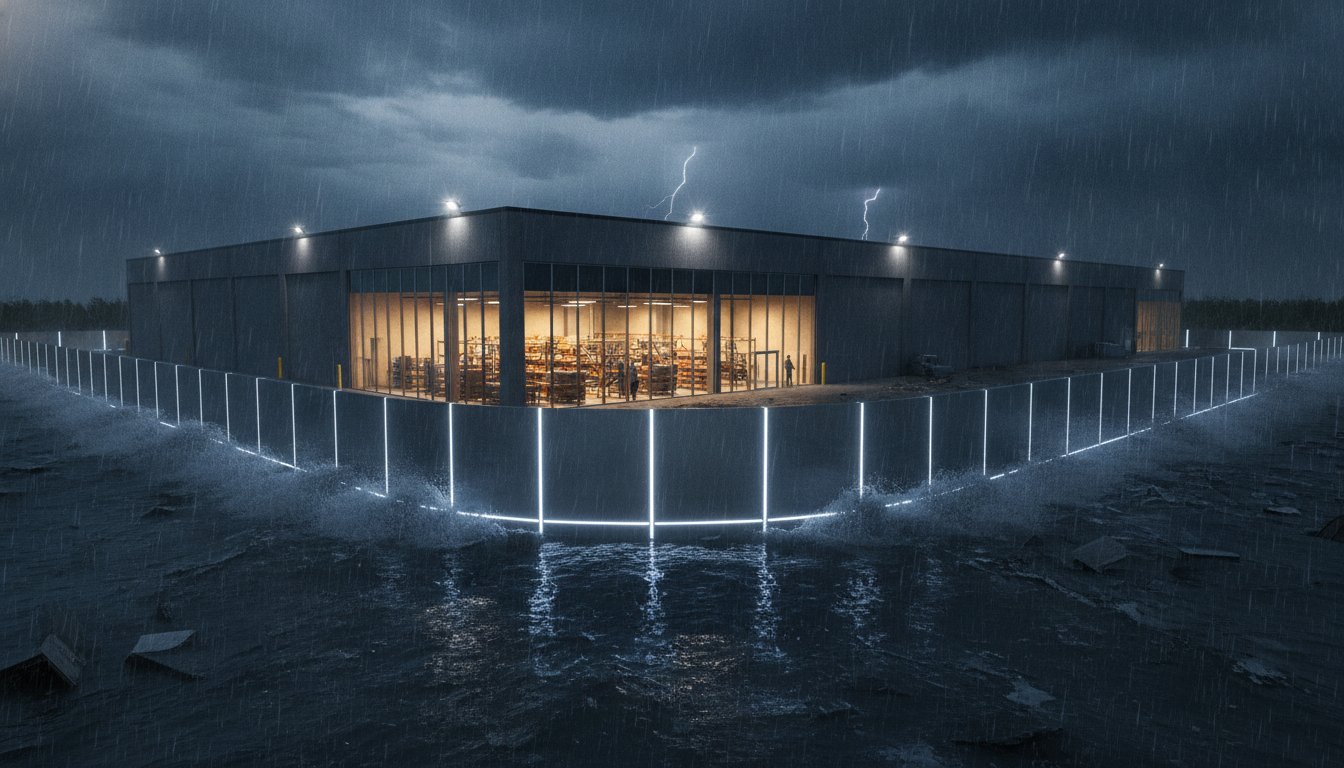
Forty percent of businesses never reopen after a flood disaster. It is a brutal reality that exposes the weakness of old-school defense methods. Relying on sandbags is an exhausting, losing battle that often fails when the pressure mounts. You need a modern strategy built on speed and structural integrity. By deploying advanced commercial flash flood barriers, you turn your facility into an impenetrable stronghold. This isn't just about holding back water; it is about total, engineered redirection.
You know the fear of watching the clouds break and wondering if your inventory will survive the night. We understand that the cost of a business shut-down is often more devastating than the physical water damage itself. This guide gives you a definitive readiness checklist for 2026 to secure your property and your peace of mind. You'll learn how to replace manual labor with high-stakes redirection strategies. We will cover everything from identifying structural vulnerabilities to deploying rapid-response systems. It's time to gain total confidence in your defense so your operations can continue without interruption, no matter what the forecast says.
Key Takeaways
- Understand the specific mechanics of high-velocity flash floods and how they differ from standard rising water events.
- Conduct a comprehensive structural audit to pinpoint hidden entry points in your perimeter, loading docks, and utility vaults.
- Shift your strategy from brute-force resistance to engineered redirection using modern commercial flash flood barriers.
- Establish a rapid response protocol that enables your team to deploy a professional-grade defense within a 60-minute warning window.
- Explore the latest innovations in business resilience, including inflatable systems and paintable, transparent liquid barriers for high-stakes protection.
The Flash Flood Reality — Assessing the Threat to Your Commercial Assets
Flash floods in 2026 are no longer rare, once in a lifetime events. They are frequent. They are violent. They are structurally devastating. Unlike slow-rising river floods that offer days of warning, flash events give you minutes. Waiting for the rain to stop is not a strategy. It's a gamble with your company's future. The United States experiences over $32 billion in annual flood-related damages, and approximately 30% of commercial properties are now located in high-risk zones. If you aren't prepared for a high-velocity event, you are essentially leaving your front door open to a wrecking ball of water and debris.
Defining the Flash Flood Threat
Flash floods are high-velocity events occurring within six hours of heavy rainfall. This speed is exactly what makes them lethal to commercial infrastructure. Standing water is a nuisance; moving water is a structural threat. Understanding hydraulic pressure is vital for any facility manager. When water moves at high speed, it creates dynamic loads that can buckle warehouse doors and shatter ground-level windows. This isn't just about moisture. It is about force. In modern business districts, the danger is amplified by urban runoff. Non-permeable surfaces like asphalt and concrete prevent the earth from absorbing rainfall. This channels massive volumes of water directly toward your loading docks and utility vaults. Relying on a traditional flood barrier like a sandbag wall is often useless against this level of kinetic energy.
The True Cost of Commercial Flood Damage
The damage to your bottom line goes far deeper than soaked carpets or ruined drywall. Direct asset loss is only the first blow. The hidden cost of business interruption is often the knockout punch. Statistics show that around 40% of businesses don't reopen after a flood disaster. If your facility is offline for weeks, your clients won't wait; they'll find a competitor who was better prepared. Water also attacks the invisible parts of your building. It undermines concrete slabs and compromises foundations, leading to long-term structural instability. This damage can tank your property valuation and make future insurance coverage nearly impossible to secure. Standard commercial insurance is a post-event bandage. It doesn't save your servers or your specialized machinery. Real resilience requires a proactive strategy. Integrating engineered commercial flash flood barriers into your site plan ensures that you are redirecting the threat rather than just cleaning up after it. Without a definitive defense, the cost of inaction is almost always permanent closure.
The Commercial Vulnerability Audit — A Structural Readiness Checklist
Defense begins with a clear-eyed assessment of your facility's weaknesses. You cannot protect what you haven't mapped. A structural audit isn't just a casual walkthrough; it's a strategic hunt for every possible breach point. Flash floods don't just look for open doors. They find the path of least resistance through vents, conduits, and loading docks. In high-velocity events, these openings become high-pressure funnels that can flood a warehouse in minutes. Identifying these gaps now is the only way to ensure your facility remains an impenetrable stronghold when the rain starts.
External Perimeter Assessment
Start at the lowest point of your property. Analyze the slope of your parking lot and the soil saturation levels nearby. Water naturally follows gravity, and adjacent buildings often create a funnel effect that directs runoff straight toward your thresholds. You must identify every subterranean window, air intake vent, and pedestrian entrance. Standard seals on these entry points are rarely designed for hydraulic pressure. Following a comprehensive Ready.gov flood preparedness plan involves more than just stacking sandbags. It requires a permanent understanding of where the water wants to go. This is where deploying commercial flash flood barriers becomes essential. These systems are engineered to handle the kinetic energy of moving water, providing a level of security that traditional methods simply can't match.
Internal Critical Infrastructure
Move inside and apply the High Ground rule. Your most valuable assets should never sit directly on the slab. Move server racks, electrical vaults, and specialized machinery above the base flood elevation. Even if you seal the building envelope, moisture can penetrate through floor drains or wall seepage during prolonged events. Protecting your utility systems is paramount for business continuity. If your HVAC or power distribution fails, your facility is offline regardless of water level. Reviewing your site's specific layout helps determine if you need the Fortress Flood Diversion System to secure these internal weak points before a crisis occurs.
Finally, evaluate your drainage and runoff capacity. Most commercial gutter systems are designed for average rainfall, not the extreme deluges seen in 2026. When gutters overflow, they dump water directly at the base of your foundation, undermining structural integrity. Map your highest-value inventory and ensure it is positioned away from these external walls. Combining structural modifications with professional grade commercial flash flood barriers creates a layered defense strategy. This proactive approach transforms your facility from a vulnerable target into a resilient asset, ensuring your operations survive the storm without permanent loss.
Redirection vs. Resistance — Evolving Your Flood Defense Strategy
Resistance is a gamble. Most traditional flood defenses focus on holding water back. They act as a plug. This approach ignores the reality of hydraulic pressure. When you stop water, its weight and energy transfer directly onto your building's facade. This can shatter glass; it can buckle masonry; it can compromise the very foundation you are trying to save. To truly protect your assets, your strategy must evolve from resistance to redirection. It is the difference between absorbing a blow and parrying it.
Redirection is about control. By using engineered commercial flash flood barriers, you don't just block the flow. You guide it. This creates a strategic perimeter that acts as a shield. Instead of absorbing the full force of a flash flood, your facility deflects it. This reduces the hydrostatic pressure on your walls and windows. It moves the water away from your entry points and toward municipal drainage or natural catchments. It's a shift from being a victim of the tide to being the master of the water's path.
The Science of Diversion
The Fortress Flood Diversion System utilizes the water's own kinetic energy against itself. It doesn't fight the flood; it redirects it. By angling the barrier to steer the current, you significantly lower the load on your structure. This is critical for commercial properties with large glass storefronts or light industrial siding. These materials aren't built to withstand thousands of pounds of pressure. Diversion ensures that the water keeps moving, preventing the build-up of standing depth that leads to catastrophic breaches. You are creating a path of least resistance that leads away from your inventory.
Why Sandbags are a Liability, Not a Solution
Sandbags are a relic of the past. They are incredibly labor-intensive. In a flash flood scenario, you don't have the hours or the manpower required to build an effective wall. They are also porous. Water eventually seeps through, bringing silt and contaminants with it. Following OSHA flood preparedness guidelines highlights the importance of worker safety during emergency deployment. Heavy lifting and exposure to contaminated water make sandbags a workplace hazard. They become a toxic sponge after the event, absorbing sewage and industrial chemicals. Disposing of them is expensive and dangerous. A one-time investment in an engineered system eliminates recurring labor costs and environmental risks. It provides a definitive, reusable solution that is ready in minutes, not days.

The Rapid Response Protocol — Deployment Checklist for High-Stakes Events
Speed is the only currency when a flash flood strikes. When the alert hits your phone, the clock starts. A 60-minute warning is often the only lead time you have before water reaches your thresholds. Without a clear chain of command, that hour is lost to panic and indecision. You need a protocol that moves your team with military precision. This isn't just about having the right equipment; it's about the speed of activation. Your response must be a reflex, not a debate.
Logistics are the backbone of any defense strategy. Store your commercial flash flood barriers in a dedicated, climate-controlled location that remains accessible even during power outages. Don't bury your defense systems under pallets of seasonal inventory. Use dedicated transport carts to move barriers to their deployment zones. Every second saved in transit is a second gained in fortification. If your team has to hunt for pumps or nozzles, you've already lost the battle against the rising tide.
Activating the Inflatable Defense
The Fortress Inflatable Flood Barrier is engineered for this high-stakes environment. It replaces hours of manual labor with minutes of mechanical efficiency. First, unroll the barrier along your predetermined perimeter. Position it tightly against the building envelope to prevent seepage. Once in place, connect your high-volume air pump and begin the inflation process. As the barrier expands, perform a seal test to ensure a watertight connection between the barrier and the ground. For corner protection, utilize an L-shape configuration. This maintains a continuous, impenetrable line of defense that can withstand the kinetic energy of moving water.
The Human Element of Preparedness
Technology is only as effective as the hands that deploy it. Your staff must be trained to activate your defense systems without waiting for expert supervision. Conduct an annual dry run to identify logistical bottlenecks. Is a loading dock door blocked by a delivery? Is a specific threshold uneven? You want to discover these flaws on a sunny Tuesday, not during a midnight deluge. Documentation is also vital. Record every drill and actual deployment to maintain accurate records for insurance and compliance. This level of discipline ensures that when the next 60-minute warning comes, your team is ready to act with total confidence. Learn how the Fortress Inflatable Flood Barrier can streamline your emergency protocol.
Post-event recovery is the final stage of the protocol. Once the threat recedes, clean your assets with fresh water to remove silt or chemical contaminants. Dry them completely before rolling them for storage. This prevents mold and ensures your commercial flash flood barriers are in peak condition for the next threat. Proper maintenance turns a one-time purchase into a long-term strategy for business resilience.
Fortress Protection — Engineering the Future of Business Resilience
Resilience is not a passive state. It is an active, engineered posture. Many businesses hesitate to install commercial flash flood barriers because they fear an industrial aesthetic will drive away customers. This is a false choice. Modern defense systems provide military-grade security without compromising the visual appeal of your storefront. You don't have to choose between a fortress and a frontage. It's about creating a site that is both welcoming and impenetrable.
Aesthetic Resilience for High-End Commercial Spaces
High-end retail and modern office spaces require a different approach than industrial warehouses. The Fortress Transparent Liquid Paintable Flood Barrier offers a solution that is virtually invisible to the naked eye. This advanced coating can be applied directly to glass and masonry, sealing the building envelope against high-pressure water ingress. It creates a seamless shield that remains hidden until the moment of impact. You gain peace of mind through protection that doesn't look like defense. This ensures your brand identity remains intact while your assets stay dry.
Off-the-shelf products often fail because they ignore the unique geometry of your building. A generic plug cannot account for the specific vulnerabilities of your loading docks or subterranean vents. This is where professional engineering becomes the deciding factor. Custom-fit commercial flash flood barriers are designed to integrate with your existing architecture. This ensures there are no weak points for water to exploit. When water hits a custom-engineered barrier, the force is distributed safely across the structure rather than concentrated on a single, vulnerable seal.
The Full-Service Advantage
True resilience requires more than just hardware. It requires a strategic partner who understands the high stakes of business interruption. Our process moves beyond simple sales to provide a comprehensive defense strategy. This starts with detailed engineering blueprints and ends with professional on-site installation. We ensure your shield is not just present but perfectly positioned for combat. FloodWater Pros acts as your vigilant guardian, providing the expertise needed to navigate complex local regulations and FEMA guidelines.
Maintenance is the final, critical component of your readiness. Treat your flood defenses like a fire suppression system. Regular inspections and seal tests ensure that your system is ready to activate the moment a 60-minute warning is issued. Don't wait for the water to test your resolve. The cost of a single breach far outweighs the investment in a professional defense system. Take the first step toward total security by scheduling an expert consultation. We will map your vulnerabilities and design a custom fortification plan that protects your assets and your brand. It's time to move beyond the uncertainty of sandbags. Fortify your business with FloodWater Pros today.
Securing Your Business Against the Unpredictable
The threat of flash flooding in 2026 demands more than just hope. It requires a structural shift from passive resistance to active redirection. By conducting a thorough vulnerability audit and moving beyond outdated sandbags, you transform your property into a resilient stronghold. Deploying high-performance commercial flash flood barriers ensures that your inventory and infrastructure remain protected when seconds matter most. It is about moving from a state of vulnerability to a state of absolute security.
We provide a proprietary Fortress Flood Diversion System designed to act as an impenetrable shield against hydraulic pressure. Our team offers a comprehensive engineering-to-installation full-service solution with national coverage for commercial facilities across the country. Don't leave your company's survival to chance. Secure Your Assets — Request a Professional Flood Vulnerability Audit. Take command of your environment today and gain the peace of mind that comes with total readiness. Your future resilience starts with a single proactive step.
Frequently Asked Questions
What is the difference between a flood barrier and a flood diversion system?
A flood barrier acts as a plug to stop water, while a diversion system channels the flow away from your structure. The Fortress Flood Diversion System is designed to reduce hydrostatic pressure by redirecting the current. This prevents the sheer weight of the water from compromising your building's facade or shattering glass storefronts.
Can commercial flood barriers be installed on historic or glass-heavy buildings?
Yes, modern commercial flash flood barriers are specifically engineered for sensitive architecture. The Fortress Transparent Liquid Paintable Flood Barrier provides a clear, seamless shield that protects glass and masonry without altering the building's appearance. This allows high-end retail and historic properties to maintain their aesthetic while establishing a military-grade defense against water ingress.
How much warning time is needed to deploy an inflatable flood barrier?
You typically need less than 60 minutes to deploy the Fortress Inflatable Flood Barrier once it is in position. Because these systems use high-volume air pumps for inflation, they are much faster than manual methods like sandbagging. This speed is critical during high-velocity flash events where lead times are minimal and every second counts.
Are these systems compliant with FEMA or local commercial building codes?
Our systems are designed to meet the rigorous demands of dry floodproofing standards for non-residential structures. While FEMA provides national guidelines, local building codes often dictate specific requirements for commercial properties in high-risk zones. We recommend reviewing your local ordinances to ensure your chosen commercial flash flood barriers align with the latest 2026 regulatory updates.
What happens to the water once it is redirected by the Fortress system?
Redirected water is channeled toward municipal drainage systems or natural catchments located away from your property. The goal of the Fortress system is to move the current into areas designed to handle high volumes of runoff. This prevents water from pooling against your foundation and reduces the risk of structural undermining or seepage through floor drains.
Can the Fortress Paintable Flood Barrier be removed after the flood season?
The Fortress Transparent Liquid Paintable Flood Barrier is designed as a long-term, semi-permanent defense. It doesn't need to be removed after each season because it is virtually invisible and weather-resistant. This provides year-round readiness without the logistical burden of repeated application, ensuring your facility is always prepared for unpredicted deluges.
How do I determine the right height for my commercial flood barriers?
The correct height is determined by your local Base Flood Elevation plus a safety margin known as freeboard. We analyze historical flood data and your property's specific topography to recommend a protection height that accounts for potential surges. This tailored approach ensures your shield is tall enough to handle the extreme weather events projected for 2026.
Does FloodWater Pros provide professional installation for national accounts?
FloodWater Pros provides a comprehensive engineering-to-installation solution for commercial facilities across the country. We act as a strategic partner for national accounts, ensuring that every location receives a custom-fit defense strategy. Our team handles the entire process from the initial site assessment to final deployment training for your local facility staff.


