
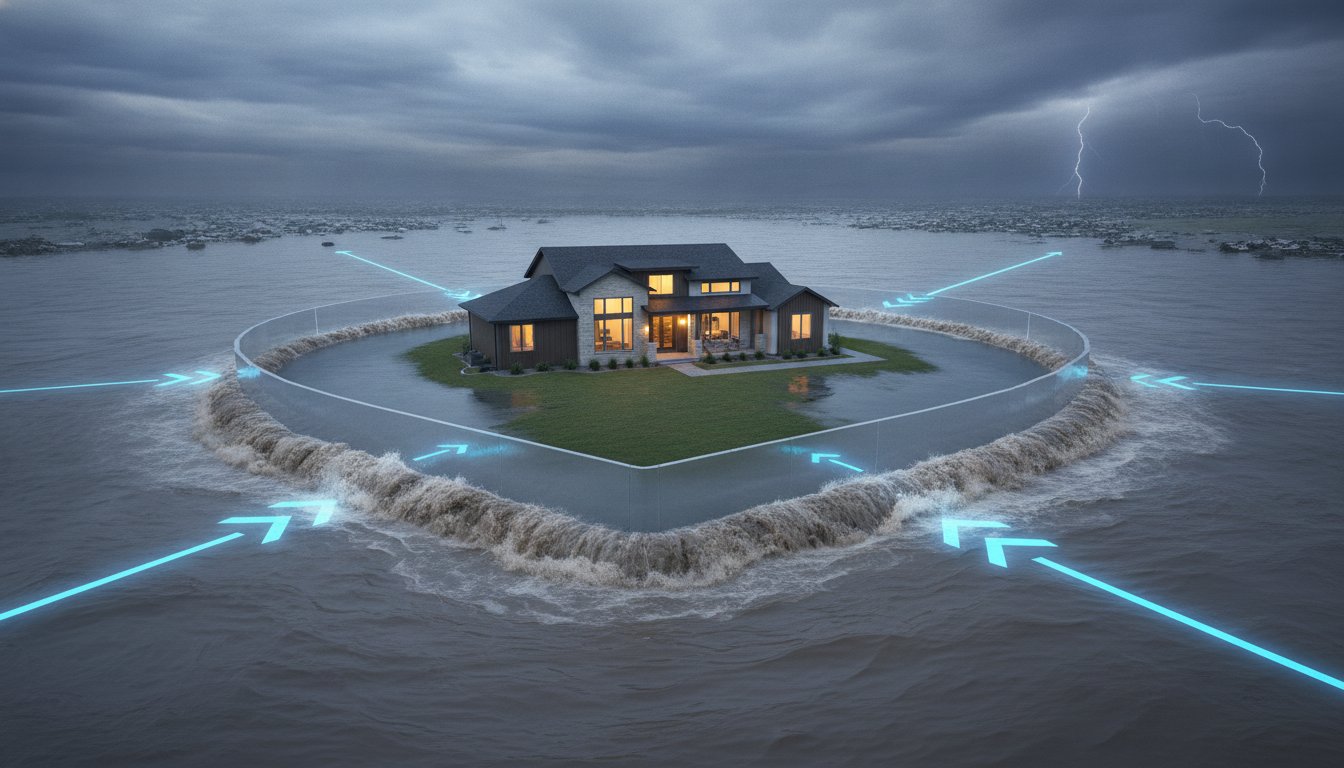
Trying to block a flood is like trying to stop a freight train with a sheet of glass. Most people reach for sandbags to build a wall, but fighting the sheer weight of water is a losing battle that often ends in structural collapse. You already know the hollow anxiety of watching the clouds and wondering if your temporary barriers will hold. It's exhausting to rely on solutions that fail when the pressure peaks. To truly protect your foundation, you must implement effective flood diversion methods that work with physics rather than against it.
The secret isn't just stopping the flow. It's about redirection. Since just one inch of water can cause over $25,000 in damage according to FEMA, you need a defense that actually works. This article breaks down the physics of hydrostatic pressure and helps you identify the right defense for your specific property layout. You'll learn how to transition from fragile, temporary fixes to engineered fortification. We'll explore how to protect your structural integrity and secure your home against the rising tide. It's time to replace uncertainty with a structural shield and achieve the long-term peace of mind you deserve.
Key Takeaways
- Stop fighting the mass of water—learn why commanding its direction is the only way to avoid the logistical failures of traditional sandbags.
- Understand the physics of hydrostatic pressure and how effective flood diversion methods protect your foundation from the silent forces that buckle basement walls.
- Compare modern defense strategies—from rapid-response inflatable shields to invisible paintable barriers—to find the right fit for your estate.
- Follow a strategic 5-step engineering process to identify hydrological entry points and transform your property into a fortified stronghold.
Beyond Sandbags — The Evolution of Flood Diversion
Sandbags are an emergency improvisation. They aren't a strategy. For decades, property owners have relied on burlap and sand to fight rising tides. It's a logistical nightmare. It requires hours of backbreaking labor. Often, it's too little and too late. By the time the wall is built, the water has already found the gaps. We need a shift in mindset. The old way is reactive. It's messy. It's unreliable. Most importantly, it fails to address the underlying physics of a flood event. True security requires a transition from frantic response to strategic fortification.
Effective protection comes from moving water with intent. This is the core of effective flood diversion methods. Rather than trying to hold back thousands of pounds of pressure, we guide it. This philosophy mirrors large scale Flood bypass systems used in civil engineering. It's about the path of least resistance. In 2026, the standard for residential and commercial defense has moved toward high strength, deployable barriers. Solutions like the Fortress Flood Diversion System represent this shift. FEMA's updated 2026 requirements for floodproofing certificates emphasize that we can't rely on luck. We must engineer for reality.
The Problem with Retention
Retention is a high risk gamble. When you block water, you create a massive buildup of hydrostatic pressure against your walls. This force is silent but devastating. It can buckle a basement wall in minutes. Sandbags are porous. They allow seepage. This saturation weakens the soil around your foundation and can lead to long term settling issues. Beyond the structural risk, there's a significant environmental cost. Single use materials like sandbags often become hazardous waste after a single flood event. They're a liability that requires expensive disposal, not an asset that provides security.
The Promise of Redirection
Redirection changes the game. It utilizes the kinetic energy of the water to move it safely away from your perimeter. By implementing effective flood diversion methods, you reduce the total load on your home. You aren't catching the water; you're shedding it. Modern systems offer a permanent return on investment. They replace the recurring cost of emergency panic with a one time structural solution. It's the difference between a temporary patch and a permanent shield. This proactive approach ensures that when the rain starts, your property is already prepared to defend itself without human intervention.
The Physics of Protection — Why Redirection Beats Retention
Water is heavy. At rest, it exerts 62.4 pounds per cubic foot. This is hydrostatic pressure. It's the silent force that buckles basement walls and shatters foundation integrity. When you try to block water, you're essentially trying to hold up a collapsing building with your bare hands. Flood diversion is the strategic redirection of water to prevent pressure buildup against a structure. By utilizing effective flood diversion methods, you stop fighting the weight and start managing the flow. You move from a state of vulnerability to a position of command.
Static water builds weight; flowing water carries momentum. if you simply trap water against your home, the pressure increases every second the water sits there. Redirection converts a potential direct hit into a glancing blow. It's about the envelope. You must keep the water at a safe distance from your structural footprint. Experts in structural and nonstructural mitigation emphasize that controlling water's path is far more effective than trying to arrest its movement entirely. This is why redirection is the only sustainable choice for long term defense.
Hydrostatic Pressure vs. Hydrodynamic Flow
Static weight is the enemy of the foundation. Hydrodynamic flow, however, is something we can command. Diversion systems are designed to harness the kinetic energy of moving water. Instead of allowing it to pool and press, these barriers guide the liquid along a predetermined path. This prevents the "punching" effect that occurs when a flood hits a flat, unyielding surface. By angling the defense, you bleed off the water's energy. It's a strategic shield that preserves the integrity of your property's envelope. It's the difference between a wall that breaks and a system that survives.
Topography and Water Pathing
Every property has a natural path for water. Gravity is the ultimate architect. Identifying these low points and entry vectors is the first step in fortification. Even in low lying areas, you can use subtle elevation changes to your advantage. The role of the barrier angle is critical. A 45 degree angle can redirect water with significantly less force than a 90 degree wall. Managing velocity is equally important. Fast water erodes soil and undermines barriers. Effective flood diversion methods incorporate features that slow the water down as it's being moved. This prevents the ground beneath your defense from washing away. To ensure your property is truly resilient, consider how the Fortress Flood Diversion System can be tailored to your specific topography.
Comparing Effective Flood Diversion Methods for Modern Estates
Estate protection isn't one size fits all. It's a strategic choice. You must weigh the speed of deployment against the permanence of the structure. For properties with wide driveways or sprawling perimeters, effective flood diversion methods must be both scalable and reliable. We don't just build walls. We create shields. The market for modern flood diversion technologies has evolved to provide options that don't look like concrete bunkers. You can now choose a level of readiness that matches your specific risk profile without compromising the integrity of your landscape.
Deployable Inflatable Barriers
The Fortress Inflatable Flood Barrier is the definition of rapid response. It provides strength through air pressurized water resistance. It's built for the moment the storm breaks. You don't need a construction crew. It's ideal for sealing driveways, garage doors, and low entry points. Deployment speed is its primary weapon. Within minutes, you transform a vulnerable opening into a sealed perimeter. It's a temporary solution with permanent grade performance. It's about readiness. It's about the profound relief of knowing you're prepared before the first drop of rain hits the pavement.
Engineered Diversion Systems
When threats are high velocity, you need a structural answer. The Fortress Flood Diversion System is that answer. It's designed for high rain and coastal environments where water doesn't just rise; it moves. These rigid barriers redirect flow without absorbing the impact. They don't buckle. They don't yield. This approach ensures long term durability against repetitive loss events. It's the "Fortress" standard of perimeter defense. You aren't just surviving the flood. You're commanding the landscape. By implementing these effective flood diversion methods, you ensure your estate remains an impenetrable sanctuary.
Modern estates often face a unique challenge: curb appeal. You shouldn't have to choose between a dry home and a beautiful one. The Fortress Transparent Liquid Paintable Flood Barrier seals the microscopic gaps that traditional barriers miss. It's invisible protection. It works on storefronts and residential facades alike. It creates a seamless, waterproof seal that stays out of sight until it's needed. This allows you to maintain the elegance of your property while building a hidden layer of resilience. You remain vigilant. You stay protected. Your property value remains secure.

Strategic Implementation — Engineering Your Property’s Defense
Fortifying your estate requires more than just high-grade equipment. It demands a tactical plan. Implementation is where theory meets the ground. Without a methodical approach, even the most advanced effective flood diversion methods can fail under the weight of a storm. We follow a strict five step protocol to ensure your defense is impenetrable. It's a progression from vulnerability to total structural security.
First, conduct a site-specific hydrological assessment. You must find the water's entry point. This isn't a guess. It's an analysis of flow and volume. Second, map the redirection path. You must determine exactly where the water will go once it's turned away. Third, select the barrier technology that matches your specific risk needs. This might mean a Fortress Flood Diversion System for high-velocity areas or a Fortress Transparent Liquid Paintable Flood Barrier for storefronts. Fourth, move to professional installation. The seal must meet the engineering spec to be effective. Finally, conduct testing and readiness drills. Preparation is the bridge between anxiety and peace.
Mapping the Redirection Path
Redirection is only successful if the water has a safe destination. You must avoid neighbor conflict. Diverting water onto an adjacent property isn't a solution; it's a legal and ethical liability. Your plan must utilize existing drainage systems and natural swales. A clear exit point is non-negotiable. If water pools at the end of your barrier, you haven't solved the problem. You've simply moved the pressure. Your goal is a continuous, controlled flow that leads away from all structural envelopes. It's about commanding the water's journey from entry to exit.
The Professional Installation Advantage
DIY attempts often fail when the stakes are highest. A single gap in a seal can compromise the entire perimeter. Professional installation ensures that ground-sealing technology is properly integrated with your property's surface. This is critical for effective flood diversion methods. Experts understand the nuances of local building and flood codes. They ensure your system is compliant and robust. When the water rises, you don't want to wonder if you tightened every bolt correctly. You want to know that your shield is locked in place. Secure your property with an expert hydrological assessment and installation plan today.
The Fortress Standard — Mastering the Art of Diversion
We don't just block water. We command it. This is the Fortress philosophy. It's the tactical edge that separates a temporary fix from a permanent shield. While others scramble for sandbags, we implement a system that dictates where the water flows. This is the pinnacle of effective flood diversion methods. High-value estates deserve a defense that matches their architectural significance. You aren't just protecting a building. You're securing a legacy. This is a total transformation. It's the shift from the anxiety of vulnerability to the profound relief of absolute security.
The Fortress Flood Diversion System stands as the gold standard for residential and commercial fortification. It's an engineered answer to a high-stakes problem. We don't believe in guesswork. Every component is designed to redirect massive volumes of water without yielding to pressure. By controlling the kinetic energy of the flood, we preserve the structural integrity of your foundation. You stay dry. You stay safe. Your property remains an impenetrable sanctuary in the middle of the storm.
Invisible Defense for Modern Architecture
Modern design often relies on expansive glass doors and clean facades. You shouldn't have to sacrifice this beauty for safety. The Fortress Transparent Liquid Paintable Flood Barrier provides an invisible layer of resilience. It's the science of the seal. This coating penetrates microscopic gaps in building materials to prevent infiltration. It works on glass, stone, and metal. It creates a waterproof bond that is virtually undetectable. You maintain your curb appeal while building a hidden fortress. It's the ultimate solution for those who demand both elegance and impenetrability. The seal is tight. The water stays out. Your architecture remains flawless.
Your Strategic Partner in Flood Protection
We're more than a manufacturer. We're your vigilant guardian. Our process is comprehensive. It begins with professional design and moves through precision manufacturing. It ends with expert on-site installation. This full-service approach is the only way to ensure 100% readiness. You don't have to worry about the details. We've seen the consequences of inaction. We know the weight of the water. This experience allows us to build systems that never fail. You get a strategic partner who is as committed to your safety as you are. The peace of mind that follows is priceless. It's the quiet confidence of the prepared. Secure your property and your future. It's time to consult with the experts at FloodWater Pros today to finalize your defense plan.
Secure Your Legacy with Engineered Defense
The era of emergency improvisation is over. You now understand how hydrostatic pressure can compromise a foundation and why redirection is the only sustainable path to structural integrity. By implementing effective flood diversion methods, you move from a state of vulnerability to a position of absolute command. You no longer need to fear the next heavy rain event. You have the science of redirection on your side.
True security requires a partner who understands the gravity of environmental threats. Our proprietary Fortress engineering standards ensure that your defense is as resilient as it is impenetrable. We provide full-service design-to-installation management to guarantee every seal meets our rigorous specifications. Whether you're protecting a sprawling residential estate or a critical commercial asset, we have the specialized solutions to keep you dry. Fortify your property with a custom Fortress Flood Diversion System and experience the profound relief of total protection. Your sanctuary deserves nothing less.
Frequently Asked Questions
What is the most effective way to divert flood water away from a house?
The most effective method is utilizing rigid, engineered diversion systems that guide water toward natural catchment areas. This approach uses the water's kinetic energy to move it safely away rather than trying to arrest its movement. By angling the defense, you minimize the direct impact force on your perimeter. This preserves your property's structural envelope and prevents the foundation damage common with static walls.
Can I redirect flood water without affecting my neighbors?
Responsible redirection relies on identifying neutral exit points like municipal storm drains or existing swales. You must map the water's journey to ensure it doesn't pool on a neighbor's land. Professional hydrological assessments are the best way to verify that your effective flood diversion methods are both ethical and legally compliant. It's about commanding the flow without shifting the burden to others.
How do inflatable flood barriers compare to traditional sandbags for diversion?
Inflatable barriers provide an impenetrable seal that sandbags simply cannot match. Sandbags are porous; they allow water to seep through and saturate the ground around your home. In contrast, an inflatable system uses water pressure to lock itself against the surface. It offers a rapid response defense that is reusable, clean, and far more reliable during high velocity events where traditional methods often fail.
Is it possible to have flood protection that is invisible or aesthetic?
Invisible protection is now a reality through transparent liquid paintable barriers. These advanced coatings create a waterproof shield over glass, metal, and stone without altering the property's curb appeal. It's a hidden layer of resilience that stays out of sight until the rain starts. This allows modern estates to maintain their aesthetic integrity while remaining fully fortified against infiltration through microscopic gaps.
What is the difference between flood blocking and flood diversion?
Blocking is a reactive attempt to stop water; diversion is a proactive strategy to lead it. When you block water, you invite massive hydrostatic pressure to push against your walls. Diversion seeks the path of least resistance. It turns a potential disaster into a managed flow. By guiding the water away, you eliminate the risk of structural collapse that often follows a block only approach.
Do I need professional engineering to install a flood diversion system?
Expert engineering is the bridge between a temporary patch and a permanent shield. A professional assessment identifies the specific entry points and pressure loads unique to your topography. This ensures that your diversion system is correctly angled and sealed for your risk profile. Without this expert oversight, a barrier might fail at the exact moment it's needed most. Professional installation guarantees total readiness.
How much does a professional flood diversion system typically cost?
The cost of a system depends on the specific vulnerabilities of your property and the level of fortification required. While every estate is different, the investment should be viewed as a one time structural upgrade. It replaces the recurring costs and logistical nightmares of emergency improvisation. For many owners, the long term peace of mind and preserved property value far outweigh the initial installation expense.
Can paintable liquid barriers really stop flood water from entering through doors?
Specialized paintable barriers are highly effective at sealing the microscopic gaps where water typically enters. They transform standard doors and facades into waterproof membranes. These coatings are designed to withstand the pressure of rising tides while maintaining a seamless bond with the building's surface. It's a military grade solution for the most vulnerable points of your home's envelope during effective flood diversion methods implementation.


