
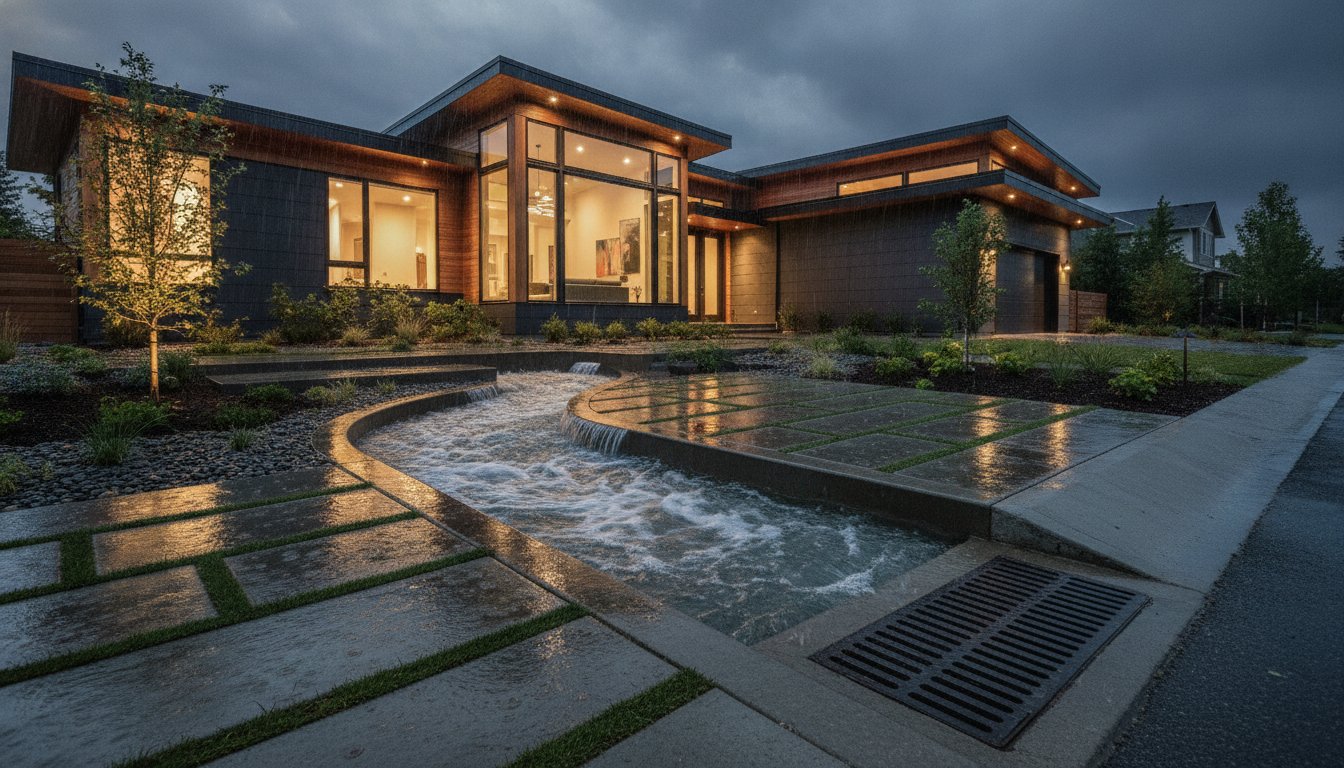
A single inch of floodwater inside your living room can trigger more than $25,000 in damages and insurance claims. For many, the first sign of heavy rain brings a familiar sense of dread and the back-breaking labor of stacking sandbags that inevitably leak. It's a high-stakes gamble with your most valuable asset. If you're tired of watching the horizon with fear, it's time to move beyond temporary fixes. Implementing professional flood diversion solutions for residential properties allows you to seize control of the environment before the first drop hits the ground.
You can master the science of redirecting water away from your foundation using engineered landscaping and advanced diversion systems. This article explores how to build a perimeter of total security that doesn't sacrifice your home's curb appeal. We'll look at the structural answers to rising water, from physical barriers to strategic land grading. You'll learn how to replace the vulnerability of potential loss with the profound relief of a property that's truly prepared. By the end, you'll have a clear path toward a home that stands as a shield against uncertainty. Every storm is a test. It's time your home had the answers.
Key Takeaways
- Move beyond the "sponge" myth. Learn why soil and plants are no match for high-velocity storm surges.
- Master the critical difference between retention and redirection. Effective defense requires moving water, not just holding it.
- Deploy professional flood diversion solutions for residential properties. The Fortress system provides a structural shield against environmental uncertainty.
- Map your terrain with tactical precision. Identify exactly how water moves across your landscape to protect your home’s most vulnerable assets.
- Shift from passive proofing to proactive defense. Secure your property value and your peace of mind with a permanent, engineered perimeter.
Why Traditional Landscaping Fails During Major Flood Events
Many homeowners view their yards as a natural sponge, believing that soil and plants will soak up whatever the sky delivers. This is a dangerous myth. While healthy turf and garden beds handle light rain with ease, they're quickly overwhelmed by high-velocity storm surges. Once the ground reaches its limit, your yard stops being a filter and starts acting like a slip-and-slide for rising water. Traditional landscaping isn't built for defense; it's built for aesthetics. Relying on it during a crisis is a recipe for structural failure.
The true threat isn't just the water you see, but the weight of the water you don't. Hydrostatic pressure is the silent force that destroys foundations when water lingers against your home's perimeter. Water is heavy, weighing approximately 62.4 pounds per cubic foot. When this mass sits stagnant against your basement walls or slab, it exerts immense pressure that can crack concrete and force moisture through microscopic pores. Broad Flood management strategies often categorize these efforts as structural defenses, prioritizing the physical movement of water over simple absorption. Flood diversion is the engineered management of water trajectories to protect structural integrity.
The Saturation Point: When Nature Gives Up
Soil infiltration rates are finite. In the intense weather patterns of 2026, we're seeing rainfall totals that exceed these rates in minutes, not hours. "Retention-only" thinking, like relying on a small rain garden, is a liability during a flash flood. When the ground is saturated, additional water becomes surface runoff immediately. This standing water isn't just an eyesore; it's a structural threat that begins the countdown to a flooded crawlspace or garage. Effective flood diversion solutions for residential properties require moving past the idea of holding water and toward the reality of moving it.
Impact of Surface Runoff on Residential Foundations
Water always finds the path of least resistance. On a standard residential lot, that path often leads straight to your foundation. Traditional lawns can become as impermeable as asphalt during a heavy downpour, accelerating the flow of water toward your home's most vulnerable points. The emotional cost of watching your perimeter fail as water pools at the doorstep is immense. Investing in flood diversion solutions for residential properties changes the narrative. Instead of hoping the ground can keep up, you're implementing a tactical redirection that keeps your home dry and your foundation secure. You aren't just planting a garden; you're engineering a fortress.
Redirection vs. Retention: The Core of Engineered Flood Diversion
Most homeowners confuse holding water with managing it. Retention strategies, like rain gardens and bioswales, focus on absorption. They're designed to let water soak into the ground slowly. Redirection is different. It's an active, tactical response to high-volume threats. When a flash flood hits, your soil's capacity to absorb is irrelevant. You need to move the mass. True flood diversion solutions for residential properties don't wait for the ground to keep up; they dictate where the water goes before it ever reaches your foundation. This is the "Fortress Philosophy." We believe defense starts at the property line, not your doorstep.
Redirection is the only viable answer for the extreme weather patterns seen in 2026. A retention pond can't stop a storm surge. An engineered barrier can. By balancing hydraulic capacity with residential aesthetics, you can create a perimeter that looks like a high-end landscape but functions like a military-grade levee. You aren't just decorating your yard; you're hardening a target.
When to Use Retention (Rain Gardens)
Retention has its place. It's ideal for managing daily precipitation and minor runoff from your roof or driveway. These systems keep your local ecosystem healthy and prevent minor puddling. Many Flood Resilient Landscaping techniques incorporate permeable pavers to help with this baseline management. However, retention fails during major events. In a hurricane or a severe storm surge, a rain garden is just a hole that fills up in seconds. It provides zero protection against the rising tide that threatens your living room.
The Power of Diversion: Moving the Threat
Diversion is about physics. By using engineered slopes, swales, and structural barriers, you create a "liquid highway" that carries water away from your home and toward safe drainage zones. This is where the Fortress Flood Diversion System excels. It provides a definitive, structural answer to high-stakes redirection. It doesn't ask the water to soak in; it commands it to move elsewhere.
When implementing these systems, legal considerations are paramount. You must ensure diverted water follows natural drainage paths and doesn't negatively impact neighboring properties. Professional engineered flood defense requires a deep understanding of local topography and water rights. You're building a shield, but it must be a responsible one. A well-designed diversion system provides total perimeter security while maintaining the peace of mind that comes from knowing you're prepared for the worst nature can throw at you.
Hardscaping for Defense: Strategic Perimeter Barriers
Aesthetics alone cannot save a home from a rising tide. While gardens and lawns provide the first line of visual appeal, hardscaping provides the literal line of defense. Selecting the right flood diversion solutions for residential properties involves a critical choice between permanent fortifications and deployable systems. Permanent structures offer 24/7 vigilance, standing ready even when you aren't home to react. Deployable options provide flexibility, allowing you to activate high-grade protection only when the forecast turns grim. Engineered barriers provide the structural integrity that simple landscaping lacks by creating an impenetrable line of defense against lateral water pressure.
The Fortress Flood Diversion System represents the gold standard for engineered property redirection. Unlike traditional landscaping that might erode under stress, this system is designed to maintain its position and purpose during the most severe events. It acts as a structural shield, ensuring that water is forced away from your foundation and into designated drainage zones. Retaining walls also play a vital role here. When properly reinforced, they serve as primary flood deflectors that manage the weight of moving water without buckling. They turn a vulnerable slope into a tactical advantage.
Engineered Berms and Defensive Walls
Earthen berms don't have to look like industrial levees. You can construct them to appear as natural garden features, using specific soil compositions and internal reinforcements to ensure they don't wash away. The key is strategic placement. You must identify the high-entry points of your property where water naturally funnels. By placing a reinforced wall or berm at these junctions, you break the momentum of the flood. These walls must be built to withstand lateral water pressure, which is far greater than the weight of soil alone. It's about turning your property's topography into a weapon of defense.
The Fortress Inflatable Flood Barrier: Rapid Response
When time is the enemy, you need a solution that deploys in minutes, not hours. The Fortress Inflatable Flood Barrier is the modern answer to the logistical nightmare of sandbags. Traditional sandbags are heavy, prone to leaking, and difficult to dispose of after the storm. In contrast, this modular system uses heavy-duty, puncture-resistant technology to create a rigid wall of protection across long perimeters and driveways. It's a professional-grade response that provides total perimeter security. You get the peace of mind of a military-grade barrier with the ease of a system that stores compactly when the sun is out. Don't wait for the water to reach your door. Stop it at the edge of your world.

Step-by-Step: Designing a Flood-Resilient Residential Perimeter
Creating a truly resilient home isn't a weekend DIY project. It is a tactical operation. You must move beyond reactive measures and start thinking like an engineer. When designing flood diversion solutions for residential properties, the goal is total perimeter security. This requires a methodical approach that identifies weaknesses before the clouds gather. A well-designed defense doesn't just stop water; it dictates the terms of the engagement. By following a structured design process, you can transform your property from a vulnerable target into a fortified sanctuary.
The process begins with five critical phases:
- Step 1: Topographical Mapping. You must understand the "why" and "where" of water movement on your land.
- Step 2: Identifying Critical Assets. Prioritize the protection of your foundation, garage, and low-lying utilities.
- Step 3: Selecting Your Defense Layers. Combine softscaping for minor runoff with hardscaping for high-velocity surges.
- Step 4: Professional Consultation. Engineering beats guesswork every time. Professional insight ensures your system handles the actual hydraulic loads of your region.
- Step 5: Implementation and Stress Testing. Deployment must be seamless. Testing ensures your barriers hold when the pressure is real.
Mapping the Flow: A Homeowners Guide
You can't fight what you don't understand. Start by identifying drainage bottlenecks and low spots where water naturally pools. A simple but effective method is the "Garden Hose Test." By running a high-volume hose at various points of your property, you can observe micro-drainage patterns in real-time. It's a low-tech way to see where the path of least resistance leads. For a broader perspective, consult local flood maps. These documents provide 100-year event projections that help you prepare for the "worst-case" scenario rather than just a typical afternoon shower.
Selecting the Right Barrier for the Right Zone
Different areas of your home require different levels of vigilance. For entry points like basement windows or door frames where aesthetics are a priority, the Fortress Transparent Liquid Paintable Flood Barrier provides a nearly invisible, airtight seal. It's an ideal choice for maintaining curb appeal while adding a layer of impenetrable defense. For open yard spaces, you need robust diversion systems that can handle massive volumes of runoff. When you're ready to move from planning to action, it's vital to consult with a flood mitigation professional. Ask them about lateral pressure ratings, FEMA compliance, and how your diversion strategy impacts the local water table. Your home is your most valuable asset. Protect it with the precision it deserves.
Total Property Protection: The Fortress Integrated Approach
Stop thinking about flood proofing. That is a reactive term. It implies you're waiting for the water to arrive and hoping your seals hold. True security requires a shift to flood defense. This is a proactive, tactical stance that looks at your entire lot as a battlefield. The Fortress integrated approach combines the engineered landscaping we've discussed with high-grade structural barriers. It creates a multi-layered shield that accounts for every possible point of failure. When you implement comprehensive flood diversion solutions for residential properties, you aren't just buying gear. You're installing a permanent state of readiness.
This approach is a strategic investment in your property's long-term value. In a market where environmental risks are rising, a home with a documented, engineered defense system stands apart. It proves to future buyers that the structure is resilient and the foundation is secure. Professional installation is the final piece of this puzzle. An engineered system only works if it's anchored correctly and tested against the actual hydraulic loads of your specific terrain. It ensures the system holds when the pressure is on and the rain is relentless.
Invisible Defense: Paintable and Transparent Solutions
Defense doesn't always have to be visible to be effective. Many homes have vulnerable points in masonry, vents, and door frames that traditional landscaping can't reach. The Fortress Transparent Liquid Paintable Flood Barrier provides an airtight, watertight seal without altering your home's aesthetic. It uses advanced hydrophobic technology to seal microscopic pores in brick and concrete. This invisible layer prevents the capillary action that pulls moisture into your walls. It's the perfect solution for protecting seams and utilities where a physical wall isn't practical. You get military-grade protection that preserves your home's architectural integrity.
Consulting the Experts: Your Strategic Partner
Every property has a unique fingerprint of risk. Moving beyond off-the-shelf solutions requires a partner who understands the physics of water movement. FloodWater Pros manages the entire process from initial topographical engineering to final installation. We don't just sell products; we design custom fortifications. We identify the drainage bottlenecks and high-entry points that others miss. This expert oversight ensures your flood diversion solutions for residential properties are legally compliant and structurally sound. You deserve the peace of mind that comes from knowing your foundation is dry and your family is safe. Secure your legacy—Request a Fortress consultation today.
Secure Your Legacy: The Future of Property Defense
The era of relying on sandbags and luck is over. You've learned that true resilience comes from mastering the science of redirection rather than hoping for absorption. By integrating engineered hardscaping with tactical mapping, you transform your home into a fortress. Professional flood diversion solutions for residential properties provide the structural integrity required to move massive volumes of water before they reach your foundation.
Don't leave your home's safety to chance. Our proprietary technology is specifically engineered to withstand extreme hydrostatic pressure that would crush standard landscaping. With a professional national installation network ready to secure your perimeter, the relief of total security is within reach. Fortify your home with the Fortress Flood Diversion System and stand firm against the next storm. Your property is a sanctuary. Keep it that way.
Frequently Asked Questions
Can I redirect flood water to my neighbor’s property?
No, you cannot legally redirect water in a way that causes damage to adjacent properties. Most jurisdictions follow the "reasonable use" doctrine, which requires that any diverted water follows natural drainage paths or enters municipal storm systems. It is vital to consult with a professional to ensure your defense strategy doesn't result in civil litigation or local code violations.
How does a flood diversion system differ from a standard drainage system?
Standard drainage manages daily precipitation, while a flood diversion system is built for high-velocity surge events. While gutters and French drains handle localized rain, flood diversion solutions for residential properties are engineered to move massive external threats away from your entire perimeter. It is the difference between a simple sponge and a structural shield.
Will flood diversion landscaping affect my home’s curb appeal?
No, engineered landscaping can be integrated seamlessly into your existing garden design. Earthen berms can be disguised as elevated flower beds, and swales often resemble decorative dry creek beds. These features enhance your property's value by providing visual interest alongside a documented history of structural defense. You get total perimeter security without sacrificing the look of your home.
What is the most effective flood barrier for a long driveway?
The Fortress Inflatable Flood Barrier is the most efficient solution for protecting long, open expanses like driveways. Unlike rigid panels that require permanent tracks, this modular system can be deployed in minutes to create a heavy, water-filled seal. It resists movement during intense storm surges and provides an impenetrable line of defense where traditional methods often fail.
How much maintenance does a Fortress Flood Diversion System require?
Maintenance is minimal but essential for unwavering readiness. You should inspect the structural components twice a year for erosion or debris blockages. Clear any sediment from the diversion channels to ensure the "liquid highway" remains unobstructed. Regular professional inspections ensure the system's integrity remains uncompromised before the next major storm season begins.
Are inflatable flood barriers reusable after a major storm?
Yes, the Fortress Inflatable Flood Barrier is designed for multiple deployments over many years. After the flood recedes, you simply drain the chambers, wash away any silt or contaminants, and allow the material to dry. Once dry, it folds into a compact size for secure storage. It is a sustainable, long-term investment in your home's safety.
Can I install these flood diversion solutions myself?
DIY installation is not recommended for high-stakes structural defense. Effective flood diversion solutions for residential properties require precise topographical mapping and complex hydraulic calculations to work correctly. Professional installation ensures the system is anchored properly and complies with all local water laws. Guesswork leads to catastrophic failure when the water pressure is real.
What is the lifespan of a paintable liquid flood barrier?
The Fortress Transparent Liquid Paintable Flood Barrier typically provides five to ten years of protection depending on environmental exposure. Extreme UV rays or constant salt spray can eventually wear down the hydrophobic coating. We recommend a fresh application during your regular home maintenance cycle to ensure the seal on your masonry and vents remains completely impenetrable.


