
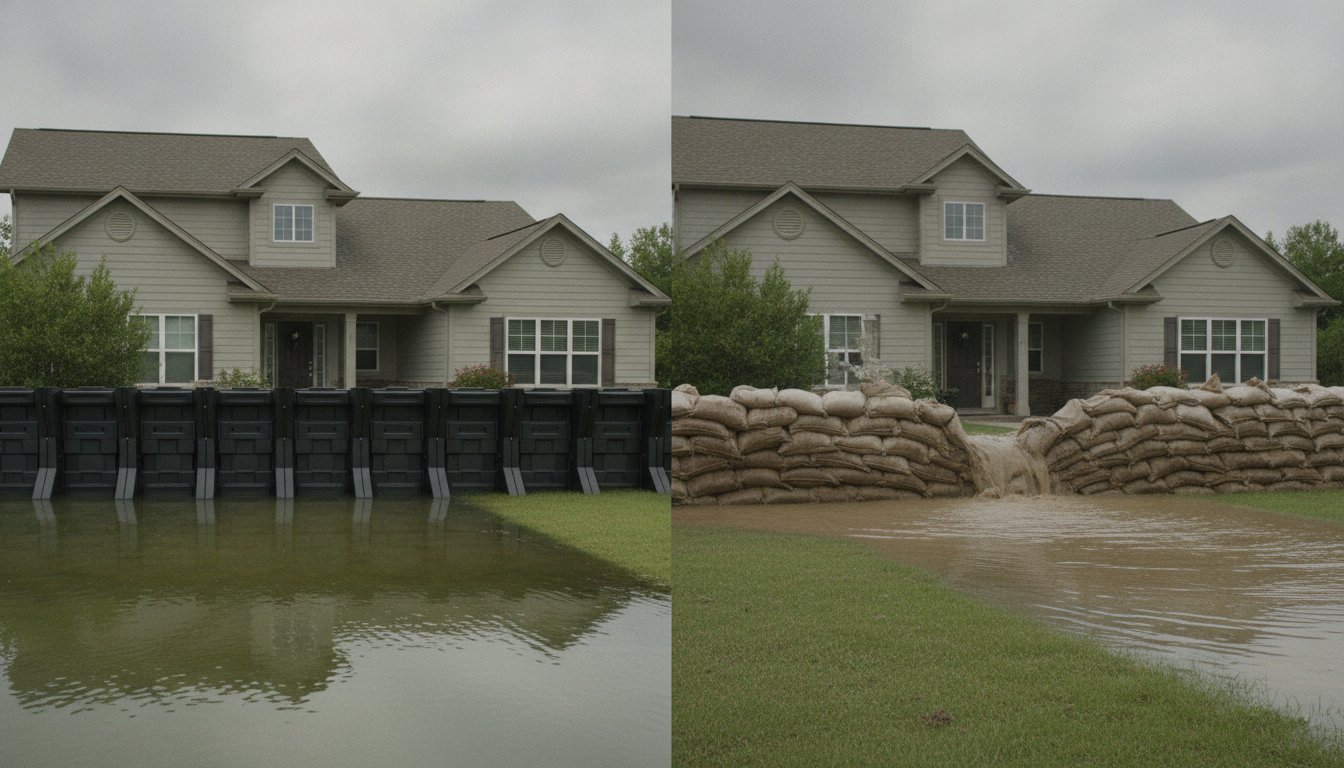
The humble sandbag has been the standard defense for decades, but relying on a mountain of dirt to save your property is a high-stakes gamble that rarely pays off. When comparing flood barriers vs sandbags, it becomes clear that a makeshift wall of polypropylene is often the only thing standing between your home and $25,000 in damages from just one inch of flooding. You deserve a shield that doesn't rely on luck or back-breaking labor.
We understand the exhaustion of filling bags and the lingering fear that your wall will fail under pressure. This guide settles the debate to show you why engineered fortification is the only way to achieve total security. You'll learn how modern systems offer rapid-deployment protection that diverts water away from your foundation without ruining your curb appeal. We will break down the structural flaws of manual labor and help you choose a professional-grade system built for resilience.
Key Takeaways
- Stop relying on porous sandbags that fail to provide a watertight seal and leave your structure vulnerable to seepage.
- Understand why the choice between flood barriers vs sandbags is the difference between a reactive gamble and a proactive, engineered fortification strategy.
- Protect your foundation by shifting from water retention to strategic diversion, moving floodwaters safely around your property perimeter.
- Evaluate the long-term ROI of professional systems that eliminate toxic cleanup costs and help maintain your property's insurability.
- Identify rapid-deployment solutions like the Fortress Flood Diversion System that provide military-grade security with minimal manual effort.
The Sandbag Illusion — Why Traditional Methods Fail Modern Structures
Sandbags represent a desperate response to an immediate threat. They are the default choice for many property owners because they feel accessible and familiar. However, the reality of flood barriers vs sandbags is a study in false security. A wall of sand is not a seal. It is a porous filter. It might slow the water, but it rarely stops the destruction. When the stakes involve your home or business, relying on a relic of the past is a dangerous strategy.
Most people view floodwater as just excess rain. In reality, it is a toxic cocktail of industrial runoff, fertilizers, and raw sewage. Sandbags act like massive sponges. They absorb these contaminants, turning your defense line into a biohazard by the time the storm passes. This is why an engineered flood barrier is the superior choice for long-term safety. You need a system that repels water rather than soaking up the filth of the street.
Hydrostatic Pressure and the Failure Point
Rising water exerts immense force. Hydrostatic pressure is the weight of standing water pushing against your structure with thousands of pounds of force. Sandbags are heavy, but they are not structurally unified. They shift. They slump. As the pressure builds, water finds the gaps between the bags. This seepage factor means you are often left running pumps behind your own defense line just to stay dry. A single breach in a sandbag wall can lead to total failure in seconds.
The Hidden Costs of "Free" Protection
The logistics of sandbags are a nightmare of manual labor. Consider the scale of the task. A 100-foot long wall that is only 18 inches high requires approximately 1,400 sandbags. Filling, hauling, and stacking that volume takes dozens of man-hours. In a fast-moving emergency, time is your most precious resource. You cannot afford to waste it on a method that offers no guarantee of success. The physical toll on your body is significant, but the emotional toll of watching a makeshift wall leak is even worse.
The financial burden doesn't end when the sun comes out. Once the bags are wet, they are heavy and potentially hazardous. You cannot simply dump the sand in your garden. The disposal process often involves:
- High labor costs for emergency removal.
- Expensive disposal fees for contaminated waste.
- The cost of cleaning up the silt and residue left behind.
According to FloodSmart, just one inch of water inside a building can lead to over $25,000 in claims. Relying on manual labor is a high-stakes gamble. You are betting your property against the clock and the elements. It is time to move toward a proactive fortification that works as hard as you do.
Engineered Fortification — The Mechanics of High-Performance Flood Barriers
Shifting your defense from manual labor to engineered fortification changes the rules of engagement. While sandbags rely on mass and gravity, modern systems utilize material science to create an impenetrable line. We're talking about industrial-grade polymers and reinforced steel instead of rotting burlap. These materials don't just sit there. They work to create a mechanical seal that locks water out entirely. When you weigh the merits of flood barriers vs sandbags, you're choosing between a temporary dam and a permanent structural solution.
The secret lies in the seal. Engineered systems are designed to create a vacuum or a high-compression mechanical bond against your building's foundation. This eliminates the seepage factor that plagues traditional methods. You don't need a pump running constantly because the water simply cannot find a way in. It's a level of certainty that manual stacking can never provide. For those seeking this level of structural integrity, exploring high-performance diversion options is the first step toward peace of mind.
Active vs. Passive Protection Systems
Active systems are built for rapid deployment. They allow you to secure a driveway or a storefront in minutes. Passive systems are even more advanced. They require no human intervention at all. They're built into the landscape or the structure itself. Professional engineering ensures these barriers are tailored to your specific site. This prevents bypass flooding, where water flows around the ends of an improperly sized defense. It is a proactive shield rather than a reactive scramble.
Comparison: Sandbags vs. Engineered Barriers
When evaluating the long-term utility of flood barriers vs sandbags, consider the lifespan of your investment. The deployment window is the most critical metric. Stacking 1,400 sandbags takes a team hours of grueling work. A professional barrier can be ready in the time it takes to brew a pot of coffee.
- Setup Time: Barriers take minutes; sandbags take hours of heavy lifting.
- Reliability: Barriers offer a 100% watertight seal; sandbags are porous by nature.
- Reusability: Barriers last 10 to 20 years; sandbags are single-use biohazards.
- Cleanup: Barriers require a quick rinse; sandbags require expensive toxic waste disposal.
Investing in a professional system means you're prepared for the next two decades, not just the next two hours. It's a one-time move that ends the cycle of procurement and panic. You aren't just buying equipment. You're installing a permanent layer of resilience that protects your property's value and your own tranquility.
Redirection vs. Retention — A Strategic Shift in Flood Defense
Traditional flood defense relies on the concept of retention. You build a wall. You hope it holds. This creates what engineers call the "Dam Problem." When you stack sandbags against a structure, you're essentially trapping thousands of pounds of water weight directly against your foundation. This pressure doesn't just sit there. It searches for every microscopic crack in your concrete. Choosing between flood barriers vs sandbags means deciding whether you want to fight the water or outsmart it. Retention is a battle of brute force. Redirection is a strategy of intelligence.
The physics of a flood are relentless. Stagnant water held against a building envelope leads to hydrostatic pressure that can buckle walls or shift foundations. Beyond the structural risk, standing water causes soil erosion and foundation scouring. This is where the ground literally washes away from beneath your home. Engineered systems prioritize the path of least resistance. Instead of acting as a temporary dam, they serve as a tactical shield that guides the energy of the water elsewhere.
The Fortress Flood Diversion System Explained
The Fortress Flood Diversion System represents a total departure from the "stack and pray" method. It utilizes the natural topography of your property to steer rising water away from high-value assets. By controlling the flow, you reduce the duration of water contact with your building envelope. This is critical. The less time water spends pressing against your walls, the lower the risk of long-term structural rot or seepage. This redirection strategy is the gold standard for large estates and commercial assets where a simple door barrier isn't enough to protect the entire investment.
Defending the Perimeter
True security starts at the property line, not the front door. Defending the perimeter allows you to maintain a dry zone around the entire structure. This prevents the saturation of the soil immediately surrounding your foundation. Strategic placement of a diversion system integrates seamlessly with existing municipal runoff and drainage paths. It creates a unified defense that moves water toward lower-lying areas or established storm drains.
When you compare the flow rates of these systems, the advantage is clear. Sandbags create stagnant pools that breed bacteria and increase pressure. Engineered systems maintain a controlled flow that prevents the buildup of destructive energy. You aren't just damming a flood; you're managing a landscape. This proactive approach ensures that even in a high-velocity event, your property remains a fortified island of safety.

The True Cost of Protection: Deployment Speed and Multi-Season ROI
Cheap solutions often come with the highest price tags. While sandbags seem like a low-cost entry point, they represent a recurring cycle of expense and exhaustion. Every storm requires new sand, new bags, and new labor. A professional system is an investment in structural resilience that typically pays for itself after just two storm seasons. When analyzing flood barriers vs sandbags, the real metric isn't the initial invoice. It's the total cost of ownership over a decade of defense.
Beyond the hardware, you're protecting your property's marketability. For high-end residential real estate, an integrated Fortress defense is a powerful selling point. It transforms a vulnerable asset into a fortified sanctuary. Insurance providers are also taking notice. In an era where non-renewal is becoming common in high-risk zones, having a certified barrier can be the difference between maintaining coverage and being left exposed. For a deep dive into the numbers, explore The True Flood Barrier System Cost: Long-Term ROI.
Deployment Logistics in an Emergency
Minutes determine the fate of your interior finishes. The Fortress Inflatable Flood Barrier redefines the evacuation timeline by offering a 15-minute deployment window. You no longer need to organize a 10-person sandbag brigade or wait for municipal deliveries that might never arrive. One person can secure a 50-foot perimeter while others focus on moving family or valuables to safety. While 500 sandbags require a dedicated shed or a massive pallet for storage, a 50-foot engineered barrier folds into a single compact container that fits easily on a garage shelf.
Long-term Financial Security
Remediation is a financial sinkhole. Avoiding a $50,000 basement restoration or a massive mold removal project is the primary goal of any defense strategy. The value of sleeping through a storm surge instead of monitoring a failing pump is immeasurable. You're buying more than hardware. You're buying the tranquility that comes from knowing your home is impenetrable. If you are ready to stop gambling with your foundation, it is time to consult with a fortification expert today.
The Fortress Lineup — Professional Solutions for Every Vulnerability
Choosing the right defense requires more than just a stack of bags. It requires a system built for your specific structural vulnerabilities. When evaluating flood barriers vs sandbags, the final decision usually comes down to precision. A sandbag is a blunt instrument. A Fortress system is a surgical strike against rising water. From perimeter diversion to invisible seals, we provide the specialized tools needed to achieve total structural integrity. You deserve a defense that matches the value of the property it protects.
The Fortress Flood Diversion System serves as the ultimate perimeter defense for large estates. It stops the threat before it ever reaches your foundation. For those with more focused vulnerabilities, we offer targeted solutions that deploy in a fraction of the time required for manual labor. Every product in our lineup is designed to eliminate the uncertainty of makeshift dams. We provide military-grade security that allows you to face the storm with confidence.
Inflatable Resilience for Rapid Response
Speed is the ultimate advantage in a flash flood scenario. The Fortress Inflatable Flood Barrier is engineered for those who need heavy-duty protection without the logistics of a construction crew. These units are built to conform to uneven terrain. They seal gaps that would leave a sandbag wall leaking at the base. They're lightweight when empty; this makes them easy to store on a standard garage shelf. When the alerts hit, you can deploy a professional-grade shield in minutes. Secure your perimeter with a Fortress Inflatable Barrier today.
Invisible Protection with Liquid Coatings
Traditional defenses often compromise the beauty of a property. For historic homes and architectural masterpieces, the Fortress Transparent Liquid Paintable Flood Barrier offers a revolutionary alternative. This is the invisible shield the industry has been missing. It seals delicate entry points like doors and vents without altering the aesthetics of your building. The science is simple. The coating is impenetrable to water but remains easily removable once the threat passes. It is the ideal solution for storefronts and luxury residences where curb appeal is non-negotiable.
The FloodWater Pros Advantage
The hardware is only half the battle. Professional installation is the final piece of the security puzzle. When you choose FloodWater Pros, you're partnering with a national leader in flood engineering. We don't just sell products. We design custom defense systems tailored to your land's topography and your building's unique risks. DIY is a risk you can't afford when the water starts rising. Trust the experts who have seen it all. Consult with a FloodWater Pros expert to design your custom defense system.
Secure Your Legacy with Engineered Fortification
The era of manual labor and porous defenses is over. When you evaluate flood barriers vs sandbags, the choice is between a structural shield and a temporary gamble. You've seen how redirection outsmarts hydrostatic pressure. You've learned how rapid deployment saves precious evacuation time. Stacking sand is no longer a viable strategy for modern property owners who value structural integrity and long-term financial security. You don't have to face environmental threats with a shovel and hope. It is time to embrace a proactive defense that works as hard as you do.
FloodWater Pros provides the expertise and military-grade hardware needed to defend what matters most. Our national professional installation network is ready to deploy the Fortress Flood Diversion System alongside our proprietary inflatable and paintable technologies. We act as a vigilant guardian for your home or business. We ensure you're prepared long before the water starts to rise. It's time to move from a state of concern to a state of absolute readiness. Your property is your most valuable asset; protect it with the certainty of modern engineering.
Request a Professional Flood Risk Assessment from FloodWater Pros today. Let us transform your property's vulnerability into unwavering resilience. You deserve the peace of mind that only engineered protection can provide.
Frequently Asked Questions
Are sandbags actually effective for flood protection?
Sandbags provide a basic, temporary dam but they aren't a foolproof solution. They are naturally porous. Water often seeps through the gaps and the material itself. This requires constant pumping to manage the leakage behind the line. Unlike engineered systems, sandbags can shift or fail entirely under the immense hydrostatic pressure of a major storm surge.
How much does a professional flood barrier system cost compared to sandbags?
When comparing flood barriers vs sandbags, the initial price of sand is low, but the total cost of ownership is high. Sandbags involve hidden expenses for labor, transportation, and hazardous waste removal. A professional system pays for itself by preventing the catastrophic remediation costs associated with interior flooding. Just one inch of water can cause over $25,000 in damages.
Can I reuse flood barriers after a storm?
Engineered barriers are built for long-term resilience and reusability. Sandbags are single-use items that absorb filth and rot quickly. A professional system like our inflatable or paintable barriers can be rinsed off and stored for decades. This makes it a one-time purchase for a lifetime of protection rather than a recurring emergency expense.
How long does it take to deploy an inflatable flood barrier?
An inflatable system can be fully operational in about 15 minutes. This rapid response is critical when flash flood warnings are issued. You don't need a large crew to move heavy bags. One person can secure the perimeter while the storm is still approaching. It's a fast, efficient way to achieve military-grade security without the back-breaking labor.
Do flood barriers require professional installation?
Professional installation is the gold standard for ensuring structural integrity. While some barriers are designed for rapid DIY deployment, an expert assessment prevents bypass flooding. We ensure the seal is perfect and the system is positioned to handle maximum pressure. This strategic partnership turns a simple product into a comprehensive fortification for your property.
What happens to sandbags after a flood?
Used sandbags are frequently classified as contaminated waste. They soak up raw sewage, fuel, and industrial chemicals found in floodwaters. You cannot simply dump the sand in your yard or a local park. You must pay for specialized hauling and disposal to meet environmental safety standards. This adds a significant, often unexpected cost to "free" sandbag programs.
Is there an invisible flood barrier for homes that doesn’t ruin curb appeal?
The Fortress Transparent Liquid Paintable Flood Barrier offers a nearly invisible shield for your home. It provides a watertight seal for doors and vents without ruining your curb appeal. This is the perfect choice for historic properties or modern architectural designs where aesthetics matter. You get the protection of a fortress without the visual clutter of traditional barriers.
Can flood barriers lower my property insurance premiums?
Investing in professionally installed, compliant flood barriers vs sandbags may help lower your insurance costs. Some providers offer premium credits for verified mitigation efforts that reduce the risk of high-dollar claims. You should consult with your insurance agent to see which specific systems qualify for discounts under your current policy or through the NFIP.


