
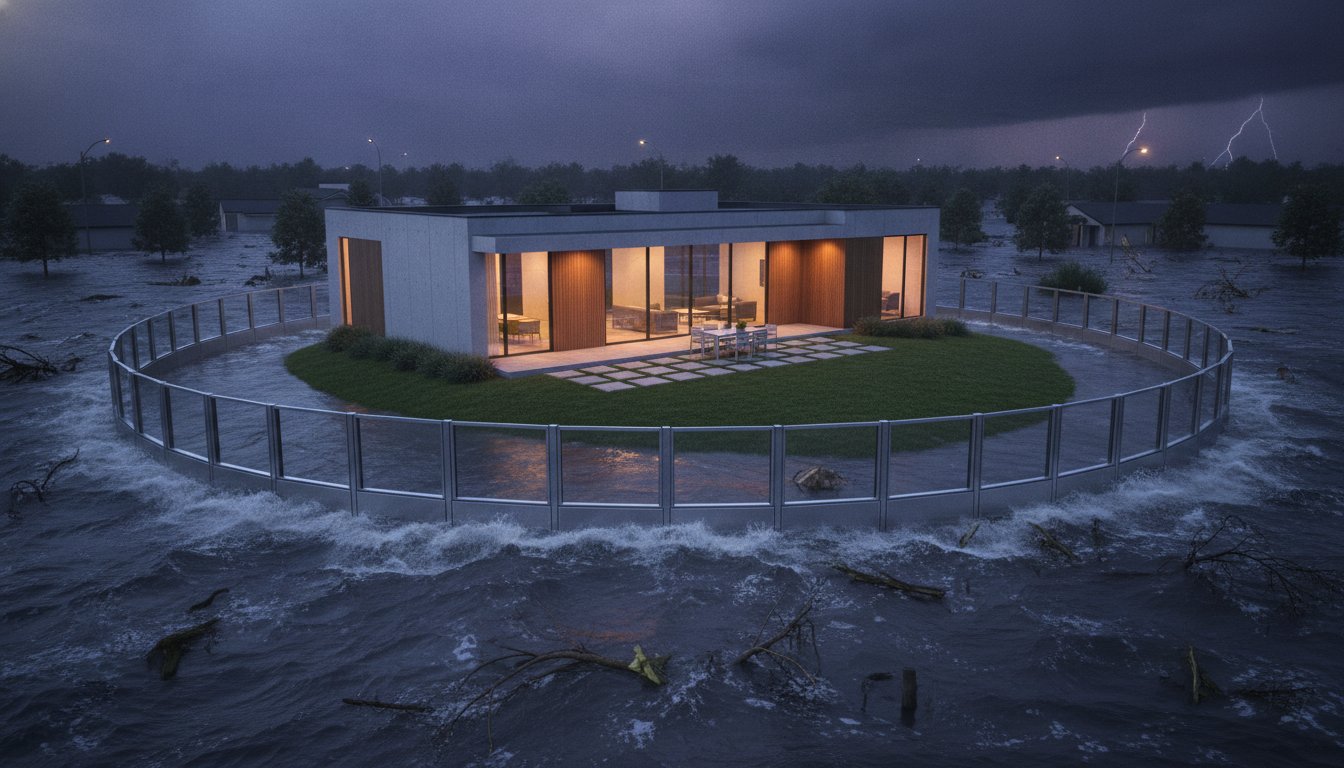
Sandbags are a relic of the past. They offer nothing more than a false sense of security while the water rises. When the stakes involve your home or business, "good enough" is a dangerous gamble. You understand the gut-wrenching anxiety of watching a storm radar and realizing your current defenses are inadequate. It's time to stop reacting to the weather. It's time to start dictating how it interacts with your boundaries. This article explores professional property flood mitigation solutions designed to replace hope with high-grade structural certainty.
We're moving past temporary fixes to focus on engineered resilience. You'll gain a deep understanding of modern mitigation technology and a clear framework for choosing a perimeter defense that lasts. With FEMA offering record levels of funding in 2026, including $1.1 billion through programs like Swift Current, the path to total protection is more accessible than ever. We'll show you how to secure your property and your peace of mind by shifting from a state of vulnerability to a position of strength.
Key Takeaways
- The physics of diversion—why redirecting water is the only way to protect your foundation from catastrophic hydrostatic pressure.
- A guide to modern property flood mitigation solutions—selecting the right tools to create an impenetrable line of defense around your estate.
- Site analysis essentials—how to identify natural water flow paths and eliminate the weak links in your building's structural envelope.
- Rapid-response technology—exploring military-grade inflatable barriers and diversion systems that offer professional protection on demand.
- The mindset of fortification—moving beyond temporary fixes to establish a permanent, engineered standard of security for your property.
Understanding Flood Hazard Mitigation — The Modern Imperative
Flood mitigation isn't about cleaning up after the storm. It's about ensuring the water never reaches your door. True mitigation is the proactive management of water flow; it's a calculated effort to prevent structural contact entirely. In the past, property owners could rely on historical data to predict risk. That era is over. Climate volatility has transformed "once-in-a-century" events into annual threats. Relying on old maps is no longer a viable strategy for defense.
Many owners believe insurance is their primary shield. This is a dangerous misconception. While a policy covers financial loss, it can't replace lost time or destroyed heritage. It won't restore the months spent in temporary housing or the family photos lost to black water. This reality is driving a global shift toward structural fortification. We're moving beyond simple recovery toward protecting the building envelope itself. Implementing robust property flood mitigation solutions is the only way to safeguard your legacy. Comprehensive flood management requires a transition from reactive hope to engineered certainty.
The Economic Reality of Inaction
The cost of waiting is always higher than the cost of preparation. Data from the National Institute of Building Sciences shows a clear "mitigation multiplier." Every $1 spent on federal mitigation grants saves the nation $6 in future disaster costs. For the individual owner, this translates to preserved property valuation and lower long-term maintenance. A house with a history of flooding is a liability. A fortified estate is an asset. Beyond the ledger, there's the psychological cost. Readiness is a lifestyle asset that provides the profound relief of security when the clouds gather. Investing in professional property flood mitigation solutions is the only way to maintain control over your asset's future.
FEMA Standards and Property Resilience
Modern defense starts with understanding Base Flood Elevation (BFE). This is the level where there's a 1% chance of flooding in any given year. Effective planning uses the BFE as a baseline to exceed. Mitigation strategies generally fall into two categories. "Wet" floodproofing allows water to enter uninhabited areas to equalize pressure. "Dry" floodproofing creates an impenetrable seal to keep the interior bone-dry. Flood hazard mitigation is a strategic structural investment that shields your asset from environmental volatility. It's the difference between a building that survives and one that thrives.
Retention vs. Redirection — Why Diversion is the Superior Defense
Water is a relentless physical force. At just three feet deep, standing water exerts over 180 pounds of pressure per square foot against your walls. This is hydrostatic pressure. It doesn't just push; it crushes. Most traditional property flood mitigation solutions rely on retention. They try to stand in the way of the water. This is the Retention Trap. When you attempt to hold back a massive volume of liquid, the pressure eventually finds a weak point. It forces its way through mortar, under foundations, or simply collapses the structure entirely. True defense requires a shift in physics. You must move from holding water to redirecting it.
Redirection uses the water's own momentum against itself. By using engineered angles and smooth surfaces, you can guide the surge around your perimeter rather than letting it pile up against your siding. This strategy reduces the load on your foundation. It keeps the soil around your home stable. While there are many Ways to Flood-Proof Your House, structural redirection is the only method that addresses the raw energy of a storm surge. It transforms a direct impact into a glancing blow. This is why professional diversion systems are becoming the standard for high-value estates.
The Failure of Passive Retention
Sandbags are the most common form of passive retention, and they're also the most prone to failure. They are inherently porous. Water seeps through the gaps and the fabric itself from the moment contact is made. Beyond the leak risk, the labor required is staggering. Deploying a 100-foot barrier just three feet high requires over 2,000 bags. That's nearly 40 tons of material moved by hand. Once the water recedes, these bags are often classified as hazardous waste. They absorb sewage, chemicals, and bacteria from the floodwater. You're left with a toxic mess and a damaged property. Passive systems offer the illusion of safety while delivering the reality of exhaustion.
Engineered Redirection: Redirecting the Force
Modern redirection systems use structural angles to dissipate water energy. Instead of a flat wall that takes the full hit, these systems present a sloped or curved profile. This allows the water to flow along the barrier. It prevents the turbulence that leads to foundation erosion and soil scour. By maintaining the integrity of the ground beneath your feet, you ensure the building remains level and secure. Redirection is the only way to beat a surge because it refuses to fight a war of attrition with nature. It's a calculated, engineered response to a high-stakes threat. Investing in advanced property flood mitigation solutions means choosing the physics of flow over the physics of failure.
Strategic Mitigation Systems — From Deployable Barriers to Invisible Coatings
Effective defense isn't a single product; it's a spectrum of technology tailored to your specific risk profile. Choosing the right tool for the threat is the difference between a dry interior and a total loss. While some properties require permanent redirection, others need the flexibility of rapid deployment. Modern property flood mitigation solutions allow for a perimeter that is both impenetrable and scalable. Whether you're securing a single residential entryway or a multi-acre commercial site, the goal remains the same: total structural integrity.
Aesthetics often dictate the choice of defense for high-value estates. You shouldn't have to choose between curb appeal and security. Current technology allows us to hide protection in plain sight, ensuring that your property remains beautiful until the moment the threat arrives. This integrated approach turns a vulnerable asset into a fortified sanctuary. By combining structural strength with visual discretion, we eliminate the need for unsightly, permanent alterations that can devalue your investment.
Engineered Diversion Systems
Fixed diversion systems are the front line for properties facing consistent water flow issues. These aren't flimsy plastic sheets. The Fortress Flood Diversion System utilizes heavy-duty polymers and reinforced steel to manage massive water volumes. These materials outperform wood and standard plastics because they don't warp or degrade under constant pressure. These systems are designed to integrate seamlessly with existing landscaping. They follow the natural contours of your estate, maintaining aesthetic value while providing a permanent, structural answer to rising tides. It's a definitive solution for those who refuse to leave their safety to chance.
Rapid Deployment: Inflatable and Temporary Barriers
When a storm is hours away, speed is your greatest ally. Inflatable barriers represent a breakthrough in mobile defense. The Fortress Inflatable Flood Barrier allows you to move from a state of vulnerability to a state of fortification in under 30 minutes. These systems often utilize the very element they fight; water-filled barriers use the weight of the flood to anchor themselves. This "fighting water with water" approach creates a heavy, pressurized seal that is virtually impossible to breach. Because these assets are reusable and easy to store, they provide a superior long-term ROI compared to disposable methods like sandbags.
Invisible Fortification: Transparent Liquid Coatings
Traditional mitigation often fails at the most obvious points: doors, windows, and masonry. Competitors frequently suggest building elevation as the only answer. This is often architecturally impossible or cost-prohibitive. The Fortress Transparent Liquid Paintable Flood Barrier offers a more sophisticated alternative. This breakthrough technology allows owners to seal structural entry points with a clear, impenetrable layer. It's an aesthetic-first solution. You can apply it to low-lying windows, door frames, and porous masonry without altering the building's appearance. It provides the security of a vacuum-tight seal with the invisibility of modern engineering.

Engineering a Resilient Perimeter — Evaluation and Implementation
A barrier is only as strong as the strategy behind it. Installing professional property flood mitigation solutions requires more than just high-grade hardware; it demands a comprehensive understanding of your site's unique hydraulics. We start with a rigorous site analysis. You must identify the natural flow of water across your land. Where does it pool? Where are the choke points that turn a steady rain into a destructive surge? Without this data, even the most expensive system is just a guess. Precision engineering ensures that your defense works with the landscape, not against it.
Execution is the final stage of protection. A deployment plan is essential for rapid storm response. You need to know exactly who is responsible for each component and how long it takes to secure the perimeter. Training and logistics turn a collection of equipment into a functioning shield. Maintenance is the silent partner in this process. You don't want to discover a worn seal or a missing component when the warning sirens are already blaring. Regular audits ensure that your investment is standing ready at all times. It's about maintaining a state of constant readiness.
Topography and Flow Analysis
Site grading should always complement your structural barriers. By subtly shaping the land, you can direct water toward your diversion systems and away from the building envelope. Be wary of backflow. This occurs when water redirected from one area inadvertently finds a path into another part of the property. Professional evaluation prevents this cycle of vulnerability. It's also vital to consult with engineers to ensure your mitigation doesn't negatively impact neighboring properties. Responsible fortification protects your assets without creating new liabilities for others. It's a strategic move that considers the entire ecosystem of your estate.
Structural Integrity and Entry Point Sealing
Your structural audit must be exhaustive. We analyze door thresholds, garage entries, and utility penetrations. These are the primary points of failure in any building. The weakest link rule applies here: a single unsealed crawlspace vent can compromise a million-dollar defense system. High-value property flood mitigation solutions must include a specific plan for every opening, no matter how small. Once installation is complete, professional pressure testing verifies the integrity of the seal. It's the only way to confirm your building is truly impenetrable. Don't leave your legacy to chance. Secure your structural audit today to identify your property's hidden vulnerabilities and begin the process of total fortification.
The Fortress Standard — Precision Protection for High-Value Assets
The Fortress Standard represents the apex of structural defense. It's where engineering meets uncompromising protection. We don't just provide equipment; we deliver a comprehensive shield for your most valuable assets. These property flood mitigation solutions are built on the principle that failure is not an option. From the redirection of mass water volumes to the microscopic sealing of building pores, the Fortress suite addresses every vector of vulnerability. It's a vigilant guardian for the modern estate.
The Fortress Flood Diversion System stands as the pinnacle of perimeter redirection. It's designed for those who face high-velocity threats and demand a permanent, structural answer. For those requiring agility, the Fortress Inflatable Flood Barrier provides military-grade protection that deploys in minutes. It turns a vulnerable opening into an impenetrable wall before the first drop hits the ground. When aesthetics are paramount, the Fortress Transparent Liquid Paintable Flood Barrier offers an invisible defense. It seals masonry and frames without altering the architectural soul of the home. This is the FloodWater Pros approach: a seamless integration of engineering, manufacturing, and professional installation.
Why Professional Installation Matters
Mitigation is a science of margins. A single inch of misalignment can lead to catastrophic failure when hydrostatic pressure peaks. DIY attempts often overlook the subtle hydraulics of a site, turning a potential shield into a liability. The FloodWater Pros guarantee is built on engineered precision and on-site expertise. We ensure every component of your property flood mitigation solutions is calibrated to the specific topography of your estate. Professional installation doesn't just protect your building; it secures your legacy. It provides the profound relief of knowing your sanctuary is ready for the storm. You've worked too hard to leave your security to a manual and a prayer.
Your Path to Fortification
The journey to resilience begins with a detailed consultation. We map your property's unique defense requirements, identifying the specific flow paths and structural weak points discussed in our engineering audit. Every Fortress system is customized to your architectural needs. We don't believe in one-size-fits-all security. We believe in tailored fortification that respects the integrity of your home. The water is coming, but it doesn't have to win. Your defense starts with a single, decisive step toward expert partnership. Secure your perimeter with a professional flood mitigation consult and move from a state of concern to a state of absolute readiness. Protect what matters most with the experts who have seen it all.
Secure Your Legacy Through Structural Fortification
The window for reactive recovery has closed. To protect high-value assets, you must embrace the physics of redirection and the certainty of engineered defense. We've explored how professional property flood mitigation solutions move beyond the failure of sandbags to create a truly impenetrable building envelope. By prioritizing site-specific hydraulics and structural integrity, you transform your estate from a target into a fortress. It's a shift from vulnerability to absolute readiness.
FloodWater Pros provides the expertise required for this total transformation. Our approach combines proprietary Fortress engineering with a full-service design-to-installation model. With nationwide professional deployment, we ensure your defense is ready before the clouds gather. Don't wait for the water to dictate your future. Take control of your security with a partner who understands the high stakes of environmental volatility. Fortify your property with the Fortress Flood Diversion System. You deserve the profound relief of a secure sanctuary and the confidence that your home is prepared for whatever comes.
Frequently Asked Questions
What is the most effective flood hazard mitigation system for a residential home?
The most effective system is one that utilizes active redirection rather than passive retention. Diversion systems are superior because they manage the energy of moving water instead of just trying to hold it back. This approach protects the foundation from the crushing force of hydrostatic pressure. For most high-value homes, a combination of perimeter barriers and entry-point seals provides the highest level of structural certainty.
Can I install flood mitigation systems myself or do I need a professional?
Professional installation is essential for high-stakes property flood mitigation solutions. Even a minor gap in a barrier can lead to a total structural breach when the water rises. Experts ensure every seal is pressure-tested and every angle is calibrated to your site's specific topography. DIY attempts often fail because they don't account for the complex hydraulics and soil mechanics involved in a major flood event.
How does a flood diversion system differ from a traditional flood wall?
Traditional flood walls are designed to hold water in place. This creates massive pressure that can compromise the wall or the ground beneath it. Diversion systems use structural angles to guide water around your property. This reduces the physical load on your defenses and maintains soil stability. By keeping the water moving, you prevent the buildup of destructive force against your building's envelope.
Is a paintable flood barrier really effective against standing water?
The Fortress Transparent Liquid Paintable Flood Barrier is highly effective at sealing structural entry points. It creates a vacuum-tight seal on porous materials like masonry, stone, and door frames. This prevents seepage through the microscopic gaps that traditional barriers often miss. It's a professional-grade solution that provides an invisible layer of defense without compromising the architectural integrity of your home.
Do inflatable flood barriers work on uneven terrain or grass?
Inflatable barriers are designed to be highly versatile. The Fortress Inflatable Flood Barrier can contour to uneven surfaces more effectively than rigid, permanent walls. Its flexibility allows it to create a seal on grass, soil, and sloped driveways. While they are adaptable, a professional site evaluation ensures the ground can support the weight of the pressurized system during a surge.
How much does a professional property flood mitigation system cost?
Costs vary significantly based on the perimeter size and the specific environmental threats your property faces. A customized system is a structural investment that reflects the value of the assets it protects. Because every estate has different elevations and entry points, we recommend a professional consultation to map out the specific requirements and engineering needs of your property.
Will installing flood barriers lower my property insurance premiums?
Many insurance providers recognize structural mitigation as a proactive way to reduce risk. While we don't broker insurance, fortified properties often qualify for lower premiums or credits from the National Flood Insurance Program. Policyholders in high-risk areas should also investigate FEMA's Increased Cost of Compliance coverage. This can provide up to $30,000 to help cover the costs of bringing your property into compliance with local ordinances.
What is the difference between wet and dry floodproofing?
Dry floodproofing aims to keep the interior of a building bone-dry by sealing the entire structural envelope. Wet floodproofing is a different strategy that allows water to enter uninhabited areas, such as crawlspaces, to equalize internal and external pressure. This prevents the foundation from collapsing under the weight of the flood. Most modern residential property flood mitigation solutions focus on dry floodproofing to protect living spaces and high-value interiors.


