
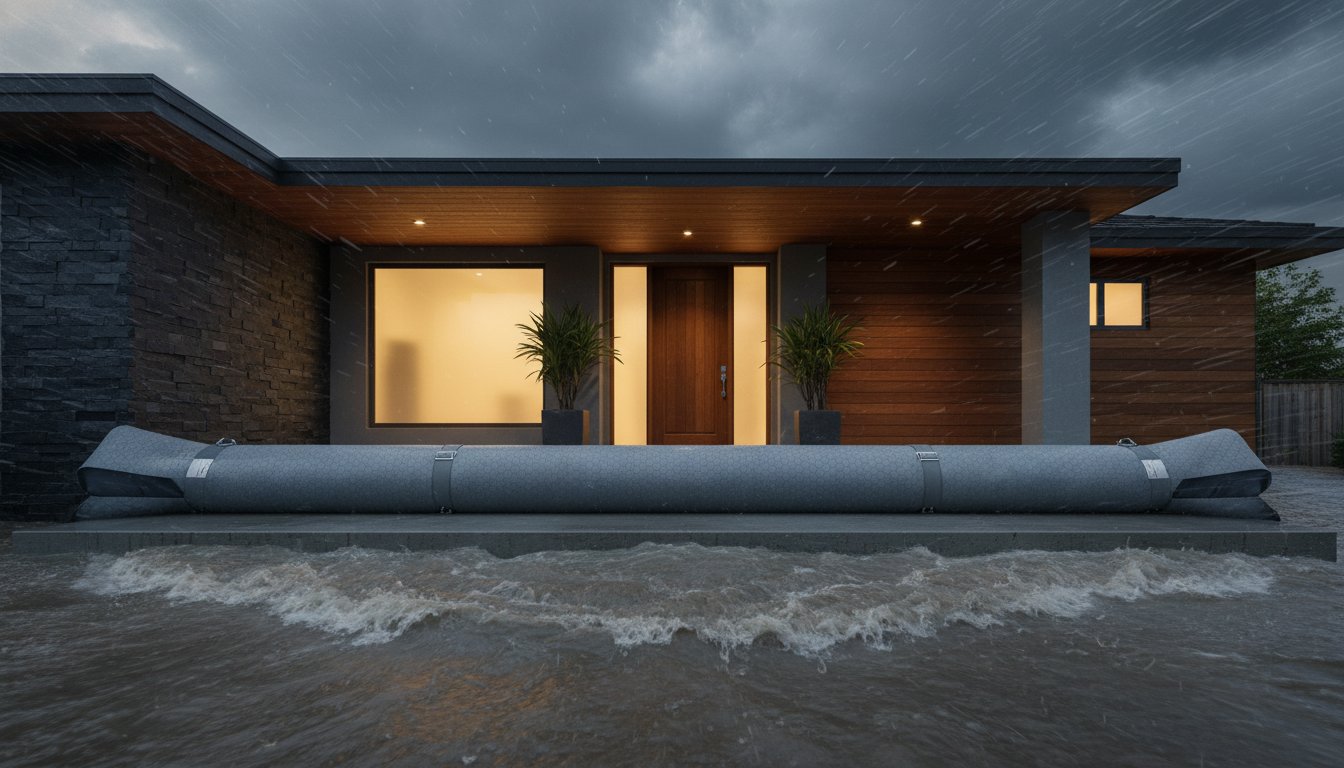
Did you know that just one inch of floodwater in your home can result in approximately $25,000 in damages? It's a staggering figure that forces a hard look at how we protect our properties. When it comes to sealing doors against flood water, relying on outdated methods is a gamble you can't afford to take. You're likely exhausted from the backbreaking labor of hauling heavy sandbags every time a storm clouds the horizon. You want absolute safety, but you don't want your home to look like a fortress under siege.
We understand the fear of catastrophic loss and the frustration of bulky, unattractive barriers that ruin your curb appeal. This guide promises to show you how to transform your vulnerable entryways into impenetrable shields using modern engineered systems. We'll explore high-performance solutions like inflatable barriers and paintable liquid seals that offer professional-grade security. You'll discover how to achieve total peace of mind with structural fortification that preserves your home's beauty while standing guard against the rising tide.
Key Takeaways
- Learn why standard weatherstripping fails against hydrostatic pressure and the crushing weight of rising water.
- Move beyond the backbreaking labor of sandbags and discover engineered alternatives that provide military-grade security without the structural damage of plywood.
- Discover how the Fortress Transparent Liquid Paintable Flood Barrier creates a seamless molecular bond to stop leaks without ruining your home's curb appeal.
- Explore the Fortress Inflatable Flood Barrier for rapid-response defense that uses the water's own weight to anchor an impenetrable seal.
- Understand why sealing doors against flood water is most effective when paired with a complete perimeter strategy like the Fortress Flood Diversion System.
Why Standard Door Seals Fail: The Physics of Flood Water
Most homeowners believe their front door is a solid barrier. They trust the weatherstripping. They rely on the deadbolt. This confidence vanishes the moment floodwater reaches the porch. Standard seals are designed to block air drafts and light rain. They aren't engineered to withstand the relentless, crushing weight of a rising tide. Sealing doors against flood water requires a shift in perspective. You aren't just stopping a leak; you're resisting a structural assault.
Water is heavy. At 62.4 pounds per cubic foot, its weight accumulates rapidly against a flat surface. When that water is moving, the force increases. Even stationary water creates a "Bypass Effect" that finds every microscopic gap in your home's exterior. It travels through porous masonry. It seeps behind siding. It flows through the gaps between your door frame and the wall studs. A seal is only as strong as the frame that holds it. If the frame absorbs water and swells, the seal breaks. If the threshold isn't bonded to the foundation, water will simply flow underneath it. Sealing doors against flood water is only effective if you treat the entire entryway as a single, unified structure.
The Reality of Hydrostatic Pressure
This physical phenomenon exerts force in every direction. It pushes inward against the door face. It presses down on the sill. It even drives upward through the floor. As the water level rises, this pressure multiplies. A few extra inches can add hundreds of pounds of force. This is why standard door hinges often buckle. They aren't rated for these loads. Hydrostatic pressure is the primary killer of DIY seals because it forces water through openings you didn't even know existed. To survive, you need a professional flood barrier designed for extreme resilience.
The Threshold Weakness
The door sill is the most vulnerable point in any entryway. Gaps between the sill and the concrete foundation are almost universal in standard construction. These fissures become high-pressure entry points during a flood. Porous wood frames act like straws. They pull water into your walls through capillary action. Many modern frames also include "weep holes" for drainage. In a flood, these holes work in reverse. They act as open valves for the surge. Effective protection means identifying these hidden paths before the water does. It's about total entryway fortification.
Comparing Your Options: Temporary Patches vs. Engineered Fortification
Most property owners react to flood warnings with a sense of frantic desperation. They grab whatever is at hand. Usually, this means a trip to the hardware store for sandbags or plywood. These are temporary patches. They aren't structural solutions. Sealing doors against flood water requires a system that can withstand both velocity and sustained pressure. When you choose a defense strategy, you're choosing between a recurring nightmare of labor or a one-time investment in resilience.
Plywood is often the first choice for a quick fix. It's a mistake. Screwing heavy sheets of wood directly into your door frame creates permanent structural damage. It leaves behind holes that compromise the integrity of your entryway. When the surge hits, plywood bows under the weight. It isn't waterproof; it's merely a baffle that slows the inevitable. True protection requires a barrier that creates a mechanical, watertight bond with the foundation. If you're ready to move beyond these outdated methods, exploring advanced entryway protection can provide the permanent security your property deserves.
The Sandbag Myth
Sandbags are the most iconic symbol of flood defense. They're also the most inefficient. A single standard doorway requires approximately 75 to 100 bags to create a viable wall. That's nearly two tons of backbreaking labor. The danger doesn't end when the sun comes out. Sandbags soak up "gray water" during a flood. This water is often contaminated with raw sewage, industrial chemicals, and hazardous bacteria. You can't just empty them in your garden. They become toxic waste that ends up in a landfill. It's a one-time-use solution that leaves you exhausted and vulnerable.
Professional Flood Gates and Barriers
Engineered systems offer a decisive advantage in both speed and reliability. Removable aluminum gates and rapid-deployment barriers are designed for high-velocity water situations. They focus on seal integrity. Unlike sandbags, which rely on gravity, professional barriers use compression gaskets to lock out moisture at the molecular level.
- Deployment Speed: Professional systems can be activated in under ten minutes.
- Longevity: These barriers are built from marine-grade materials meant for decades of reuse.
- Certifications: Look for systems that distinguish between "water-resistant" and "flood-proof." Only the latter are tested against the extreme hydrostatic loads discussed in previous sections.
Choosing engineered fortification is about more than just stopping water. It's about reclaiming your time and protecting your health. You stop being a victim of the weather and start becoming a guardian of your domain.
The Invisible Shield: Sealing Doors with Paintable Liquid Barriers
Traditional flood gates are eyesores. They scar beautiful facades and require permanent, bulky hardware that ruins curb appeal. The Fortress Transparent Liquid Paintable Flood Barrier offers a radical alternative. It provides high-stakes protection without the structural bulk. This system creates a seamless molecular bond between your door and its frame. It transforms a vulnerable entry into a hardened shield. Sealing doors against flood water no longer requires sacrificing your home's architectural soul. It's about invisible resilience.
Liquid barriers address the "Bypass Effect" mentioned earlier by sealing the microscopic pores in your building materials. While a physical gate might stop the bulk of a surge; water can still seep through the masonry around it. A paintable coating eliminates this vulnerability. It creates a unified, waterproof envelope that covers the door, the sill, and the adjacent walls. You gain the profound relief of total security without the aesthetic penalty of military-grade hardware. It is the modern answer to an age-old threat.
How Liquid Barriers Work
These advanced coatings utilize high-performance hydrophobic technology. They don't just block water; they repel it at the threshold. This is the ultimate solution for historic homes or high-end residential estates where preserving architectural integrity is non-negotiable. The transparent finish is virtually undetectable once cured. It remains flexible enough to handle the natural shifting of a house but tough enough to withstand moving debris and harsh UV exposure. It is a vigilant, invisible guardian that stays on duty 24/7.
Step-by-Step Application for Entryways
Adhesion is the foundation of defense. You must start with a surgically clean substrate. Remove all oils, dirt, and loose debris from the door and frame. Apply the Fortress Transparent Liquid Paintable Flood Barrier with a brush or roller. Focus on the transition points where the frame meets the siding or masonry. We recommend extending the coating at least 12 inches up the door and 12 inches onto the surrounding wall surface. This creates a deep "boot" of protection.
Curing times are critical. The barrier needs time to reach its full molecular strength before it can resist hydrostatic pressure. Depending on local humidity, this process can take several hours. Once dry, the seal is clear and impact-ready. Verification is simple. A quick water bead test confirms the surface is fully protected. You've successfully turned a weak point into a point of strength. Your entryway is now an impenetrable shield against the rising tide.

Rapid-Response Deployment: Inflatable Barriers for High-Risk Thresholds
Liquid coatings provide an excellent invisible shield, but certain high-risk thresholds demand a more substantial physical presence. When the forecast predicts high-velocity surges, you need a wall that rises as fast as the water. The Fortress Inflatable Flood Barrier is engineered for exactly this moment. It offers heavy-duty protection that you can deploy in minutes without heavy machinery or a crew of volunteers. Sealing doors against flood water during a flash event requires speed and structural certainty. It's about having a plan that works when every second counts.
This system relies on L-shaped engineering. It's a brilliant application of physics. The horizontal "lip" of the barrier sits on the ground, facing the oncoming water. As the flood rises, the weight of the water itself presses the barrier down, anchoring it more firmly to the foundation. The more water that hits it, the tighter the seal becomes. It's a proactive defense that turns the threat's own strength into your greatest advantage. This is how you achieve total entryway fortification without the permanence of a concrete wall.
The Mechanics of Inflatable Defense
Internal air pressure is the secret to a perfect seal. Sandbags are lumpy and leave gaps. Plywood is rigid and misses the contours of your driveway. An inflatable barrier is different. It conforms to uneven surfaces like pavers, cobblestones, or cracked concrete. The internal pressure forces the material into every dip and valley. Constructed from drop-stitch fabric and heavy-duty PVC, the Fortress Inflatable Flood Barrier resists puncture from sharp debris and high-velocity impacts. Unlike traditional methods, sealing doors against flood water with inflatable technology ensures that even the most irregular surfaces are made watertight.
Deployment Protocol for Homeowners
Success depends on a clear sequence of action. You don't want to be reading a manual while the rain is pouring. Follow this protocol for maximum effectiveness:
- Unroll the Defenses: Lay the barrier across the primary threat path. Ensure the L-shaped flap faces toward the expected water source.
- Activate the Seal: Use a standard portable compressor to inflate the barrier to the specified PSI. It will become rigid and stable within seconds.
- Final Positioning: Slide the barrier into place to ensure zero-gap contact with your door frame and side walls.
After the waters recede, maintenance is straightforward. Wash the barrier with fresh water to remove any contaminants, salt, or silt. Let it dry completely before rolling it back up. Store it in a cool, dry place. Your rapid-response kit is now ready for the next season. Don't wait for the next siren to sound. You can secure your rapid-response barrier today and stop the flood before it reaches your door.
Professional Readiness: Integrating Door Seals into a Perimeter Strategy
A sealed door is a vital component of defense. It isn't a complete solution. If you focus only on the threshold, you ignore the reality of how water behaves. Sealing doors against flood water is most effective when you control the water's destination. Without a plan to manage the flow, a surge will simply migrate to the next weak point in your foundation. True security requires a holistic approach that combines entryway fortification with a robust diversion strategy. You must think like the water to defeat it.
The Fortress Flood Diversion System represents this higher level of protection. It doesn't just block the surge; it redirects the threat away from your home's perimeter entirely. By managing the path of the water, you significantly reduce the hydrostatic pressure pressing against your entryways. This synergy ensures that your door seals aren't forced to work at their absolute breaking point. It's the difference between a desperate stand and a calculated victory. You protect your foundation, your landscaping, and your peace of mind simultaneously. It's a proactive strike against environmental uncertainty.
The Diversion Advantage
Moving water is a dynamic force. When it pools against a structure, it seeks out every microscopic fissure. By implementing a diversion system, you channel that energy into safe zones. This reduces the saturation levels around your foundation. Your door barriers become a final line of defense rather than the only one. This layered approach also safeguards outdoor assets that a simple door seal cannot reach. It preserves your property's value by preventing soil erosion and structural undermining. Strategic redirection is the hallmark of a professional grade defense.
Your Fortification Roadmap
Building a resilient property starts with a vulnerability audit. You must identify every ground-level entry point and assess its specific risk level. Some doors may require the invisible protection of a paintable coating. Others might need the rapid response power of an inflatable system. The most critical step is coordinating these tools with a perimeter diversion plan. Consulting with experts allows you to understand your property’s unique hydrological risks. You don't have to face the uncertainty of the next storm alone. You can Schedule your professional engineering consultation with FloodWater Pros to begin your journey toward total fortification. Take the decisive step today to ensure your home remains an impenetrable sanctuary.
Take Command of Your Property's Defense
The threat of rising water is real. It's relentless. But you don't have to be vulnerable. You now understand the physics of hydrostatic pressure and the limitations of temporary patches. Effective defense isn't about hope; it's about engineering. Sealing doors against flood water is the first step in a total fortification strategy. By combining molecular liquid barriers with rapid inflatable systems, you create a point of strength where there was once a weakness.
True peace of mind comes from a comprehensive perimeter plan. You deserve a solution that matches the scale of the threat. Secure your home with the Fortress Flood Diversion System. Our proprietary Fortress technology is specifically engineered for high-stakes residential protection. With our professional national installation team, you gain an elite partner in safeguarding your most valuable assets. Don't wait for the next surge to test your readiness. Take action now and transform your property into an impenetrable sanctuary. You're ready for whatever the horizon holds.
Frequently Asked Questions
Can I use standard silicone caulk to seal my door against a flood?
Standard silicone caulk is not a viable solution for flood defense. It lacks the structural bond and flexibility needed to withstand intense hydrostatic pressure. While it might stop a minor draft, it will fail instantly under the weight of a surge. You need engineered coatings designed for high-stakes sealing doors against flood water to ensure your home remains dry.
How much water pressure can a professional door flood barrier handle?
Professional barriers are engineered to resist hundreds of pounds of force. The exact capacity depends on the height of the barrier and the velocity of the water. Unlike DIY patches, these systems are tested against the crushing loads of standing water to prevent structural collapse and seal failure.
Is the Fortress Transparent Liquid Paintable Flood Barrier truly invisible?
The Fortress Transparent Liquid Paintable Flood Barrier cures to a clear, high-performance finish. It's designed to be virtually undetectable once applied to your door and frame. This allows you to maintain your home's architectural beauty while keeping a vigilant, invisible guardian on duty at all times.
How long does it take to deploy the Fortress Inflatable Flood Barrier?
You can deploy the Fortress Inflatable Flood Barrier in under ten minutes. This rapid-response capability is vital for homeowners facing flash floods. It unrolls quickly and inflates using a standard portable compressor, providing military-grade security without the need for a professional crew or heavy machinery.
Will sealing my doors prevent water from coming up through the floor?
Sealing doors against flood water is only one part of a defense strategy. It won't stop water from rising through your foundation or floorboards due to rising groundwater. To prevent total property loss, you must integrate door seals into a broader perimeter plan that manages the water's path away from your structure.
Can I still use my door while a flood barrier is installed?
Most physical barriers will temporarily block the use of your entryway. Inflatable systems and removable gates are designed to be impenetrable, which means they must stay in place until the threat passes. Liquid barriers don't block the door's function during the application process, but they must remain undisturbed once the final seal is made for an approaching storm.
Does insurance cover the cost of professional flood barrier installation?
Insurance coverage for mitigation hardware depends entirely on your specific policy and provider. Some providers offer credits or lower premiums for properties with professional flood protection systems. Check with your agent to see if your investment in structural fortification qualifies for any financial incentives or coverage extensions.
How often do I need to replace my inflatable flood barriers?
These barriers are built for long-term resilience and multiple uses over many seasons. If you wash away contaminants and store the barrier in a cool, dry place, it remains a reliable part of your arsenal. Always perform a visual inspection and a pressure test before each storm season to verify the integrity of the material.


