
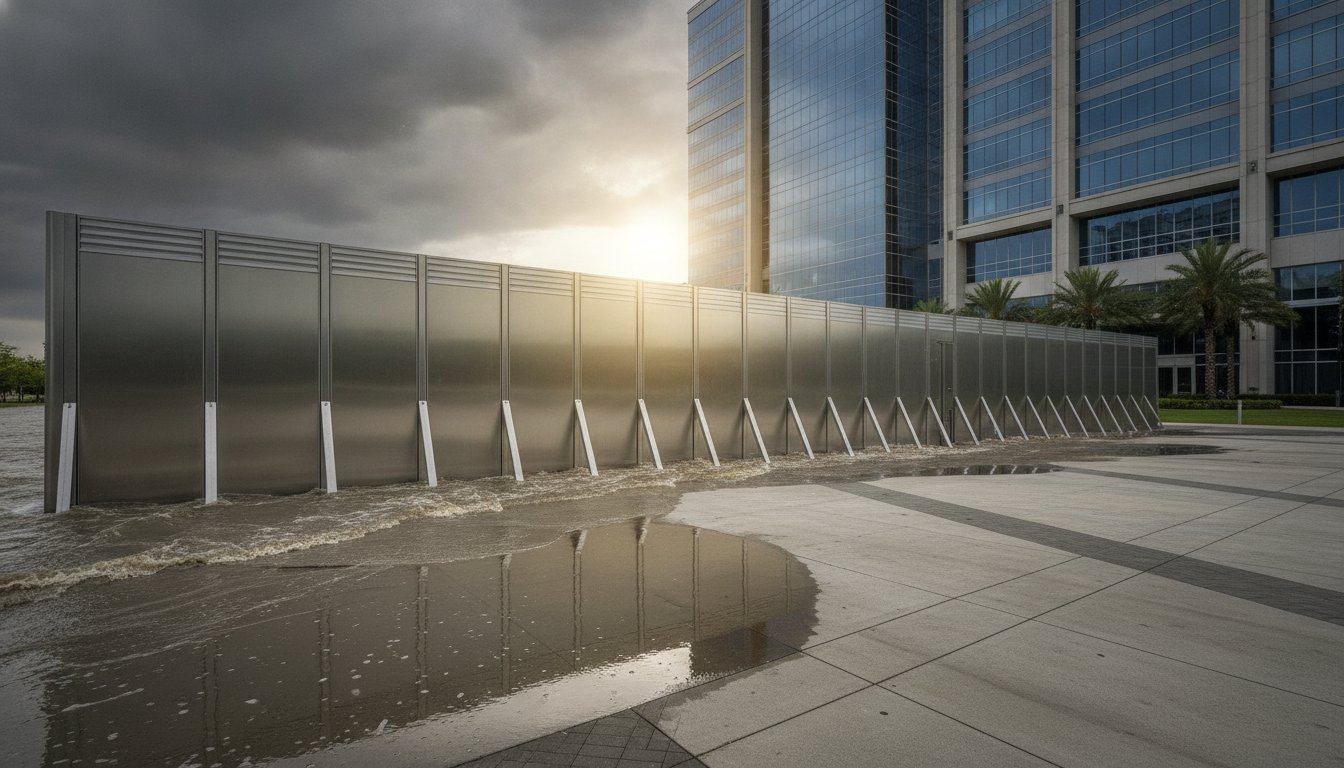
What if the retail barrier you bought to save money is actually the most expensive mistake you'll ever make? You understand the high-stakes fear of watching the clouds darken and wondering if your property will survive the night. It's exhausting to weigh the flood diversion system cost against the terrifying reality of total structural loss. You shouldn't have to choose between a confusing retail kit and true safety.
This guide reveals the critical factors that determine the price of professional fortification. You'll discover why an engineered solution is the ultimate investment for your property's future. We'll explore cost drivers, installation complexity, and the path to total structural security through the Fortress Flood Diversion System. With the U.S. flood barrier market projected to reach $0.45 billion in 2026, the shift toward permanent, professional-grade resilience is clear. It's time to stop reacting to the water and start commanding your environment. You deserve the relief that only a vigilant guardian can provide.
Key Takeaways
- Distinguish between temporary retail barriers and professional systems to avoid the devastating price of total property loss.
- Learn how linear footage and protection height act as the primary drivers for your total flood diversion system cost.
- Compare the initial investment of rapid-deployment technology against a decade of reduced labor and structural security.
- Recognize why professional engineering is a non-negotiable requirement for ensuring structural integrity and managing liability risks.
- Explore how the Fortress Flood Diversion System acts as an impenetrable shield for your most valuable property assets.
Understanding the Price of Perimeter Defense
Defense is a calculated choice. It's the difference between hoping for the best and ensuring it. When you analyze the flood diversion system cost, you aren't just looking at a bill for materials. You are evaluating the price of structural survival. A simple barrier acts as a temporary plug. A diversion system acts as a strategic shield. It moves water with intent rather than just trying to stop it in its tracks.
The price of inaction is often total property loss. Professional systems prevent the six-figure repair bills and months of displacement that follow a major breach. Cheap, off-the-shelf solutions frequently fail in high-velocity scenarios. They lack the anchoring and precision engineering required to withstand the massive kinetic energy of rushing water. By studying various flood management techniques, it becomes clear that professional fortification is the only way to move from a state of constant vulnerability to a state of absolute security. True peace comes from knowing your perimeter is impenetrable.
Diversion vs. Retention: The Core Cost Distinction
Retention forces you to fight the laws of physics. You attempt to stop thousands of pounds of hydrostatic pressure. This approach requires massive, heavy-duty reinforcement that drives up expenses. Diversion is a smarter, more efficient strategy. It uses the water's own momentum to guide it away from your foundation. This redirection logic significantly reduces the structural stress on your defense system. It allows for a more streamlined design without sacrificing strength. Engineered systems are built for long-term durability. They don't degrade after one storm. While disposable alternatives are cheaper on day one, they require constant replacement. A professional system is a one-time investment in permanent resilience.
The "Sandbag Fallacy" and Hidden Costs
Sandbags often appear to be a low-cost solution. This is an illusion. You pay for sandbags in back-breaking labor and lost time. You pay for them again when the storm passes. Traditional sandbags soak up toxic runoff and sewage. They quickly become a biohazard. Disposing of thousands of pounds of contaminated waste is an expensive and dangerous process. The Sandbag Fallacy is a high-risk economic error where the illusion of low entry costs masks the catastrophic expense of system failure and cleanup. Relying on outdated methods puts your equity at risk. A professional diversion system eliminates the need for emergency labor. It provides a clean, rapid response that protects your property and your health.
Primary Cost Drivers for Engineered Diversion
Defense is not a retail transaction; it is a structural commitment. Determining your total flood diversion system cost begins with four non-negotiable variables. You can't rely on one-size-fits-all kits when the stakes are this high. A professional system is tailored to your specific geography and risk profile. With the annual cost of flooding in the U.S. reaching between $179.8 and $496.0 billion, precision engineering is the only logical path to equity preservation. Your investment is driven by the following factors:
- Linear Footage: This is your foundational metric. Every foot of perimeter requires consistent sealing and structural support.
- Protection Height: Vertical requirements don't scale linearly. They scale exponentially because the water's weight increases with every inch.
- Terrain Complexity: Uneven ground, landscaping, and driveways require custom seals. Standard barriers fail where the ground isn't perfectly flat.
- Material Grade: There's a significant difference between the Fortress Inflatable Flood Barrier for rapid deployment and the rigid Fortress Flood Diversion System for permanent high-velocity zones.
Before you commit to a specific strategy, it's vital to consult with specialists who can map these drivers to your property's unique layout.
Calculating the Footprint of Protection
Measuring your perimeter isn't just about total length. You must account for "lapping" where sections meet. These overlap points are where most retail systems fail. Professional engineering ensures that every joint is a fortress. You also need to factor in the secondary costs of deployment hardware and long-term storage solutions. A system that's difficult to store is a system that won't be ready when the sirens sound. Integrity depends on the seal between the barrier and your specific soil or pavement type.
Height and Hydrostatic Pressure Variables
The physics of floodwater are unforgiving. As water rises, it exerts massive force against your barriers. Hydrostatic pressure is the primary driver of material thickness requirements. This means a two-foot barrier isn't just twice as strong as a one-foot barrier; it must be significantly more robust to handle the increased weight. High-velocity zones require additional internal reinforcement to prevent the system from shifting. You aren't just paying for height. You're paying for the structural resilience to hold back a literal wall of water without a single point of failure.
Diversion vs. Traditional Barriers: A Cost-Benefit Analysis
Stop viewing flood defense as a one-time purchase. It is a ten-year equity shield. When you evaluate the flood diversion system cost, you must look beyond the initial invoice. Traditional barriers focus on retention. They attempt to hold water back; essentially fighting the weight of the ocean. This creates massive hydrostatic pressure that eventually leads to structural failure. Diversion is different. It uses redirection logic to move water around your assets. By relieving the pressure rather than absorbing it, diversion systems offer a significantly lower total cost of ownership over a decade. You aren't just buying material; you're buying a lower failure rate.
The cost of speed is another critical factor. Manual systems require a team of people and hours of lead time. If a flash flood hits, you pay for that delay in ruined flooring and mold remediation. Professional systems prioritize rapid deployment. They allow a single person to secure a perimeter in a fraction of the time. This efficiency eliminates the recurring expense of emergency labor and the high-stakes gamble of "getting there in time." Reusability is where the economic argument becomes undeniable. While retail barriers often degrade after a single soak, an engineered system is a permanent asset that remains ready for the next decade of threats.
Inflatable vs. Rigid Systems
Choosing between the Fortress Inflatable Flood Barrier and a rigid diversion system depends on your specific risk level. Inflatable systems offer a superior price-to-performance ratio for those who need to protect large areas quickly. Deployment takes minutes rather than hours. They also require minimal storage space; reducing the secondary costs of warehouse or garage real estate. Rigid systems are the choice for high-velocity zones where the water's kinetic energy is extreme. While the initial outlay is higher, the absolute impenetrability they provide for high-risk foundations is a non-negotiable investment.
The Paintable Advantage: Aesthetic Security
Luxury properties often face a unique challenge: the conflict between security and curb appeal. Standard flood gates are bulky and unsightly. They can negatively impact property value even when it isn't raining. The Fortress Transparent Liquid Paintable Flood Barrier offers a sophisticated solution. It provides invisible protection that seals porous surfaces without changing the building's appearance. This aesthetic security justifies its premium by preserving the architectural integrity of the home. Maintenance is simple and cost-effective compared to the mechanical seals and heavy hardware required by traditional gates. You get total structural security without sacrificing the visual identity of your investment.

Professional Installation and Structural Integrity
Buying a barrier is the first step. Installing it is the final stand. A significant portion of the total flood diversion system cost reflects the transition from a physical product to a tactical defense. DIY attempts often ignore the invisible forces of nature; they focus on the visible barrier while neglecting the foundation. Professional oversight ensures that your perimeter doesn't just look secure. It actually holds when the pressure peaks. You aren't just paying for labor. You're paying for the certainty that your defense won't buckle under the weight of a thousand-year storm.
Structural integrity depends on the bond between the barrier and your specific terrain. Professional installers use industrial-grade equipment to create a seamless seal that prevents under-seepage. This is the most common point of failure for retail solutions. When you invest in expert installation, you're closing the gap between a "good effort" and a guaranteed result. To ensure your property is truly fortified, schedule an engineering consultation today.
The Role of Site-Specific Engineering
Standardized solutions fail because every property has a unique hydraulic profile. We analyze flow paths and soil saturation points to predict where the water will exert the most force. Customizing the Fortress Flood Diversion System for your specific perimeter involves more than just measuring distance. It requires an understanding of how water interacts with your specific landscaping and drainage infrastructure. Professional engineering converts a product into a system. Without this phase, you're simply placing an obstacle in the water's path rather than commanding its direction. This expert analysis is what prevents a diversion strategy from accidentally flooding a neighbor or a secondary structure.
Installation Logistics and Labor
Installation is a methodical process of fortification. It requires specialized anchoring and sealing equipment that retail kits simply don't include. You're paying for the precision of the seal between the barrier and the ground; whether that ground is reinforced concrete or saturated soil. Professional installation also bridges the insurance and liability gap. Most carriers won't recognize a defense system that hasn't been certified by an expert. Long-term maintenance agreements and regular system testing are part of this investment. They ensure your shield remains ready for the moment of impact. You don't want to discover a seal has perished during the first hour of a hurricane. Regular professional testing identifies these vulnerabilities before they become catastrophes.
The Fortress Solution: Precision Engineering for Total Peace
Defense is a duty. Choosing to fortify your property is a decisive act of stewardship. When you calculate the final flood diversion system cost, you aren't just buying hardware. You're securing a partnership with experts who understand the gravity of environmental threats. The Fortress Flood Diversion System is the gold standard for high-stakes protection. It's built for those who refuse to leave their equity to chance. This system represents the pinnacle of structural resilience; offering a level of security that generic retail products simply cannot match.
We provide a range of specialized solutions to meet every tactical need. For environments requiring a rapid, mobile response, the Fortress Inflatable Flood Barrier delivers military-grade protection in a fraction of the time. If you need to safeguard a luxury estate without compromising its architectural beauty, the Fortress Transparent Liquid Paintable Flood Barrier offers an invisible shield. This is the FloodWater Pros difference. We guide you from the initial engineering design to the final, certified installation. Every component is chosen for its ability to withstand the extreme kinetic energy of rushing water.
Why Fortress Beats Generic Alternatives
Generic barriers focus on retention. They attempt to hold back the weight of the water; a strategy that often leads to catastrophic failure. Fortress technology is different. It's designed for redirection. We use proprietary logic to move water around your foundation rather than letting it press against your walls. This redirection significantly reduces the stress on your property's structure. Our materials are professional-grade and built for long-term durability. They don't perish after a single storm. Our client success stories feature properties that remained dry and secure while neighboring structures suffered total loss. You don't just want a barrier. You want a system that has been tested in the most unforgiving conditions.
Securing Your Consultation
The time to act is before the clouds darken. Waiting for a storm cycle to begin is a high-risk gamble that rarely pays off. The true flood diversion system cost is an investment in your mental well-being and financial stability. Our experts provide a comprehensive assessment that covers every variable; from soil composition to local drainage patterns. We don't offer guesswork. We offer a data-driven path to total structural security. Our team ensures that your fortification is ready for the moment of impact. Don't wait for the water to reach your doorstep. Fortify your property—request a professional Fortress evaluation.
Command Your Environment: The Path to Total Security
You've seen that the flood diversion system cost is more than a line item. It's the price of structural survival. By choosing redirection over retention, you relieve the crushing pressure that destroys foundations. Height and linear footage define the footprint. Engineering defines the result. Professional installation bridges the gap between a temporary barrier and an impenetrable shield. You deserve the relief of knowing your property is protected by national expertise in high-velocity redirection.
Our proprietary Fortress engineering and full-service design-to-installation workflow ensure every seal is absolute. We act as your vigilant guardian against the uncertainty of rising waters. Take command of your property's future before the next storm cycle begins. Secure your perimeter with a Fortress Diversion System; get a custom quote today. Don't wait for the water to prove your vulnerability. Your property is worth the fortification. True peace of mind is within your reach.
Frequently Asked Questions
How much does a typical residential flood diversion system cost?
The total flood diversion system cost is determined by the specific hydraulic profile of your property rather than a flat rate. Factors like the total linear footage and the required protection height create the foundation of your quote. We don't provide generic estimates because your structural safety depends on precision. Every dollar spent on fortification is a direct investment in your home's survival.
Is a professional flood diversion system more expensive than flood insurance?
Professional systems represent a one-time capital investment while insurance is a perpetual expense. Insurance payouts rarely cover the full cost of restoration or the emotional toll of loss. A diversion system stops the water before it enters your structure. This proactive defense eliminates the need for high deductibles and the uncertainty of claims processing.
What is the most cost-effective way to protect a large commercial perimeter?
Strategic redirection is the most efficient method for securing expansive commercial assets. By using the Fortress Flood Diversion System to guide water around your facility, you avoid the massive material costs associated with holding back thousands of tons of static weight. It's a smarter use of resources that prioritizes flow over friction.
Can I install the Fortress Flood Diversion System myself to save on costs?
Professional installation is mandatory to ensure the system functions as a unified shield. DIY attempts often result in seal failure at the most critical overlap points. Our experts provide the specialized equipment and anchoring techniques needed to withstand high-velocity events. You pay for the certainty that your defense will hold when the pressure peaks.
How does the height of the flood barrier affect the overall price?
Increasing the height of a barrier adds to the flood diversion system cost because it requires exponentially stronger materials. Hydrostatic pressure grows significantly with every inch of water depth. This means a taller system isn't just larger; it must be structurally denser to prevent bowing or collapse. We engineer each section to handle these specific vertical loads.
Are there ongoing maintenance costs associated with flood diversion systems?
Minimal ongoing costs are required to maintain the readiness of your fortification. We recommend annual seal inspections and deployment drills to ensure every component remains in peak condition. These small proactive steps prevent the degradation of materials over time. It's a minor commitment compared to the catastrophic expense of a system failure during a surge.
Does a flood diversion system increase my property value?
Fortification acts as a powerful value driver for properties in high-risk zones. Buyers in 2026 are increasingly focused on climate resilience and long-term asset security. A professionally installed system de-risks the property and can make it a more attractive investment than unprotected neighboring structures. It's a signal of superior stewardship and structural integrity.
What happens to the cost if my property is on a steep slope?
Steep slopes increase the complexity of the engineering and installation phases. We must account for the accelerated velocity of runoff and the need for staggered anchoring points. These custom adjustments ensure the water is diverted without eroding the soil beneath the barrier. It requires a higher degree of site-specific analysis to maintain an impenetrable seal.


