
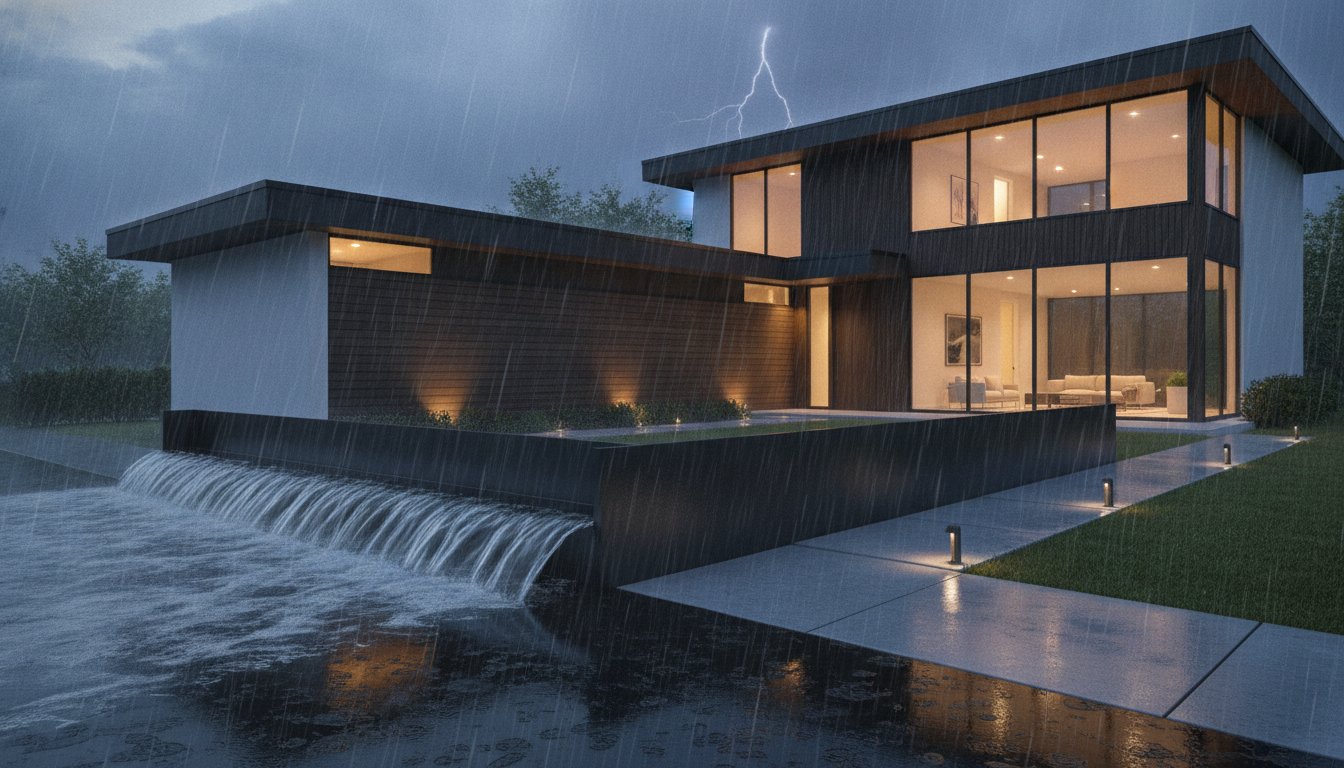
What if the best flood protection for houses wasn't a wall of heavy sandbags, but a tactical strategy to outmaneuver the water? You know the drill. The sky turns gray and the frantic heavy lifting begins. Sandbags are temporary, and they're ultimately an exhausting stopgap for a permanent problem. No homeowner wants to spend their weekend stacking wet burlap only to worry about foundation cracks and rising insurance premiums once the clouds clear. It's a high-stakes gamble with your most valuable asset.
You deserve better than a reactive struggle. It's time to move from manual labor to engineered tactical defense. This guide shows you how to secure your home's future with systems that are either invisible or deployed in minutes. We will explore high-performance diversion systems and advanced barriers that redirect water away from your foundation, ensuring total peace of mind during the 2026 storm season. Stop reacting to the weather. Start commanding your perimeter.
Key Takeaways
- Replace sandbags with engineered resilience. Legacy methods are porous and labor-intensive; modern threats require a more sophisticated, structural response.
- Master the physics of redirection. The best flood protection for houses focuses on moving water to drainage zones instead of simply holding it at the door.
- Discover invisible fortification. Transparent, liquid-applied barriers offer high-level protection without compromising the architectural beauty of your home.
- Prioritize professional site surveys. A tactical defense is only as strong as its placement; always insist on a comprehensive engineering assessment before installation.
- Adopt a defense-in-depth philosophy. Secure your future by layering rapid-deployment barriers with permanent diversion systems to create an impenetrable perimeter.
The High Stakes of Modern Flooding: Beyond the Sandbag
The climate has shifted. What we once called "100-year" storms are now occurring with alarming frequency, often striking the same communities every few years. In 2024 alone, the United States saw 27 separate billion-dollar natural disasters. This isn't just bad luck; it's a new environmental baseline. For homeowners, this means finding the best flood protection for houses is no longer a luxury. It's a fundamental requirement for survival and financial stability.
Many people still reach for sandbags when the water rises. It's a gut reaction. But sandbags are a legacy failure. They are incredibly labor-intensive to deploy. They are porous, allowing seepage even when stacked perfectly. Most importantly, they become environmentally toxic after contact with floodwater, which often carries sewage and industrial chemicals. Relying on them is like trying to stop a bullet with a paper shield. True defense requires a tactical shift.
The Failure of Traditional Retention
Retention is a strategy of desperation. When you try to hold water back with sandbags, the material begins to degrade the moment it gets wet. Water finds every gap. It seeps through the burlap. It undermines the base. Beyond the structural failure, there's a biological one. The "flood mud" trapped in those fibers is a breeding ground for mold and pathogens. This makes cleanup a hazardous, expensive nightmare. A "wait and see" approach isn't just risky. It's the most expensive strategy you can choose. Common failures of the sandbag method include:
- Porous construction that allows constant seepage.
- Immense physical labor required for deployment.
- Environmental toxicity and disposal hazards after water exposure.
Understanding Hydrostatic Pressure
Standing water exerts thousands of pounds of force on your home's walls, a phenomenon known as hydrostatic pressure.
This force can cause foundation collapse even if the water never actually enters your living room. Simply "blocking" the water is only half the battle. Without a professional strategy involving modern flood management methods, the weight of the water can literally crush your home's structural integrity from the outside in. Hidden dangers like foundation erosion and lost equity become reality long before the water recedes.
Real protection requires a tactical shift. The average National Flood Insurance Program claim is now $68,000, yet 99% of U.S. counties have been impacted by flooding since 1996. Professional flood protection is a strategic investment in your home's equity. It prevents the erosion of your foundation and the inevitable mold that follows infiltration. When you secure your perimeter, you aren't just buying hardware. You're buying the relief of knowing your home will stand firm, no matter what the 2026 storm season brings.
Redirection vs. Retention: The Tactical Shift in Home Defense
Most homeowners view flood defense as a battle of strength. They want to block the water. This is retention. It's a desperate hold against a superior force that eventually finds a way in. Diversion is a strategic win. Instead of absorbing the kinetic energy of the flood, you guide it. You choose where the water goes. This shift in thinking is what separates a temporary fix from the best flood protection for houses.
The physics of redirection are undeniable. Standing water is heavy. It pushes against your walls with immense force. When you implement a diversion strategy, you create a path of least resistance. By moving water to lower elevations or designated drainage zones, you drastically reduce the physical load on your home’s perimeter. You aren't just fighting the water; you're outmaneuvering it.
This tactical approach creates a comprehensive "dry zone." It protects more than just your front door. It secures your landscaping and protects outbuildings simultaneously. Strategic redirection keeps your entire property functional while neighboring lots are submerged. It's the difference between a house that barely survives a storm and a property that thrives through one.
The Fortress Flood Diversion Strategy
Engineering a path of least resistance is the core of modern defense. Water naturally seeks the lowest point. We give it a destination. This strategy involves identifying and protecting property "blind spots" like driveways and subterranean vents where water tends to pool. By integrating a Fortress Flood Diversion System into your landscape, you can work in harmony with existing municipal drainage. You turn your property into a shielded island that remains stable even during peak surge events.
Why Foundation Health Depends on Diversion
Foundation health is the primary victim of old-school retention methods. When water sits against your house, the soil becomes dangerously saturated. This leads to the "heave" effect. The ground expands and puts massive, uneven pressure on your concrete foundation. Redirecting water prevents this saturation entirely. It preserves the structural integrity of crawlspaces and prevents long-term settling issues. A dry foundation is the highest ROI improvement you can make, ensuring your home remains a secure asset for decades. Finding the best flood protection for houses means looking beneath the surface at the soil itself to ensure the ground stays firm.
Evaluating the Best Flood Protection Systems for Your House
Choosing the best flood protection for houses isn't about finding a one-size-fits-all product. You've got to match the technology to the specific threat. Flash floods require an instant, tactical response. Rising rivers allow for calculated, permanent measures. In 2024, the U.S. experienced 27 separate billion-dollar natural disasters. This statistic proves that "good enough" is no longer a viable strategy. You need a system that integrates into your daily life. You don't want a solution that turns your home into an industrial site.
To choose the right defense, you must evaluate your property’s specific risk profile:
- Flash Flood Risk: Requires rapid-deployment barriers that can be set up in under ten minutes.
- Sustained River Flooding: Demands permanent diversion systems and heavy-duty structural seals.
- Urban Surface Runoff: Calls for liquid barriers that protect entryways without blocking pedestrian access.
Engineered Diversion Systems
The Fortress Flood Diversion System is the definitive structural answer for properties facing recurring threats. It's ideal for large estates and homes with significant perimeter needs. This isn't a weekend project. Professional installation is mandatory. Experts use site surveys to ensure the diversion angles are mathematically precise. DIY placement often fails. It misses the subtle topography of the land that directs water toward your basement. A professional system ensures the water moves where you want it, not where it wants to go. It is a strategic investment in long-term resilience.
Rapid-Response Inflatable Barriers
When the sky turns black, speed is your only ally. The Fortress Inflatable Flood Barrier provides defense that's deployed in minutes. You don't have hours to wait for help. These barriers use heavy-duty PVC construction, making them a reusable and tactical alternative to single-use sandbags. The 20% annual growth in the private flood insurance market since 2020 shows that homeowners are taking individual responsibility. They're investing in hardware that works every time. Use these barriers to seal garage doors and main entryways. It's a high-stakes response for a high-stakes environment.
Aesthetic Defense: Transparent Coatings
Modern architecture needs a shield that doesn't compromise the view. The Fortress Transparent Liquid Paintable Flood Barrier is that "invisible" defense. It protects glass doors and windows without the need for industrial-looking gates. This liquid barrier is a breakthrough in resilience. It seals the microscopic gaps in masonry and door frames that traditional hardware often misses. It's the ultimate choice for homeowners who demand both beauty and impenetrability. You can't see the protection, but you'll certainly feel the relief during the next storm. It transforms your existing structure into a watertight vault.

Critical Factors: What to Look for in a Flood Protection Partner
Selecting a defense partner is a decision that dictates your home's survival. It's not a simple retail transaction. It's a strategic alliance. When searching for the best flood protection for houses, you must look beyond the hardware. The most advanced barrier in the world is useless if it's placed incorrectly or manufactured from inferior materials. You need a partner that understands the high stakes of environmental defense. The goal is total resilience, not just a temporary fix.
Success in a flood event relies on a methodical four-step process:
- Step 1: Engineering Assessment. Never buy a barrier without a professional site survey. A generic product cannot account for the specific drainage patterns of your property.
- Step 2: Material Integrity. There is a massive gap between consumer-grade plastics and industrial-grade polymers. Your barrier must resist UV degradation, chemical exposure, and immense physical pressure without failing.
- Step 3: Ease of Deployment. If you can't set it up alone during a midnight storm, it's not a solution. It's a liability.
- Step 4: Professional Installation. Ensuring the seal is airtight and structurally sound requires expert precision. A single gap is an invitation for disaster.
The Myth of the "One-Size-Fits-All" Barrier
Your neighbor's solution might fail on your specific terrain. Floodwater is unpredictable, but its path is dictated by topography. A barrier that works for a flat lot will fail on a sloped driveway. You must calculate your specific "protection line", which is the maximum expected height of water, to ensure your defense is tall enough. Custom-engineered lengths and heights are the only way to guarantee an impenetrable perimeter. Generic, off-the-shelf solutions often leave gaps at the most vulnerable corners of your foundation where the pressure is highest.
Deployment Speed and Reliability
A 10-minute deployment window is the industry benchmark for flash flood zones because surge events often provide zero warning. You don't have time to wait for a service team or a heavy delivery. Reliability also means the barrier stays exactly where you put it. High-quality systems use internal ballasting to prevent the "float-away" effect that plagues lighter, cheaper tubes. Before the rain starts, you should know exactly how your system performs. Rigorous testing protocols are the hallmark of a true professional partner. Don't leave your home's safety to chance. Consult with FloodWater Pros to design a tactical defense that actually works when the pressure is on.
The Fortress Standard: Engineered Resilience by FloodWater Pros
Most companies ship a box and wish you luck. We don't. FloodWater Pros acts as a strategic partner for high-value home defense. We understand that your home is your legacy. Protecting it requires more than just a barrier; it requires the best flood protection for houses backed by professional engineering. Our "Fortress" philosophy focuses on defense-in-depth. We look at your property as a whole, creating a shield that starts at the curb and ends at your front door.
We build shields, not just products. Every system we deploy is the result of American-engineered flood technology. This isn't consumer-grade equipment. It's industrial-strength resilience designed to withstand the increasing severity of modern storm cycles. When you partner with us, you're getting a full-service engineering solution. We analyze the specific vulnerabilities of your terrain to ensure our systems work in harmony with your landscape. This isn't a temporary fix; it's a permanent upgrade to your home's structural integrity.
The Fortress Installation Experience
A professional Fortress rollout is a comprehensive operation. We don't just drop off equipment; we integrate it into your property's topography. During installation, our team ensures every seal is airtight and every diversion angle is precise. We provide hands-on training so you're ready to deploy your systems the moment the sirens sound. Readiness is the difference between a dry home and a total loss. We also offer long-term system checks to ensure your hardware remains in peak condition year after year. Our goal is to ensure you're never caught off guard when the water begins to rise.
Securing Your Peace of Mind
There's a profound relief that comes with being "Fortress-protected." You no longer have to watch the weather radar with a sense of dread. Redirection isn't just a technical strategy; it's the ultimate act of guardianship for your family and your future. When you choose an engineered solution, you're choosing certainty over luck. It's time to stop worrying about the next storm and start controlling the outcome. Redirection is the highest form of defense, moving the threat away before it can touch your foundation.
Stop relying on outdated methods that fail when the pressure is highest. Secure your perimeter with technology that's built to last. Consult with a FloodWater Pros engineer today to design the best flood protection for houses and reclaim your peace of mind before the next storm arrives.
Command the Perimeter: Secure Your Home’s Future
The era of reactive sandbagging is over. You've seen how redirection outmaneuvers the weight of standing water and why professional engineering is the only way to preserve your foundation's integrity. Finding the best flood protection for houses in 2026 requires a shift from desperation to tactical certainty. By choosing high-performance systems like our proprietary Fortress Diversion Technology, you replace fear with a structural shield. Our national professional installation network ensures your defense is airtight and ready before the first drop of rain falls.
We've engineered these solutions for 2026 climate realities, where "100-year" storms are no longer rare events. You don't have to sacrifice your home's aesthetic or your own physical health to stay dry. It's time to claim the peace of mind that comes with a proactive, invisible, and impenetrable defense. Don't leave your most valuable asset to chance when the next surge arrives. You have the power to change the narrative from loss to resilience.
Secure Your Home with a Fortress Engineering Consultation
Take the first step toward a secure, dry future today. Your home is worth the defense.
Frequently Asked Questions
Is it better to block or redirect flood water?
Redirecting is the strategic choice. Retention creates massive hydrostatic pressure that can compromise structural integrity. Redirection guides the water's energy to drainage zones. It's a tactical move that keeps the weight of the flood away from your walls. This approach is widely considered the best flood protection for houses because it addresses the physics of the threat rather than just the presence of water.
Can I install a flood barrier system myself?
You can deploy rapid-response systems like inflatable barriers yourself in under ten minutes. However, permanent structural systems require a professional engineering assessment. Correct placement is vital. If the angle of a diversion system is off by even a few degrees, water can pool in vulnerable areas. Professional installation ensures the seal and the path of redirection are mathematically sound.
How much does a professional flood barrier system cost?
Total investment depends on your property's perimeter length and specific risk profile. Factors include the height of the protection line and the complexity of your terrain. While we don't provide flat rates without a survey, investing in engineered defense is a strategic move to avoid the average National Flood Insurance Program claim of $68,000. Quality systems pay for themselves by preserving home equity and preventing foundation erosion.
Do flood barriers work against hurricanes and storm surges?
Engineered barriers are designed to withstand the high-velocity impact of storm surges. Unlike sandbags that wash away, tactical barriers use internal ballasting or structural anchoring to remain fixed. They provide a robust shield against the volume of water seen in 2026 climate events. Success depends on selecting a barrier height that exceeds the predicted surge level for your specific zone.
Are there flood barriers that won’t ruin my house’s curb appeal?
Modern defense doesn't have to look industrial. Transparent liquid paintable barriers provide an invisible shield for doors and windows. Inflatable systems are strictly tactical; you deploy them when a storm is imminent and store them once the threat passes. This ensures your home maintains its architectural integrity while remaining a fortified vault during an emergency.
How long do reusable flood barriers last compared to sandbags?
Industrial-grade polymers last for years and multiple deployments. Sandbags are legacy failures that often become toxic after a single contact with floodwater. Tactical barriers are built from heavy-duty PVC or reinforced polymers designed to resist UV damage and chemical exposure. This longevity makes them a more reliable and environmentally responsible choice for long-term home guardianship.
What is the "Z-line" in flood protection engineering?
The Z-line is the vertical threshold of your defense system. It marks the precise height where the barrier effectively stops the water. If the flood exceeds this line, the system is overtopped. Engineering the best flood protection for houses involves calculating this line based on historical data and future storm projections to ensure your perimeter is never breached.
Can a paintable flood barrier really stop water from entering through a door?
A paintable liquid barrier creates an impenetrable, watertight seal. It fills the microscopic gaps in door frames and masonry that traditional mechanical gates often miss. Once applied, it acts as a structural skin. It stops infiltration at the most vulnerable entry points without requiring heavy hardware. It is a breakthrough in aesthetic resilience for modern homes.


