

Did you know that just one single inch of floodwater inside your home can trigger over $25,000 in direct physical damage? For most property owners, the difference between a dry foundation and a total loss isn't luck. It's engineering. You’ve likely felt that knot in your stomach when the sky turns black and the rain begins to hammer against your siding. You’ve tried the temporary barriers. You’ve tried the hardware store fixes. They failed when the stakes were highest. A professional water diversion system for property is the only way to stop living at the mercy of the weather.
You deserve a professional grade defense that works automatically. This guide will help you master the science of structural protection and discover how to strategically redirect floodwaters to safeguard your future. We will examine the path of least resistance, the 2026 standards for IRC grade mandates, and the specific technologies like the Fortress Flood Diversion System that preserve your property value. It is time to stop managing puddles. It is time to start engineering a path of total resistance.
Key Takeaways
- Identify the hidden dangers of hydrostatic pressure and why 2026 storm events require a shift from temporary fixes to structural engineering.
- Master the difference between redirection and retention to ensure your water diversion system for property effectively moves flood volumes away from your foundation.
- Evaluate high-performance defense methods, including permanent perimeter walls and rapid-deployment inflatable barriers, to secure your structural integrity.
- Follow a professional blueprint for hydrologic site assessments to map a precise, engineered path of resistance before the next storm hits.
- Discover how the Fortress Flood Diversion System provides an uncompromising, full-service solution that replaces uncertainty with total peace of mind.
The High Stakes of Inaction — Why Your Property Needs a Diversion Strategy
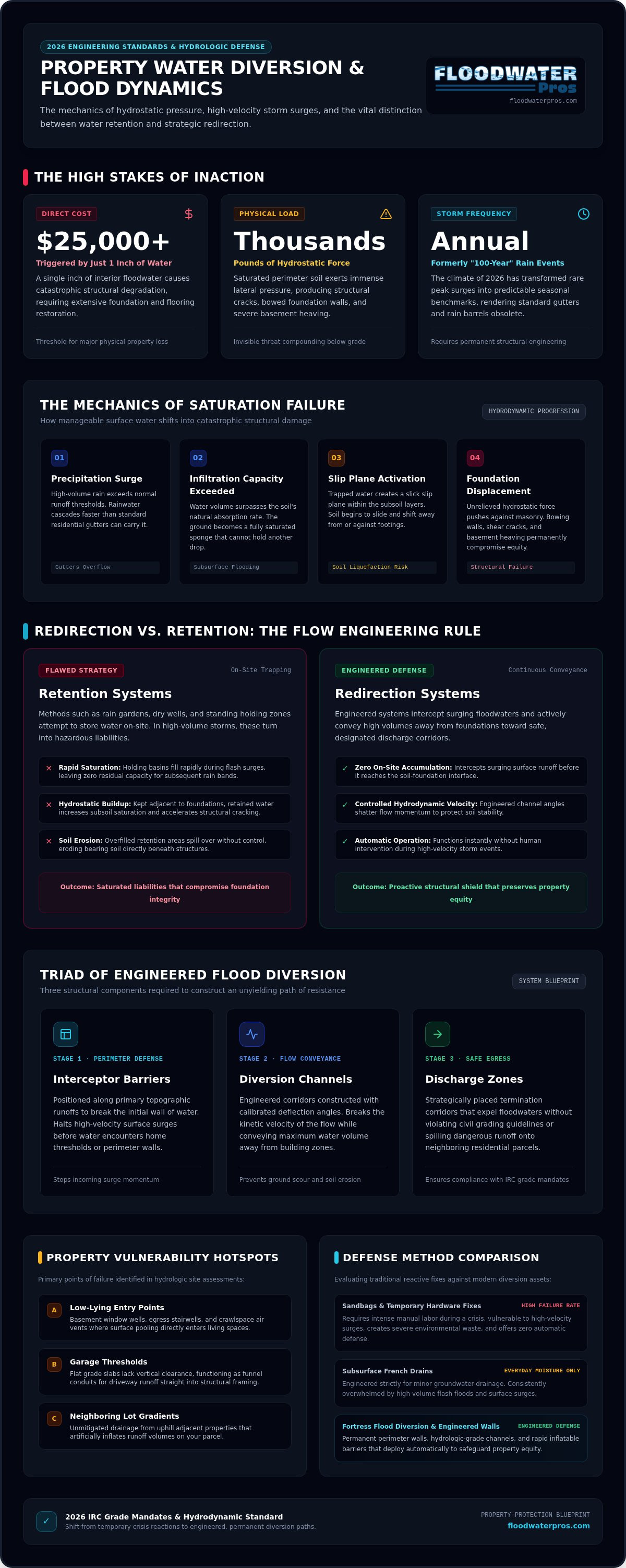
The climate of 2026 has rewritten the rules of property ownership. What were once called "100-year storms" are now annual occurrences. Waiting for the next disaster to strike is a high-stakes gamble with your home’s future. Inaction isn't just a delay; it's a choice to remain vulnerable. Every heavy rain event that passes without a strategy in place weakens your structural defense. The emotional toll of watching the water rise is matched only by the staggering financial cost of foundation restoration.
The true danger is often invisible. Hydrostatic pressure builds as soil becomes saturated, exerting thousands of pounds of force against your foundation. This pressure doesn't just cause dampness. It creates structural cracks, bowing walls, and basement heaving. While traditional subsurface French drain systems manage everyday moisture, they are frequently overwhelmed by the sheer volume of flash floods. Standard gutters and downspouts are designed for showers, not surges. A comprehensive water diversion system for property is the only way to intercept this force before it reaches your walls.
Surface Runoff vs. Structural Flooding
There is a critical threshold where simple drainage fails. Surface runoff becomes structural flooding when the volume of water exceeds the soil's infiltration rate. Your property’s topography dictates where that water goes. Without a strategic path of resistance, gravity will always win. Saturated soil acts like a sponge that can't hold another drop. This creates a "slip plane" that can lead to serious foundation shifting. You need to control the flow, not just wait for it to soak in. Professional diversion ensures the water never has the chance to pool against your home.
The Failure of Traditional Barriers
Reactive fixes are a trap. Sandbags are a "too little, too late" defense that requires immense physical effort during a crisis. They're often ineffective against high-velocity surges and create significant environmental waste. Disposable solutions reflect a mindset of panic rather than a strategy of strength. Professional protection requires a shift toward permanent, engineered preparedness. You shouldn't have to scramble when the clouds darken. A permanent water diversion system for property provides the relief of security. It works automatically. It protects your equity. It ensures that your home remains a sanctuary rather than a liability.
Redirection vs. Retention — The Engineering of Flow
A water diversion system for property is an engineered network designed to intercept and redirect flood volumes away from vulnerable structures. Many homeowners confuse this with simple drainage. While drainage manages puddles, diversion handles surges. There is a fundamental difference between redirection and retention. Retention systems, such as dry wells or rain gardens, attempt to hold water on-site. In a 2026 storm event, these assets can quickly become saturated and turn into liabilities. Redirection is safer because it keeps the water moving toward a controlled exit.
Success in flood defense relies on mastering the physics of flow. Water naturally seeks the path of least resistance. If you don't provide a designated route, the water will create its own, often through your basement windows or crawlspace vents. A professional system utilizes three critical components. First, interceptor barriers stop the initial advance. Second, engineered diversion channels provide the conveyance needed to move high volumes. Finally, discharge zones ensure the water is released safely without damaging neighboring land.
The Science of Hydrodynamic Redirection
Managing water velocity is essential to prevent catastrophic soil erosion. High-speed surges can scour the earth from beneath your foundation in minutes. Engineered angles are used to break the force of incoming water, slowing it down to a manageable pace. This redirection isn't just a suggestion to the water; it is a command. A water diversion system for property acts as a proactive structural shield that forces floodwater to bypass your assets entirely. This tactical approach turns a potential disaster into a managed event.
Identifying Your Property's Vulnerability Zones
You must know your weak spots before the clouds darken. Low-lying entry points and garage thresholds are common failure points. You also have to account for neighboring property runoff. If a neighbor’s lot is graded toward yours, their problem becomes your crisis. Understanding what is a flood diversion system is the first step in mapping these threats. If you aren't sure where your greatest risks are located, the specialists at FloodWater Pros can help you design a definitive path of resistance. Strategic awareness is the foundation of total property security.
Comparing Structural Diversion Methods — Choosing Your Defense
Choosing your defense is a tactical decision. It’s the difference between a minor inconvenience and a total structural loss. A professional water diversion system for property isn't a one-size-fits-all product. It’s a customized shield. You must weigh the permanence of structural walls against the flexibility of deployable technology. Retail hardware store solutions often lack the material science required to withstand the high-velocity surges we see in 2026. Professional-grade polymers and reinforced composites are the standard for true resilience.
For many, the most effective approach combines multiple layers of defense. This might include a permanent interceptor wall paired with a liquid-applied sealant on the foundation itself. The Fortress Transparent Liquid Paintable Flood Barrier provides this invisible layer of security. It creates a seamless, waterproof membrane that seals pores in masonry without altering your home’s architectural integrity. It’s a sophisticated defense that works silently until it’s needed most. Every choice you make should move you closer to total peace of mind.
Engineered Walls and Berms
Permanent perimeter walls offer a "set and forget" fortress approach. These structures are integrated directly into your landscaping to preserve aesthetics while providing impenetrable defense. By following flood diversion system design principles, you can turn a standard retaining wall into a high-capacity interceptor. These systems rely on reinforced concrete or proprietary polymers to ensure decades of longevity. It’s about creating a definitive boundary that water simply cannot cross. This method aligns with broader EPA residential stormwater diversion strategies that emphasize managing flow conveyance before it reaches the foundation.
The Rise of Deployable Technology
Sometimes permanent changes aren't feasible or desired. This is where deployable technology excels. The Fortress Inflatable Flood Barrier represents a leap forward in rapid-response engineering. Unlike traditional earthen berms that can erode or shift, these systems use the water’s own weight to create a stable, pressurized seal against the ground. They are lightweight when stored but become immovable when deployed. You should choose deployable barriers if you need high-stakes protection for specific zones like garage thresholds or basement walkouts without altering your property’s permanent footprint. It’s a flexible water diversion system for property that adapts to the specific threats of the moment.
Implementing a Diversion Strategy — From Blueprint to Barrier
Transitioning from a state of vulnerability to one of total protection requires more than just high-quality hardware. It demands a tactical blueprint. Implementing a water diversion system for property is a five-stage operation that begins long before the first barrier is set. You start with a professional hydrologic site assessment to understand exactly how water moves across your unique topography. Once the flow is mapped, you can engineer the path of redirection. This ensures that when the surge arrives, it has a pre-determined route that bypasses your foundation entirely.
Selecting the right technology is the next critical phase. You'll need to decide between permanent structural fortifications and rapid-response deployable barriers based on your specific risk profile. After selection, the focus shifts to professional installation. This isn't a weekend project; it's a structural intervention that requires expert oversight. Finally, you must establish a rigorous maintenance and testing protocol. A defense system is only effective if it's ready to perform at a moment's notice.
The Role of Professional Engineering
DIY diversion is a dangerous gamble. Without professional engineering, you risk unintentionally pushing floodwaters onto neighboring lots or creating new pressure points against your own home. Professional professional flood barrier system installation ensures that your defense meets the 2026 national flood mitigation standards. It provides the structural peace of mind that comes from knowing your system was built to withstand the force of a 100-year storm event. If you're ready to secure your property's future, the experts at FloodWater Pros can guide you through every stage of the engineering process.
Maintaining Your Defense System
Your defense requires vigilance. Seasonal checks are mandatory to remove debris from conveyance channels and verify the integrity of all seals. If you use deployable technology, you must test the inflation and seal mechanics well before the start of hurricane season. Engineered barriers in 2026 require bi-annual structural integrity audits and seal elasticity testing to ensure peak performance. Neglecting these small steps can lead to catastrophic failure when the stakes are highest. A proactive maintenance schedule transforms a physical barrier into a reliable, long-term shield for your property.
The Fortress Solution — Uncompromising Property Protection
The Fortress Flood Diversion System represents the pinnacle of engineered redirection. It's not a temporary patch. It's a permanent structural answer to a high-stakes environmental threat. Generic retail options often fail because they lack the rigorous material science and professional oversight necessary for 2026 storm events. Our solution provides a full-service integration that carries you from custom engineering to on-site installation. You don't have to worry about the critical failure points common in DIY setups. We handle the design, manufacturing, and professional implementation to ensure total reliability.
True security requires a multi-layered approach. By combining the Fortress Inflatable Flood Barrier with the Fortress Transparent Liquid Paintable Flood Barrier, we create a 360-degree defense. The inflatable system intercepts high-velocity surges before they reach your walls. The paintable barrier seals masonry pores against subsurface seepage. This dual-action strategy ensures that your property remains an impenetrable sanctuary during the heaviest rain. A professional water diversion system for property is more than a purchase; it's a definitive investment in your structural future.
The Fortress Advantage: Redirection Over Retention
We prioritize redirection over retention because moving water is inherently safer than trying to hold it on-site. High-value residential and commercial estates require a defense that respects the physics of flow. Our proprietary systems are engineered to outperform generic alternatives by breaking the force of incoming surges. This proactive approach is a hallmark of modern residential flood protection systems. We don't just manage the water; we command it to follow a path of our choosing.
Your Path to Fortification
The path to relief begins with a deep assessment of your property's unique threats. Our consultation process identifies low-lying vulnerabilities and maps the most effective path of resistance. We don't just install hardware. We provide deployment training to ensure you're ready to act before the clouds darken. You'll gain the peace of mind that only comes with an engineered, professional-grade shield. Don't wait for the next catastrophic event to test your limits. Secure your legacy with a partner who understands the gravity of protection. Contact FloodWater Pros today to begin your structural fortification.
Secure Your Future: The Engineered Path to Permanent Protection
The landscape of flood defense in 2026 has fundamentally changed. You can no longer rely on temporary fixes or hardware store solutions when the stakes involve your home's structural integrity. True security requires a shift from reactive panic to professional engineering. By prioritizing redirection over retention, you ensure that floodwaters follow a pre-determined path away from your foundation. This tactical approach is the only way to achieve total peace of mind during heavy rain events.
A professional water diversion system for property is more than just a barrier. It is a comprehensive shield built on the science of resistance. With our proprietary Fortress technology and full-service engineering to installation pipeline, you gain a partner with national expertise in high-stakes defense. You don't have to face the storm alone. It is time to replace uncertainty with an impenetrable defense that works automatically to preserve your property value. Secure Your Property with the Fortress Flood Diversion System today and take command of your structural future. You’ve worked hard to build your legacy. We’re here to help you defend it.
Frequently Asked Questions
What is the difference between a drainage system and a flood diversion system?
A standard drainage system manages everyday surface runoff and small puddles through gravity. In contrast, a water diversion system for property is engineered to intercept and redirect massive, high-velocity flood volumes. Drainage often fails during surges because it lacks the capacity to handle extreme loads. Diversion acts as a proactive structural shield that forces water to bypass your assets entirely. It is the definitive choice for defending against catastrophic environmental threats.
Can a water diversion system be installed on an existing property?
Yes, you can install a water diversion system for property on almost any existing residential or commercial lot. The process begins with a professional hydrologic site assessment to map current flow patterns and vulnerability zones. Engineers then design a custom path of resistance using barriers like the Fortress Inflatable Flood Barrier. This retrofitting process ensures that older structures gain modern, military-grade protection against the rising storm frequencies seen in 2026.
How do I redirect flood water away from my house foundation effectively?
Effective redirection requires identifying the natural path of least resistance and engineering a superior one. You must use interceptor barriers to stop the initial advance and conveyance channels to move the volume safely. By combining permanent structures with the Fortress Transparent Liquid Paintable Flood Barrier, you create a multi-layered defense. This ensures that water is steered toward designated discharge zones rather than pooling against your foundation walls or basement windows.
Are permanent flood diversion walls better than inflatable barriers?
Both systems offer unique tactical advantages depending on your property's needs. Permanent walls provide a constant, "set and forget" fortress approach that is integrated into your landscaping. Inflatable barriers offer rapid deployment and flexibility for specific high-stakes surges. Many property owners choose a hybrid strategy. They use permanent walls for primary redirection and deployable Fortress Inflatable Flood Barriers to seal critical entry points like driveways or garage thresholds during extreme weather.
Will a diversion system affect my neighbor's property or cause legal issues?
Diversion systems must follow the "Reasonable Use Rule" to ensure you don't cause damage to adjacent properties. Professional engineering is critical here because it ensures your system complies with local water doctrines and national standards. A poorly designed DIY project can lead to liability if it accelerates water onto a neighbor's lot unexpectedly. Professional installation by FloodWater Pros includes the structural oversight necessary to protect your home while maintaining legal compliance.
How much maintenance does a professional flood diversion system require?
Professional systems require bi-annual structural audits and seasonal debris removal. You should clear conveyance channels after heavy leaf fall to prevent blockages that could lead to system failure. For deployable systems, testing the seal integrity and inflation mechanics before hurricane season is vital. Maintenance in 2026 focuses on seal elasticity and the removal of sediment from catch basins. These small steps ensure your engineered shield remains ready to perform when it matters.
Can I install a water diversion system myself using retail products?
While retail barriers exist, they often lack the structural integrity and material science of engineered systems. DIY projects frequently fail because they don't account for hydrostatic pressure or soil saturation rates. A professional water diversion system for property includes custom design and installation that retail products simply cannot match. Investing in a professional-grade shield prevents the catastrophic failure often seen with temporary, consumer-grade hardware during high-stakes 100-year storm events.
What is the expected lifespan of an engineered Fortress diversion system?
An engineered Fortress system is built for long-term resilience and structural integrity. When utilizing professional-grade polymers and rigid conveyance components, you can expect an operational lifespan of 30 to 40 years. This longevity depends on regular maintenance and the use of high-performance materials like those found in the Fortress Flood Diversion System. Unlike temporary sandbags or thin plastic barriers, these systems are designed to be a permanent part of your property’s structural defense strategy.


