
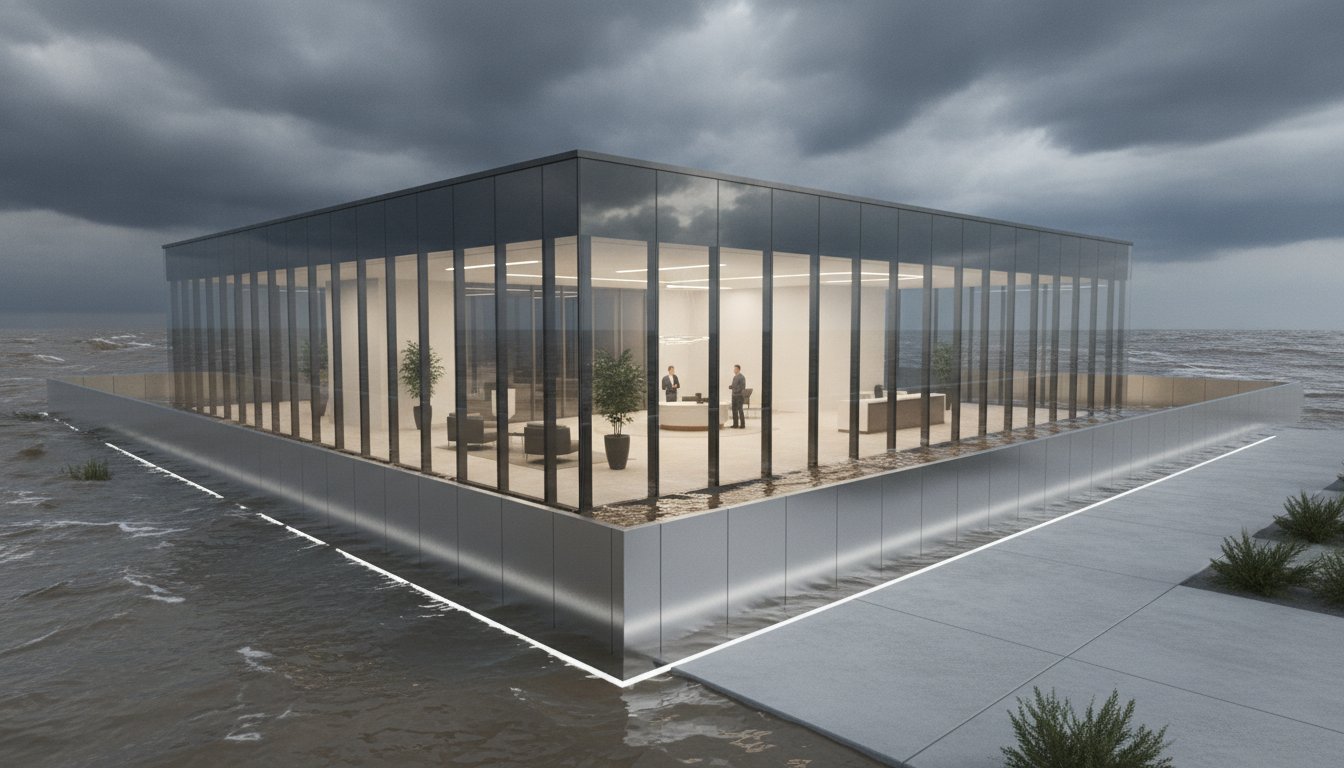
Did you know that every dollar invested in flood resilience can save your business up to thirteen dollars in future losses? In an era where a single inch of water causes $25,000 in structural damage, the math of survival has changed. You've likely watched your insurance premiums climb by 18% this year while deductibles skyrocket. It's frustrating to pay more for less protection. It's even worse to rely on temporary sandbags that offer little more than a false sense of security during a crisis. The ROI of commercial flood barriers is no longer a theoretical debate; it's a fundamental pillar of modern capital preservation.
We understand the pressure of protecting what you've built. This guide will show you how to calculate the true return on investment for engineered defense systems. You'll discover how professional-grade solutions safeguard your business continuity and provide a measurable financial shield against rising environmental risks. We'll provide a clear framework for your investment, explain the critical difference between water diversion and retention, and give you the confidence to select a system that stands firm. Stop viewing flood defense as a sunk cost. Start seeing it as a strategic asset that ensures your doors stay open while others close.
Key Takeaways
- Shift from passive insurance to active defense. Understand why the current risk environment demands a proactive structural shield to protect your bottom line.
- Master the formula for the ROI of commercial flood barriers. Compare the crushing cost of structural failure against the long-term value of capital preservation.
- Learn the physics of redirection. Discover why systems like the Fortress Flood Diversion System neutralize the pressure that causes traditional barriers to buckle.
- Tailor your defense to your specific property. Secure retail glass perimeters or industrial loading docks without compromising your operational efficiency.
- Leverage an end-to-end protection strategy. Benefit from a seamless transition between engineering and military-grade manufacturing for total peace of mind.
The High Stakes of Commercial Flood Risk in 2026
The weather isn't what it used to be. In 2026, environmental threats have shifted from seasonal concerns to constant, high-stakes realities. We're seeing a dangerous convergence of unpredictable storm patterns and aging municipal infrastructure. A standard rainfall can now easily overwhelm drainage systems, turning a parking lot into a lake in minutes. To survive, your facility needs more than hope. It needs a flood barrier. Think of this as a proactive structural shield; it's a perimeter defense designed to neutralize rising water before it ever touches your foundation.
In 2024 alone, the U.S. experienced 27 weather disasters that each exceeded $1 billion in losses. This isn't a distant threat for someone else. It's a localized risk for every commercial property owner. FEMA reports that just one inch of water can cause $25,000 in damage. When you multiply that across a warehouse floor or a retail storefront, the numbers become staggering. The financial logic is undeniable. The ROI of commercial flood barriers is rooted in the "40% Reality." Statistics show that nearly half of businesses never reopen after a major flood event. A breach destroys localized logistics, ruins sensitive digital assets in ground-floor server rooms, and freezes production lines. When the water rises, your ability to stay operational determines your future.
The True Cost of Inaction
Visible structural damage is just the tip of the iceberg. The long-tail effects of mold and deep-seated moisture can cripple a building's value and lead to years of remediation. Insurance payouts often fall short of the total recovery cost, especially when you consider lost market share and damaged client trust. Operational paralysis is the primary killer of commercial enterprises.
Why Traditional Methods Fail the Modern Business
The "Sandbag Myth" is a relic of the past. Relying on sandbags involves high labor costs, inconsistent reliability, and the eventual headache of disposing of contaminated, toxic waste. These temporary fixes create a false sense of security while inviting structural seepage through porous walls and gaps. Today’s landscape demands a transition from reactive crisis management to proactive engineered fortification. You can't afford to wait for the storm to start before you decide to protect your assets. Modern fortification requires systems that are ready to deploy at a moment's notice, ensuring your business remains a fortress against the elements.
Engineered Defense: Why Redirection Beats Retention
Water is an overwhelming force. Most traditional defenses try to hold it back; they act as a dam against a rising tide. This approach is fundamentally flawed because it ignores the reality of hydrostatic pressure. When water stands against a building, it exerts thousands of pounds of force per square foot. Eventually, seals fail. Foundations crack. Retention systems buckle under the sheer weight of the volume they are trying to contain. You aren't just fighting water. You're fighting physics.
The Fortress Flood Diversion System represents a paradigm shift. Instead of just resisting water, it's engineered to redirect it. By guiding the flow away from your facility's most vulnerable points, we lower the physical stress on your building's perimeter. This strategic redirection is what drives the high ROI of commercial flood barriers. A system that effectively steers water into drainage or safe zones offers significant economic benefits by preventing the structural fatigue that leads to catastrophic failure. It's the difference between a wall that eventually breaks and a shield that guides the threat elsewhere.
Our defense relies on advanced material science. We use industrial-grade stainless steel and reinforced polymers to create an impenetrable line. These materials don't just survive the flood; they maintain their integrity through repeated events. They resist corrosion and impact from floating debris. If you're ready to move beyond temporary fixes, you should explore our engineered diversion solutions to see how redirection can save your assets.
The Fortress Flood Diversion System Philosophy
Diversion is a precision game. Our philosophy centers on reducing the hydraulic load on building seals. Professional engineering is essential here. We map the unique topography of your property to identify natural water flow paths. This ensures that when the surge arrives, it has somewhere to go that isn't inside your lobby or warehouse. For large industrial complexes, these systems are fully scalable. They provide a cohesive shield across vast perimeters without creating weak points.
Rapid Deployment vs. Permanent Fortification
Sometimes permanence isn't the priority; speed is. The Fortress Inflatable Flood Barrier provides heavy-duty protection that can be deployed in minutes. In flash-flood prone urban environments, every second counts. While manual barriers require hours of heavy lifting and a large crew, inflatable systems use the water itself or localized air pumps to create a stable, massive wall. This flexibility allows you to choose between a permanent structural shield and a rapid-response unit. The ROI of commercial flood barriers increases when you have the right tool for your specific risk profile. Whether you need a fixed diversion path or a mobile barrier, the goal remains the same: total asset protection.
Calculating the True ROI of Commercial Flood Barriers
Asset protection is a math problem. To solve it, you must look beyond the initial purchase price and evaluate the total cost of ownership against the cost of a catastrophic breach. Professional-grade fortification transforms a high-stakes liability into a manageable variable. The basic formula for the ROI of commercial flood barriers is simple: multiply your potential loss by the probability of an event, then compare that figure to the cost of your system plus its annual maintenance. When you factor in that FEMA estimates just one inch of water causes $25,000 in damage, the financial justification for defense becomes immediate and undeniable.
Direct savings are the easiest to quantify. Every time a surge is successfully diverted, you eliminate the need for massive structural repairs, inventory disposal, and expensive equipment replacement. However, the economic benefits of flood adaptation extend much further. Research into global resilience measures shows that benefit-to-cost ratios can reach as high as 120 to 1 in high-risk areas. By installing a certified system, you also position your business to negotiate better terms with insurers. Under FEMA’s Risk Rating 2.0, premiums for properties with assessed risks can increase by up to 18% per year. A professional system acts as a hedge against these rising costs, often leading to reduced deductibles and lower annual premiums.
The Operational Downtime Factor
Revenue stops when the water enters. Calculating your daily revenue loss during a post-flood cleanup phase is a sobering exercise. Beyond the immediate loss of sales, you face the "Customer Churn" risk. Clients rarely wait for you to dry out; they migrate to competitors who remained operational. One day of operational uptime can often pay for the entire barrier system. By maintaining continuity, you protect your market share and keep your supply chain intact while others are forced into a total standstill.
Long-Term Asset Value Preservation
A history of flooding is a permanent stain on a property's record. It suppresses resale values and makes it difficult to attract high-quality tenants who demand security for their own operations. Professional flood-proofing increases the "bankability" of a commercial asset, making it more attractive to lenders and investors who prioritize risk mitigation. This investment provides a peace of mind dividend for stakeholders and board members. They need to know that the organization's physical foundation is secure. The ROI of commercial flood barriers is ultimately measured in the resilience of your brand and the enduring value of your real estate.

Strategic Implementation for Commercial Property Types
Protection isn't one-size-fits-all. Every asset has a unique vulnerability profile that demands a tailored engineering response. The ROI of commercial flood barriers is only fully realized when the defense matches the specific operational reality of the site. Retailers need to maintain an inviting storefront while warehouses must secure massive loading docks against a surge. A mismatch between the threat and the defense leads to wasted capital and compromised security.
High-rise office buildings often house their most critical infrastructure in the most vulnerable locations. Basement-level HVAC units and electrical vaults are the first to fail when water breaches the foundation. A single event can trigger a total building shutdown. Implementing a strategic shield around these utility hubs prevents operational paralysis. You can secure your critical infrastructure by integrating professional-grade diversion systems into your facility management plan.
Aesthetic Defense for High-End Retail
Water respects no brand. For high-end boutiques and corporate headquarters, traditional defense methods like bulky metal gates can deter customers and damage the building's prestige. They project a sense of constant crisis. The Fortress Transparent Liquid Paintable Flood Barrier provides a seamless, invisible shield for these environments. It creates a waterproof bond on glass and masonry without altering the architectural design. It's a silent guardian that preserves your curb appeal while offering impenetrable protection.
Perimeter and Foundation Fortification
Industrial complexes and large warehouses require a different scale of fortification. The Fortress Flood Diversion System is designed to create a comprehensive dry-zone around the entire building footprint. This strategy is vital for protecting underground parking structures and subterranean utility vaults from a catastrophic storm surge. Professional installation ensures that every seal is airtight and every diversion path is optimized. By keeping water away from the foundation, you preserve the long-term structural integrity of the asset. This high-level fortification is the cornerstone of the ROI of commercial flood barriers, turning a potential disaster into a non-event.
The Fortress Advantage: Full-Service Flood Protection
True security isn't found in a box. It's built through a relentless commitment to engineering precision and operational readiness. When you choose FloodWater Pros, you aren't just buying a product. You're enlisting a strategic partner dedicated to your facility's survival. Our end-to-end solution bridges the gap between theoretical risk and physical fortification. This comprehensive approach ensures that every dollar spent contributes directly to the ROI of commercial flood barriers. We manage the entire lifecycle of your defense, from the initial hydraulic modeling to the final installation.
Quality control is the heartbeat of our operation. We utilize proprietary manufacturing processes to maintain military-grade standards across every component we produce. This isn't off-the-shelf equipment. It's custom-engineered hardware built to withstand the specific hydrostatic loads of your property. By controlling the manufacturing line, we eliminate the weak links that plague third-party suppliers. Your business deserves a shield that is as resilient as your ambition. We don't settle for "good enough" when your assets are on the line.
A professional on-site engineering consultation is the first step toward a custom barrier design. We don't believe in generic solutions. Every building has a different story, a different foundation, and a different set of vulnerabilities. Our experts walk your perimeter to identify the exact points where water will try to enter. We then design a system that seals those gaps with surgical precision. This level of detail is what separates a professional-grade defense from a temporary fix.
The FloodWater Pros Process
Our methodology begins with a deep dive into your site's unique topography. We perform a rigorous site analysis and water flow modeling to predict exactly how a surge will behave against your foundation. This data drives the custom manufacturing of your Fortress systems. We don't guess; we calculate. Once the hardware is ready, our professional teams handle the installation. We also provide hands-on training for your staff. Rapid deployment is only possible when your team knows exactly how to engage the defense before the first drop falls.
Securing Your Business Future
Waiting for a storm warning is a strategic failure. By the time the clouds gather, the window for effective fortification has already closed. You need a system that is ready today for the threat that arrives tomorrow. The transition from a state of vulnerability to total structural security is a profound shift for any business owner. It allows you to focus on growth rather than survival. The ROI of commercial flood barriers is ultimately found in the confidence that your doors will remain open. Don't leave your legacy to chance. Protect your commercial assets with a Fortress Flood Diversion System today.
Securing Your Legacy Against the Rising Tide
Environmental threats don't wait for your budget cycle. They strike without mercy. We've shown you why engineered redirection is the only viable path for long-term structural integrity. You now understand the math behind the ROI of commercial flood barriers; it's a strategic move that defends your capital and your operational continuity. Don't let your business be defined by what you lost in a surge. Define it by the fortification you built before the clouds gathered.
Our proprietary Fortress technology is engineered for military-grade redirection. We back this with national professional installation teams that ensure your defense is airtight and reliable. The relief of security is within your reach. Take the definitive step toward total asset protection today. Schedule a Professional Commercial Flood Risk Assessment to fortify your facility against the unpredictable. You have the power to turn a potential catastrophe into a managed non-event. Stand firm. Stay dry. Secure your future.
Frequently Asked Questions
How much does a commercial flood barrier system typically cost?
Total investment depends on your property's specific perimeter length, the required protection height, and the complexity of your topography. We design custom systems that address unique structural vulnerabilities rather than offering one-size-fits-all products. While the upfront cost reflects engineering and military-grade materials, it's a fraction of the $25,000 in damage FEMA estimates for just one inch of water. Protecting your assets is a capital preservation strategy that pays for itself during the first major surge.
Can flood barriers lower my commercial property insurance premiums?
Yes, professional mitigation is a recognized way to lower premiums and reduce high deductibles. Insurers now use Risk Rating 2.0 to calculate costs based on individual property risk factors like elevation and structural defense. By installing a proactive structural shield, you improve your property's risk profile in the eyes of underwriters. This reduction in annual carrying costs is a significant factor in the ROI of commercial flood barriers.
What is the difference between a flood barrier and a flood gate?
A flood barrier typically provides perimeter protection for long stretches or entire building footprints. A flood gate is a specific structural unit designed to seal individual openings like doorways, pedestrian entrances, or loading docks. Both are essential parts of a comprehensive defense strategy. We often integrate both systems to ensure no weak points exist in your facility's armor while maintaining easy access during normal operations.
How long does it take to deploy a Fortress Inflatable Flood Barrier?
Deployment of the Fortress Inflatable Flood Barrier typically takes only a few minutes once the system is positioned. These units use high-volume pumps to create a massive, stable wall that stands firm against rising water. This speed is critical for urban environments where flash floods offer almost no warning. It eliminates the hours of grueling labor and large crews required for manual sandbagging or heavy panel assembly.
Are liquid paintable flood barriers as effective as physical walls?
The Fortress Transparent Liquid Paintable Flood Barrier is highly effective for sealing porous surfaces, masonry, and glass perimeters. It isn't a replacement for a physical diversion wall in high-velocity surge zones, but it provides an impenetrable seal against structural seepage. It's the ideal solution for retail storefronts where you must preserve curb appeal while ensuring water cannot penetrate the building envelope through microscopic gaps or joints.
Do commercial flood barriers require professional installation?
Professional installation is essential to ensure zero-leak performance and long-term structural integrity. Our national teams understand the nuances of building foundations and the physics of hydraulic pressure. A DIY approach often overlooks critical gaps where water can seep through under pressure. Expert setup guarantees that your system will perform exactly as engineered when the surge arrives, protecting your staff and your inventory.
What maintenance is required for a commercial flood diversion system?
Maintenance involves periodic inspections of seals, gaskets, and deployment hardware to ensure everything remains in peak condition. We recommend an annual checkup to clear debris from diversion paths and test inflatable components for airtight integrity. This proactive care ensures your defense is always ready for a crisis. It protects your long-term ROI of commercial flood barriers by extending the lifespan of the hardware and ensuring its reliability.
Will these barriers work against flash floods with no warning?
Yes, our systems are designed for either permanent readiness or rapid-response deployment. Permanent diversion systems are always active and require no human intervention to protect the foundation. For deployable units, the speed of our inflatable technology allows for protection in a fraction of the time traditional methods require. Readiness is the difference between a minor incident and a total operational shutdown when every second counts.


