
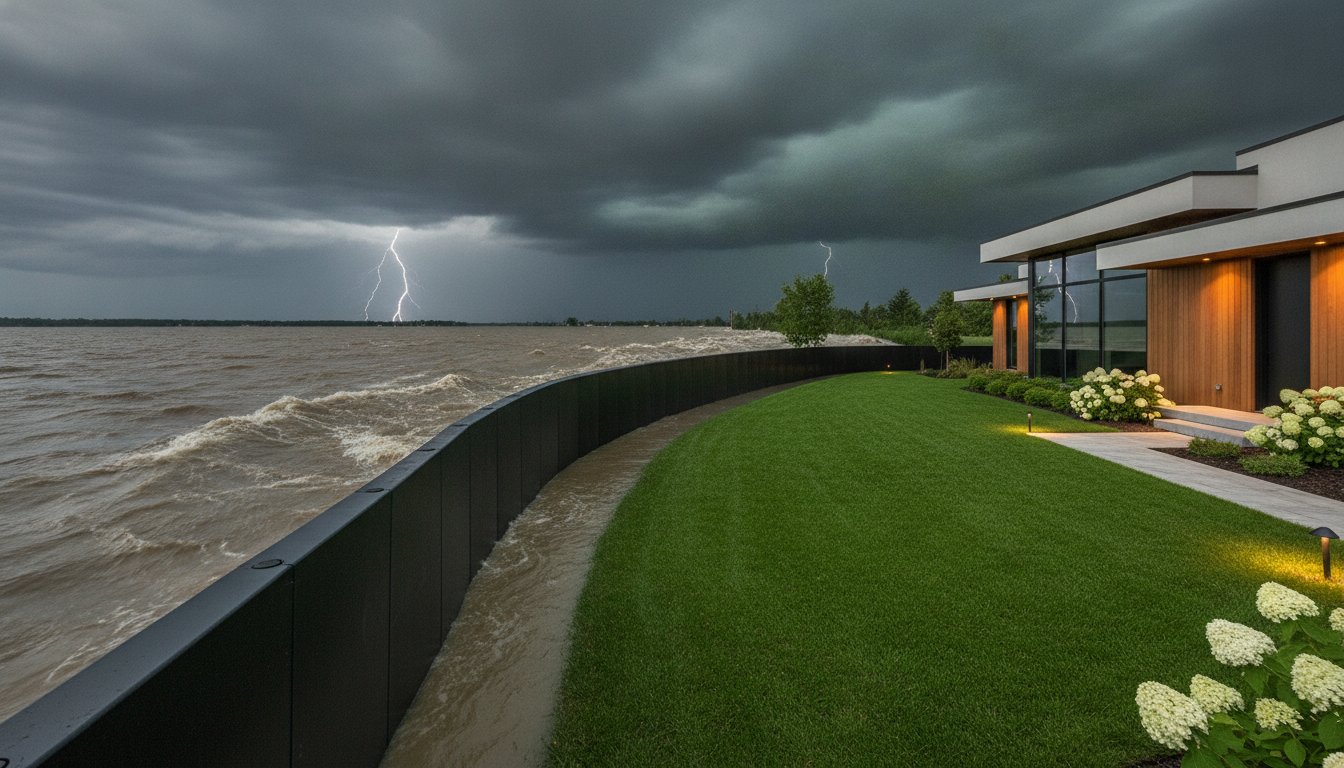
Sandbags aren't a strategy; they're a back-breaking gamble against a force that never tires. You've likely spent hours hauling wet canvas and grit, only to lie awake wondering if a DIY wall can actually withstand real hydrostatic pressure. It's an exhausting, expensive cycle that fails to provide the certainty you need when the clouds gather. You deserve a defense that acts as a professional shield rather than a desperate, temporary fix. This guide explores how high-performance reusable flood protection barriers provide the structural integrity required for total peace of mind.
We'll show you how to move beyond disposable options toward engineered systems that deploy in minutes. You'll discover professional-grade solutions, including the Fortress Flood Diversion System and inflatable barriers, that secure your property without ruining its curb appeal. With floods causing over $10 billion in damages annually in the United States, the shift to modular, rapid-deployment technology is a necessary evolution in safeguarding your investment. We will break down the latest in polymer-based materials and automated designs to help you choose a permanent partner in protection.
Key Takeaways
- Transition from reactive emergency response to proactive fortification—learn why reusable flood protection barriers are the definitive answer to rising environmental threats.
- Analyze the mechanics of the Fortress suite—including the Fortress Inflatable Flood Barrier—to understand the science of redirecting massive water force away from your foundation.
- Expose the financial illusion of sandbags—discover how engineered barriers eliminate the high costs of recurring replacement and specialized disposal.
- Determine your property’s specific defense requirements by evaluating soil types and water flow paths for a strategic, "deploy in minutes" installation.
- Gain total peace of mind with a professional-grade shield that prioritizes structural integrity without compromising your property's curb appeal.
Beyond the Sandbag — Why Reusable Flood Protection Barriers are the New Standard
For decades, the sandbag has been the face of flood response. It is a primitive tool for a modern crisis. When you rely on sand, you rely on gravity and hope. Reusable flood protection barriers represent a fundamental shift in philosophy. We've moved from reactive emergency response to deliberate, engineered defense. This change isn't just about blocking water; it's about mastering it through structural integrity.
Traditional methods try to absorb or weigh down the threat. But water exerts massive hydrostatic pressure that weight alone cannot stop. Water is relentless. It finds gaps, saturates porous materials, and eventually pushes through. Modern systems use the science of diversion to redirect the energy of the water. They control the path of the flood instead of just standing in its way. This is the difference between a temporary patch and a professional shield.
The Failure of Disposable Defense
Sandbags are inherently porous. During a peak surge, they shift and leak. They often fail exactly when the pressure is highest. Beyond the immediate risk, there's a hidden environmental toll. Used sandbags often become hazardous waste because they absorb oils, sewage, and chemicals from floodwater. The Sandbag Trap is the cycle of repeated costs and unreliable protection that leaves property owners vulnerable year after year. Deploying temporary flood barriers that are designed for single use creates a logistical nightmare of storage, labor, and toxic disposal.
The Core Benefits of Permanent Readiness
True security comes from speed. You can't spend six hours filling bags when a flash flood is twenty minutes away. Engineered reusable flood protection barriers offer rapid deployment. You move from vulnerability to total fortification in minutes. This speed transforms your emotional state from panic to prepared confidence. While the initial investment is higher than a palette of sand, the long-term ROI is undeniable.
- Rapid Deployment: Systems can be set up by a small team or a single person in a fraction of the time.
- Long-Term ROI: One professional system replaces a decade of emergency spending on sand, labor, and disposal.
- Reliability: These solutions use resilient materials like marine-grade PVC and reinforced steel to ensure they stand firm against aggressive surges.
Reliability is the only metric that matters when your assets are on the line. By choosing a system designed for repeated use, you're investing in a permanent partner for your property's safety. You aren't just buying a product; you're securing a future where the weather no longer dictates your peace of mind.
Engineering the Shield — Comparing Inflatable, Diversion, and Liquid Barrier Technologies
Defense is not a singular event. It is a layered strategy. To move beyond the limitations of sand, you must understand the different mechanics of modern reusable flood protection barriers. Engineering a shield requires more than just mass. It requires an understanding of fluid dynamics and structural resilience. We categorize these professional systems into three primary technologies: inflatable anchors, diversion structures, and invisible liquid seals. Each serves a specific purpose in your property's fortification plan.
Inflatable Barriers: Rapid-Response Fortification
The Fortress Inflatable Flood Barrier transforms a liability into an asset. It uses the weight of water to create a heavy, impenetrable seal against your foundation. These systems are not simple tubes. They are engineered from high-tenacity, marine-grade polymers designed to resist punctures and withstand prolonged UV exposure. When a surge approaches, speed is your greatest ally. These barriers deploy in a fraction of the time required for traditional methods. They are ideal for securing garage doors, long driveways, and vulnerable perimeters where traditional construction isn't feasible.
Diversion Systems: The Strategic Advantage
There is a critical distinction between retention and diversion. Most property owners try to stop water entirely. This is retention. It places immense hydrostatic pressure on a single point, which can lead to structural failure. Diversion is the superior strategy. The Fortress Flood Diversion System is designed to redirect the energy of moving water. By guiding the flow away from your foundation and toward natural drainage or lower ground, you reduce the stress on your home's envelope. Moving water is predictable; trapped water is a ticking clock. Protecting the land around your home is just as vital as protecting the threshold itself.
Transparent Coatings: Invisible Resilience
Not every barrier needs to be a physical wall. The Fortress Transparent Liquid Paintable Flood Barrier represents the next generation of "invisible" defense. Brick, stone, and concrete are naturally porous. They act like sponges during a flood, soaking up moisture that leads to mold and structural rot. This liquid-applied system seals the building’s envelope without altering its appearance. It provides professional-grade protection that essentially disappears once it dries. This allows you to maintain your property’s curb appeal while ensuring every square inch of your exterior is fortified against seepage.
Choosing the right combination of these technologies depends on your specific terrain and water flow paths. A comprehensive plan often involves a tri-layered approach to ensure no weak links remain. You can consult with experts to determine which engineered system fits your unique vulnerability profile. High-performance reusable flood protection barriers are the only way to ensure that when the water rises, your peace of mind remains intact.
The Sandbag Trap — Analyzing the Real Cost of Disposable vs. Reusable Systems
Cheap solutions often carry the highest price tags. Sandbags are the ultimate illusion of affordability. At the checkout counter, a few dollars per bag feels like a bargain. It isn't. When you factor in the recurring costs of sand, labor, and hazardous waste disposal, the price sky-rockets. True reusable flood protection barriers eliminate this financial leak. They transform a recurring emergency expense into a one-time structural asset. You aren't just buying a product; you're ending a cycle of waste.
Longevity is the hallmark of a professional system. A barrier is only truly reusable if it can withstand a decade of deployment cycles. This requires materials that resist the elements. While cheap plastic alternatives degrade under UV exposure, engineered systems use reinforced polymers and marine-grade alloys. These materials don't just survive; they remain ready. This level of mitigation also sends a clear signal to insurers. While we don't broker insurance, many providers recognize professional-grade fortification as a proactive step in risk reduction. It proves you've moved beyond hope and into the territory of certain defense.
The Cumulative Cost of Emergency Response
Think about a five-year storm cycle. If you deploy sandbags three times in that period, you've paid for the materials three times. You've also paid for the grueling labor of moving thousands of pounds of grit. The cost of DIY panic is measured in both dollars and physical exhaustion. Professional installation is an investment in the system’s failure-proof deployment. It ensures that when the water rises, your defense is already perfectly calibrated. You avoid the hidden fees of emergency rentals and the steep costs of disposing of contaminated sand after the storm passes.
Storage and Readiness
Readiness is a psychological state as much as a physical one. Traditional mitigation requires massive amounts of storage space for bulk sand or palettes of bags. Modern reusable flood protection barriers utilize space-saving designs. They collapse into compact units that fit in a standard garage or utility closet. This compact nature prevents the "dry rot" that plagues cheap burlap or low-grade plastics. You don't want to discover your defense has crumbled in storage just as the rain starts. Knowing your shield is tucked away, pristine and ready, provides a profound sense of tranquility. It's the difference between wondering if you can find sand in time and knowing you can fortify your perimeter in minutes.

Strategic Selection — Matching Your Property’s Vulnerability to the Right Barrier
A generic barrier provides a false sense of security. Protection is not a commodity; it's a strategic calculation. To choose the right reusable flood protection barriers, you must look beyond the threshold of your door. You must analyze the battlefield. Every property has a unique vulnerability profile dictated by terrain, soil saturation levels, and the physics of water movement. A solution that works for a slow-rising river will fail against the sudden, violent velocity of a flash flood.
The role of professional engineering is to identify these weak links before the clouds break. While 65% of new flood barrier installations now incorporate modular designs to allow for rapid deployment according to 2026 market data, the effectiveness of that modularity depends entirely on placement. You aren't just looking for a wall. You're looking for a system that accounts for hydrodynamic force. If your property sits on a slope, water doesn't just sit; it attacks with momentum. This is where the distinction between retention and diversion becomes a matter of survival for your structure.
Assessing the Flood Threat Profile
Velocity is often more destructive than depth. A foot of standing water is a nuisance, but a foot of fast-moving water can displace foundations. When selecting your shield, you must differentiate between the heavy, sustained pressure of a storm surge and the debris-heavy impact of a flash flood. Don't ignore the "backdoors" of your home. Low-lying vents and air bricks are common failure points that allow water to bypass even the strongest perimeter walls. A comprehensive defense ensures that every entry point is sealed against both seepage and surge.
Custom vs. Off-the-Shelf Solutions
One-size-fits-all products found in retail listings often fail to account for the specific contours of your land. They assume a flat, perfect surface that rarely exists in the real world. For estate-level protection, a professional site survey is the only way to ensure total fortification. These surveys allow for the integration of barriers with your existing hardscaping, ensuring the system doesn't ruin your curb appeal. Engineered reusable flood protection barriers are custom-fabricated to match the exact dimensions of your vulnerabilities.
- Analyze Flow Paths: Identify where water naturally pools or channels during heavy rain.
- Evaluate Soil Type: Saturated soil increases hydrostatic pressure against basement walls.
- Check Structural Integrity: Ensure your existing walls can support the load of a barrier system.
- Prioritize Entry Points: Secure garage doors and basement windows first.
The right strategy transforms your home from a target into a fortress. You can request a professional vulnerability assessment to move beyond guesswork and into the realm of engineered certainty. Don't wait for the next storm to discover the flaws in a generic defense.
Fortress Defense — Securing Your Perimeter with Engineered Reusable Solutions
Defense is not a collection of parts. It is a unified system. When the surge hits, you don't want a pile of equipment; you want a fortress. True reusable flood protection barriers are only as strong as the engineering behind their deployment. Moving beyond the "DIY" mindset is the final step in securing your property. When your home or business is on the line, the difference between a professional shield and a makeshift patch is measured in the safety of your foundation.
The Fortress suite provides a tri-layered approach to flood defense. We don't just offer a single product. We provide a comprehensive strategy that targets every vulnerability. By combining the Fortress Flood Diversion System with the Fortress Inflatable Flood Barrier and the Fortress Transparent Liquid Paintable Flood Barrier, we create an impenetrable envelope. This multi-faceted approach ensures that while one system diverts the primary energy of the water, others seal the thresholds and porous surfaces against seepage.
The Fortress Advantage
Synergy is our greatest strength. The Fortress Inflatable Flood Barrier acts as your frontline responder, creating a massive, water-weighted seal in minutes. Behind it, the Fortress Flood Diversion System works to channel the excess volume away from your property entirely. This synergy reduces the hydrostatic load on any single point of your structure. Most "reusable" hardware fails because property owners attempt to install it without professional guidance. Professional installation ensures the system is anchored correctly and calibrated for the specific terrain of your lot. We provide long-term support and system testing to ensure your defense remains vigilant year after year.
Your Blueprint for Resilience
Anxiety thrives on uncertainty. Preparation replaces that fear with a clear, actionable plan. A professional flood plan is your blueprint for resilience. It moves you from the vulnerability of "hoping for the best" to the confidence of "unwavering readiness." You deserve the peace of mind that comes with a property that is truly fortified. This transition starts with a custom assessment of your land’s unique risks. We identify the flow paths, the soil saturation points, and the structural weak links before the rain begins.
The expert who has seen it all knows that no two floods are identical. You need a partner who understands the high stakes of environmental threats. Take the first step toward permanent structural integrity. You can Schedule your professional flood protection assessment with FloodWater Pros to begin building your custom defense today. High-performance reusable flood protection barriers are the modern standard for those who refuse to leave their future to chance.
Secure Your Future Against the Rising Tide
Environmental threats are evolving. Your defense must evolve with them. We've explored why the era of the sandbag is over and why engineered resilience is the only path to true security. By choosing high-performance reusable flood protection barriers, you trade the exhaustion of emergency response for the tranquility of permanent readiness. You now understand that diverting water is superior to simply trying to stop it; professional installation eliminates the structural risks of DIY attempts.
The stakes are too high for guesswork. You need a partner who understands the gravity of the threat and provides a shield that won't fail. With national service coverage for residential and commercial estates, our team brings proprietary Fortress engineering directly to your perimeter. Professional on-site installation ensures every seal is perfect and every diversion path is clear.
Don't wait for the clouds to break. Fortify your home with an engineered Fortress Flood Diversion System today. You have the power to transform your property into a stronghold. Take the final step toward complete peace of mind.
Frequently Asked Questions
How long do reusable flood protection barriers actually last?
Engineered barriers typically provide a service life of 10 years or more when maintained correctly. This longevity stems from high-quality materials like marine-grade PVC and reinforced alloys that resist UV degradation. Unlike single-use alternatives that rot or tear, these systems are built for repeated deployment cycles over a decade of storm seasons.
Can reusable barriers be used in salt water environments?
Yes, professional-grade systems are specifically designed to resist the corrosive nature of salt water and coastal surges. Materials such as marine-grade polymers and corrosion-resistant coatings ensure the structural integrity remains intact during and after exposure. It's vital to rinse the hardware with fresh water after the surge recedes to prevent salt crystallization on the seals.
Do I need a professional to install my reusable flood barrier?
Initial professional installation is highly recommended to ensure the system is correctly anchored and calibrated to your property's specific topography. While many designs allow for rapid owner-deployment during a storm, expert setup eliminates the risk of failure due to improper sealing. This professional foundation provides the "set and forget" confidence required for effective defense.
Are inflatable flood barriers heavy enough to stay in place?
Inflatable barriers use the weight of the floodwater itself to create a heavy, impenetrable seal against the ground. As the water level rises, the internal ballast and downward pressure increase, anchoring the system firmly in place. This mechanism ensures the barrier doesn't shift or float even when subjected to significant hydrostatic pressure from a rising tide.
How do I clean and store my flood barriers after a storm?
Clean the barrier with mild soap and fresh water to remove silt, salt, and potential contaminants absorbed during the flood. Ensure the system is completely dry before folding or rolling it for storage to prevent mold or structural rot. Most modern reusable flood protection barriers collapse into compact units that fit easily in a standard garage or utility closet.
Can reusable barriers protect against high-velocity flash floods?
Engineered diversion systems are specifically designed to withstand the hydrodynamic forces and impact of fast-moving water. While simple weight-based barriers are ideal for rising tides, diversion systems redirect high-velocity flow away from the foundation. Success depends on selecting a system rated for the specific flow rates and debris impact common in your local threat profile.
What is the difference between a flood gate and a diversion system?
A flood gate is a localized seal for specific openings like doors, while a diversion system manages water flow across a wider perimeter. Gates focus on retention by holding water back at a single entry point. Diversion systems prioritize redirection, guiding the energy of the water toward lower ground to reduce the total structural stress on your home.
Will insurance companies recognize reusable barriers for premium discounts?
Many insurers recognize professional-grade reusable flood protection barriers as a significant step in risk mitigation, although specific policy discounts vary. implementing engineered solutions proves a proactive commitment to safeguarding your property against loss. You should provide your insurance agent with documentation of your system's technical specifications and professional installation to discuss potential premium adjustments.


